Cheltenham Street in Merivale – formerly Regent Street. Named after Cheltenham College in Gloucestershire, England. Regent Street first appears in street directories in 1890. Re-named Cheltenham Street in 1909. One of a number of streets in the area named after English public schools.
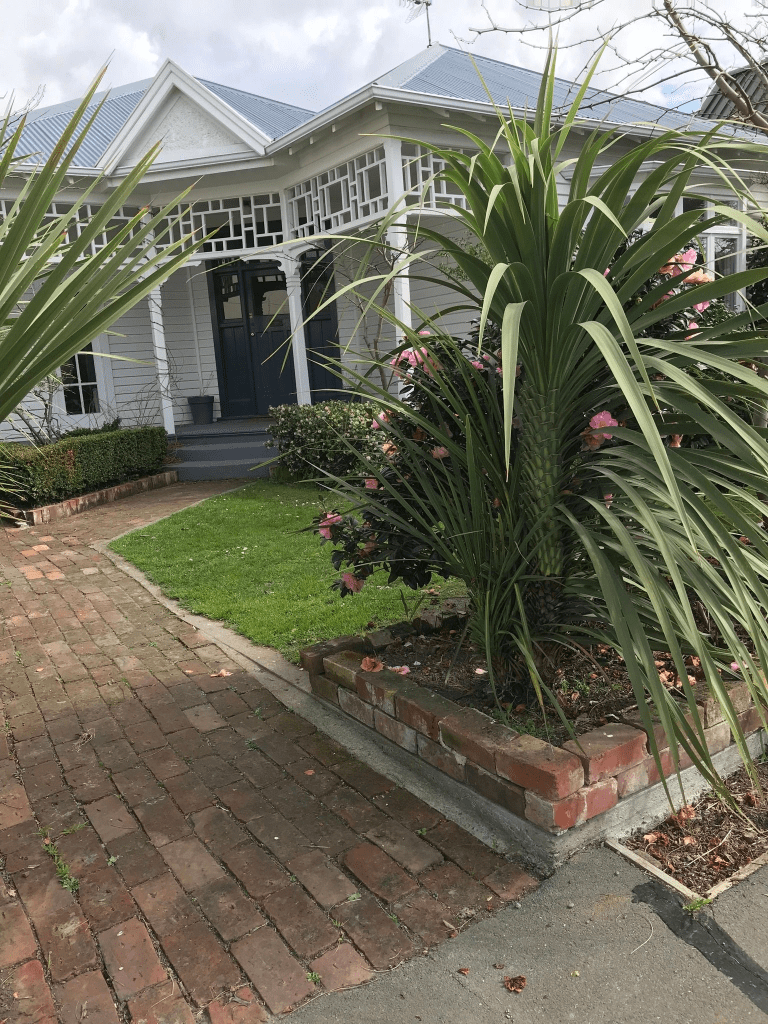
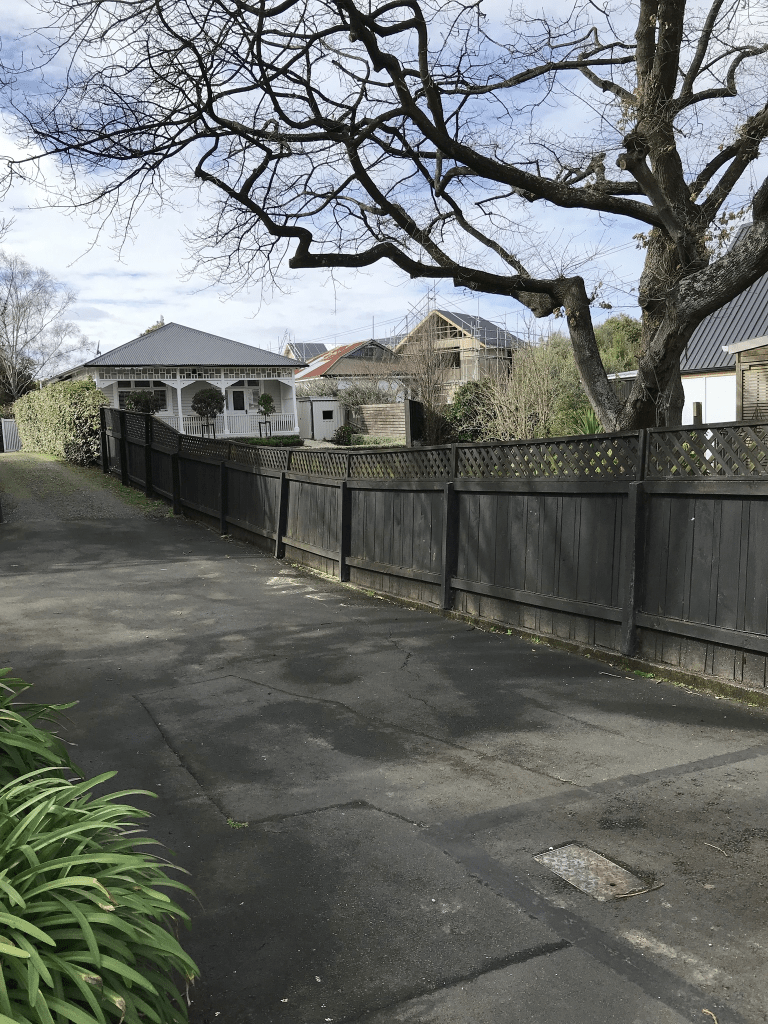
A small amount of information from the library website. Papers Past didn’t say how the street got the name. It could have been named the town Cheltenham and there are actually two colleges with the Cheltenham name. The reason for the name change from Regent St is that there was also a Regent St in Woolston. The name change was recorded in Papers Past in 1909 and 1924. Not a lot of information in Papers Past. A few death notices and in 1934 there was a complaint about dust from the road. There were sections for sale in 1890. Most houses on this street were built between 2017 and 2022 but there are still two houses from 1920. Many of the modern houses are ugly but I did love a house built in 1920.
Desmond Street in Merivale – Desmond is a first name popular with the Helmore family. Frederic Desmond Helmore (1882?- 1934) served as a Lieutenant in the Royal Army Service Corps, Mechanical Transport Section in World War I. John Desmond Helmore (1913-1988) was the father of Desmond W. Helmore (1940-) who wrote Drawings of New Zealand insects. This street was cut through land which was part of the Helmore Estate. Described as a “newlyformed” street in The Press in 1921. First appears in street directories in 1924.Information supplied in 1997 by Miss Skellerup of Desmond Street in an interview with Margaret Harper.
A reasonable amount of information from the library website and nothing that I can add about the name of the street. The author Desmond W Helmore is still alive and you can borrow his book at the library.
In 1921 it was described as a new street in the Millbrook subdivision. The entry on Papers Past also said that this street is where the original Helmore homestead is sited. This is interesting as the library information for Helmores Lane says that it is on Rhodes St. The surname that is mentioned the most on Papers Past for this street is the Skellerup name. Their house was called Danmark. In 1958 there was another subdivision called Avonbank and it was from the estate of the late George Gould. A sad entry was for a local solicitor Ken Neave who committed suicide in February 1931 just a couple of days after the Napier earthquake. He apparently mentioned the earthquake in his suicide note. He was also worried about the state of the world. In August 1930 there were two residents from this street who were on a ship called RMS Tahiti which sunk in the Pacific. Thankfully everyone was rescued but this ship was jinxed as it seemed to have had a few mishaps including hitting a ferry in Sydney Harbour killing 40 ferry passengers. In World War One it was a troop ship and more troops died from the ‘ Spanish Flu’ on this ship than any other troop ship. Note I prefer not to use the term Spanish flu but in this case the Wikipedia page used that term. Also it is easy for me to sidetrack when maritime history is involved.
I walked this street in the weekend and it is a lovely street but well beyond my budget. There are still houses here from the 1920s and 1960s subdivisions. Many of the post earthquake rebuilds are ugly and there is one that I thought was particularly ugly yet it has won awards. You can’t see the house from the street as it is on a back section but if you walk along the riverbank you can see it. I actually thought that it would be at risk of flooding and at the time didn’t realise that it was part of this street. They call the house Desmond House so I wondered if it was where the original Helmore family home was situated. I would need to look at old maps to confirm this.
Helmores Lane in Merivale – formerly Helmores Road. Named after Joseph Cornish Helmore (1832- 1920). Helmore, a solicitor, arrived in Canterbury in 1862 and built his house Millbrook (now at 59 Rhodes Street) on a 50 acre block. He also constructed a road through his land which later became Harper Avenue. He built the bridge at the end of Helmores Road in 1864 which opened up the area for subdivision. It is now of historical interest as one of the few remaining examples of the art of timber bridge construction. It was badly damaged in the earthquakes of 2010/2011. Helmores Road is first mentioned in The Press in 1865 in the annual report of the Surveyor presented to the Heathcote Road Board. He reported that the sum of 14 shillings had been spent on the road. First appears in street directories in 1894. Becomes Helmores Lane in 1960.
A reasonable amount of information from the library website. The street used to have an apostrophe in the name. In 1889 there were complaints about drainage issues. Joseph Helmore built Millbrook in 1865. Between 1923 and 1925 there were lots of entries concerning the new reserve which was opened in 1925 by Dr Chilton. In 1923 there were a few complaints about land next to the river being blocked off by the Millbrook land but the council replied that there used to be an existing towpath but it was given to Mr Helmore in exchange for the land where Helmores Lane was formed. This was the same area that became Millbrook Reserve.
The year 1923 was an active year for media attention as there were several revolvers found hidden in a hedge. This street had several well known Christchurch names living on the street. Derisley Wood, Studholme, Rhodes, Tripp and Cracroft are just some of them. In the 1950s there were letters of complaints about the street being called Helmore Road when it should be Helmore Lane. It actually only seemed to become a lane once the bridge was closed to vehicles and became a foot bridge only. It was talked about in 1958 but was in 1960s before it officially closed to traffic. In 1961 there was a subdivision of the property belonging to the late T F Gibson.
Huge number of entries in the social pages.
The houses here cover every decade from 1910 and some of the houses that I thought were older houses are actually modern houses. There are some ugly modern houses but most of the houses are interesting. Many of the original houses were damaged in the earthquakes. A lovely street and I also walked through Millbrook Reserve. I did like this street and would love to live here but well beyond my budget.
Penwood Street in Russley and it wasn’t on the library website which surprised me as most houses were built in the 1960s. A small amount of information on Papers Past. It was a development by Paramount Homes and they were selling sections in 1961 and 1967. Russley School is behind this street and on the corner with Pinehurst Crescent there is the Pinehurst Playground. The other entries on Papers Past were engagement notices. The name of the street will be from a village in England and this village is near Highclere. I have actually found geocaches in Penwood as I frequently worked nearby at Woolton Hill during my five years in the UK. Parking during the week is limited to 60 minutes so I only stayed long enough to get clues for a multi cache and of course walk this street. None of the houses stood out for me and they were typical 1960s houses and mostly made from brick.
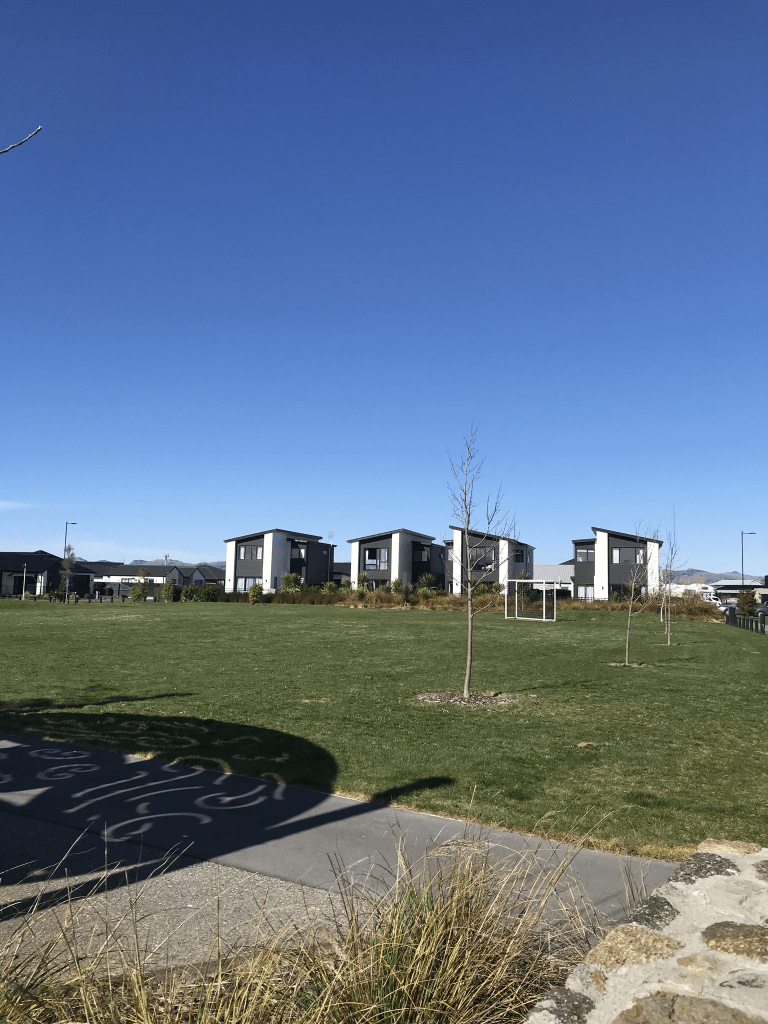
Gray Way Road in Russley and the street is too new for library website. Another street in the Karamu subdivision that is a Ngai Tahu development. The street is named after a racehorse called Gray Way. Houses all built between 2019 and 2022 and again I was reminded of the Pete Seeger song Little Boxes.
Manakura Street in Russley and the street is too new for library website. Another street where real estate agents describe as being in Avonhead. Manakura means leader. The street is part of the Karamu subdivision that is a Ngai Tahu development. The houses are all built between 2019 and 2022. There are still houses being built on this street and for most of the street the houses are only on one side of the street as the Riccarton Racecourse is on the other side. There is a reserve on the corner of Manakura St and Gray Way Rd with play equipment. In a couple of places I had to walk on the road because of vehicles blocking the footpath and we all know how much this annoys me.
Horoeka Street in Russley and the street is too new for library website. I was amused that real estate agents put the street in Avonhead. The street is in the Karamu subdivision which was a Ngai Tahu development. Horoeka is a type of lancewood. All the houses were built between 2019 and 2022 and I immediately thought of the Pete Seeger song Little Boxes. You can see the houses when you drive down Yaldhurst Rd as Horoeka Street runs parallel to Yaldhurst Rd.
Kinleys Lane in St Albans – First appears in street directories in 1966. A tiny amount of information from the library website.
There was only two entries on Papers Past and it was spelt Kinley’s Lane. One entry was for a sale of a property in 1974. The other entry was an ad for Kinley Garage. I searched the ancestry website but couldn’t find anyone with the surname Kinley who owned a garage or was a mechanic. Several with the surname Kinley lived in the area but couldn’t match them to the lane. The lane was probably named after whoever owned the garage. The lane runs from St Albans Street to Abberley Park. Most houses were built in 1990 but one house dates from 1950 which will be the one mentioned in Papers Past. I quite liked the street but it is narrow with very limited parking. I walked this street on Friday when I was geocaching in the area.
Albany Street in St Albans – Named after the dukedom of Albany The dukedom of Albany is a peerage title occasionally bestowed on the younger sons in the Scottish, and later, British royal family. First mentioned in The Press in 1908 in an advertisement. First appears in street directories in 1909.
A small amount of information from the library website and nothing that I can add about the name of the street. I seriously sidetracked on Papers Past with this street. There were a few birth notices and even more death notices but what dominated the news was a murder in December of 1965. A 73 year old widow was found by her daughter. The widow had been battered around the head by a barometer and then her throat was cut. It created so much interest that it attracted so many Sunday drivers that the cars were bumper to bumper. Note going for a Sunday drive was a big thing those days and yes I am old enough to remember such a thing. Eventually the daughter was arrested for her mother’s murder and found guilty. She appealed the verdict but the appeal failed. Interesting trial as much emphasis was placed on the mother having been married three times and the daughter having been married twice. Three psychiatrists diagnosed the daughter with psycho-neurotic personality disorder. I am not surprised that the mother was a widow as she tended to marry men at least 20 years older than her. The daughter’s marriages were a little bit more interesting. Her first husband died from carbon monoxide poisoning in a fire. The inquest stated that it was a suspicious death and subject to a police investigation. She was divorced from her second husband. He had at least 3 or 4 wives and eventually died from alcohol related illnesses. She married for the third time in 1978 and obviously was out of jail by this date.
Most houses here were built in 1970s and 1980s plus many are from 1905 to 1920s. Some of the older houses are lovely but I was disappointed with the one from 1905 as it has been altered. It was a pleasant street and even the some of the modern houses looked OK.
Harold Denton Place in St Albans – Named after Harold Ernest Denton (1893?- 1975). Denton was a city councillor 1938-1944, 1956-1959 and 1962- 1968. Formed in 1972 and contains city council housing for pensioners. First appears in street directories in 1974.
A small amount of information from the library website and not a lot that I can add. Not a lot of information on Papers Past with just a couple of death notices and entries in garden competitions. In September 1972 the cottages were opened by the mayor N Pickering. There were 20 council built and owned units for pensioners and they are still council owned. Harold Denton was mentioned and he was 80 years old in 1972.
The street runs off Springfield Rd and it actually had a footpath. The units are typical 1970s units.

 Lytteltonwitch's Walking the streets of Christchurch Project