Tracy Place in Redwood and all the library website said was that it was named in 1972. Papers Past just had a few ads for the sale of sections between 1973 and 1978. I couldn’t find out the reason for the street name. Most houses were built in 1970s and 1980s. I quite liked this street and there was one house that I really liked. I was surprised to find out that it was built in 1970 as it looked older.
Kaumatua Place in Redwood and it isn’t on the library website. I didn’t actually walk this street as it was obviously social housing. I don’t feel comfortable or safe to walk such streets. The units are owned by the Christchurch City council and the 10 units were built in 1977. The council website actually gives the address as 15 Barnes Rd.
Canberra Place in Redwood and I was very surprised that this street wasn’t on the library website. When I walked the street yesterday my first thought was that the houses had a very 1960ish look about them plus there was a footpath on both sides of the street. I was correct about 1960 as most houses here were built in the 1960s. Papers Past also had several ads for sections being available for sale in the 1960s. The for sale ads had the sections as being in Papanui or occasionally North Papanui. A few death notices and they frequently used Styx as the suburb. Redwood was only used from the late 1970s. In 1962 a sum of £430 was approved for the Canberra Place Reserve for levelling of the ground and providing playground equipment. I couldn’t find out why the name Canberra was used. There didn’t seem to be anything special happening in Canberra at the time and the original owner of the land didn’t have a connection to Canberra.
Looked like a pleasant street and the reserve is still there and yes I was geocaching in the reserve. Nothing stood out for me and I didn’t take any photos.
Albert Sheppard Close in Yaldhurst – Named after Albert Shepherd George (1868?-1962). [NB His name is spelt incorrectly in the street name.]The land developed into the Delamain subdivision had been owned by the George family for the last three generations. The original purchaser and his son were both named Albert Shepherd George. Named in 2007.
A small amount of information from library website. The George family possibly owned the land but they didn’t live there. Both father and son farmed in the Amberley area and the farm was called The Mound and was at Waipara. The father moved to Christchurch and lived on Clyde Rd when he retired. His son took over the farm. There was also two daughters and the father tried disinheriting one of the daughters but the courts overturned this.
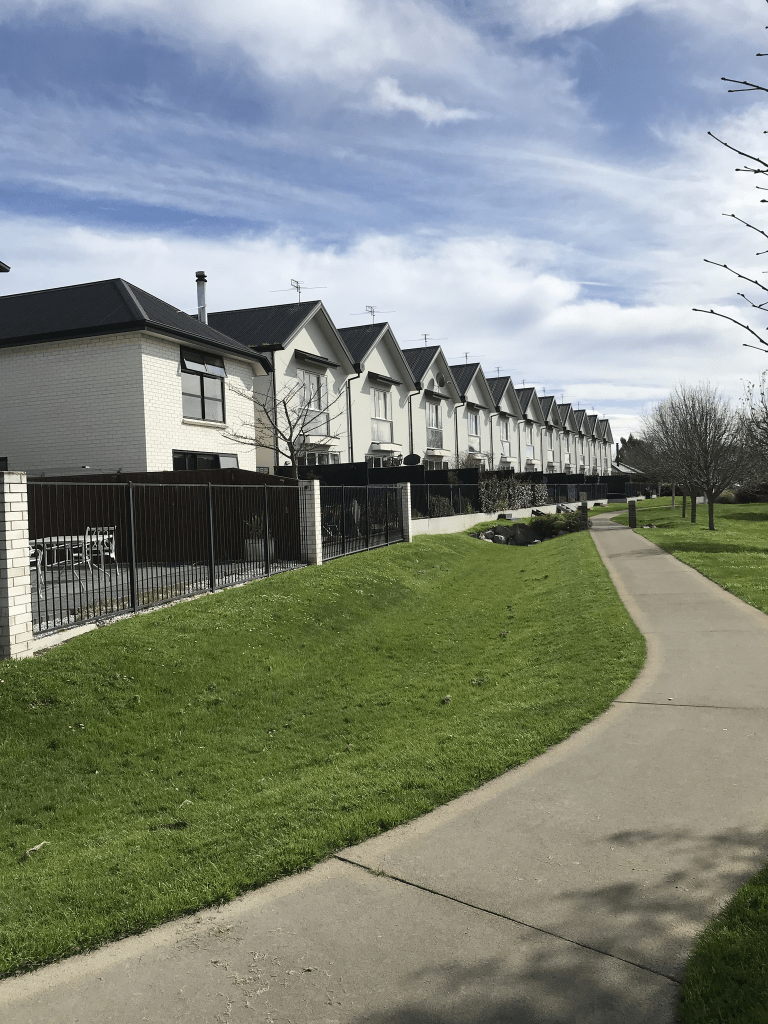
The houses here look exactly the same but there is a lovely green area behind the houses. The houses were mostly built in 2010.
Rhodes Street in Merivale – Named after Arthur Edgar Gravenor Rhodes (1859- 1922). Rhodes was a lawyer, politician and property investor. He also built Te Koraha, now the nucleus of Rangi Ruru School. Rhodes Street is first mentioned in the Star in an advertisement in 1906. First appears in street directories in 1909. Rhodes is a resident.
A small amount of information from the library website. There was a huge amount of information on Papers Past and there was also Rhodes Streets in Timaru and Waimate. Arthur Rhodes was born in Timaru but settled in Christchurch. The other streets are named after the same family.
Between 1918 and 1920 many entries were about the road being the most dangerous thoroughfare in Christchurch because of the sharp bend. Many accidents including two trams colliding. By 1920 it was decided to widen the road and Mr Rhodes gave land from the front of his property for the widening.
In 1916 the Rhodes Street Home was opened and it was also known as the Presbyterian Home for Boys. The house that the orphanage moved into was called Te Kiteroa and was the residence of the late J C Wilkin. Mr Wilkin had been the manager of the Lyttelton Times. There is also a house in Waimate with the same name which sadly was badly damaged by fire this year. By 1924 the orphanage was a Girls Home.
In 1923 Te Koraha the home of the late Mr A E G Rhodes was for sale. The ad for the sale of the house made a big deal of being the only private house in the Dominion to have been occupied by King George and Queen Mary during their trip in 1901. They were the Duke and Duchess of Cornwall and York at that stage. It was MR A E G Rhodes’s son Tahu Rhodes selling the property. Rangi Ruru School moved into this property in 1923. Rangi Ruru School was started by the Gibson family in 1889 and run by Helen and Ethel Gibson who were born in Lyttelton to a Captain Gibson. The school outgrew the premises on Webb St which is why the move to Rhodes St. The Presbyterian Church purchased the school in 1946.
I am going to have to go back to this street to take a photo of the lime tree that it is on the street. It was apparently planted in honour of the Duke and Duchess when they visited New Zealand in 1901. Some people in letters to the editor said the the Duke and Duchess planted the tree and it should have a plaque. The editor replied to say that they didn’t plant the tree.
During the 1930s and 1940s there were many entries about the Rhodes Street Reserve and arguments about the council planning on selling the reserve. Rangi Ruru were going to buy the reserve but it stayed public for many years.
Arthur E G Rhodes died in December 1922 and his wife Rose died 10 years later in 1932. She was in London staying with her son when she fell 60 feet to her death from his Chelsea apartment. The inquest couldn’t decide if the death was an accident or suicide but it was hinted that it was probably suicide.
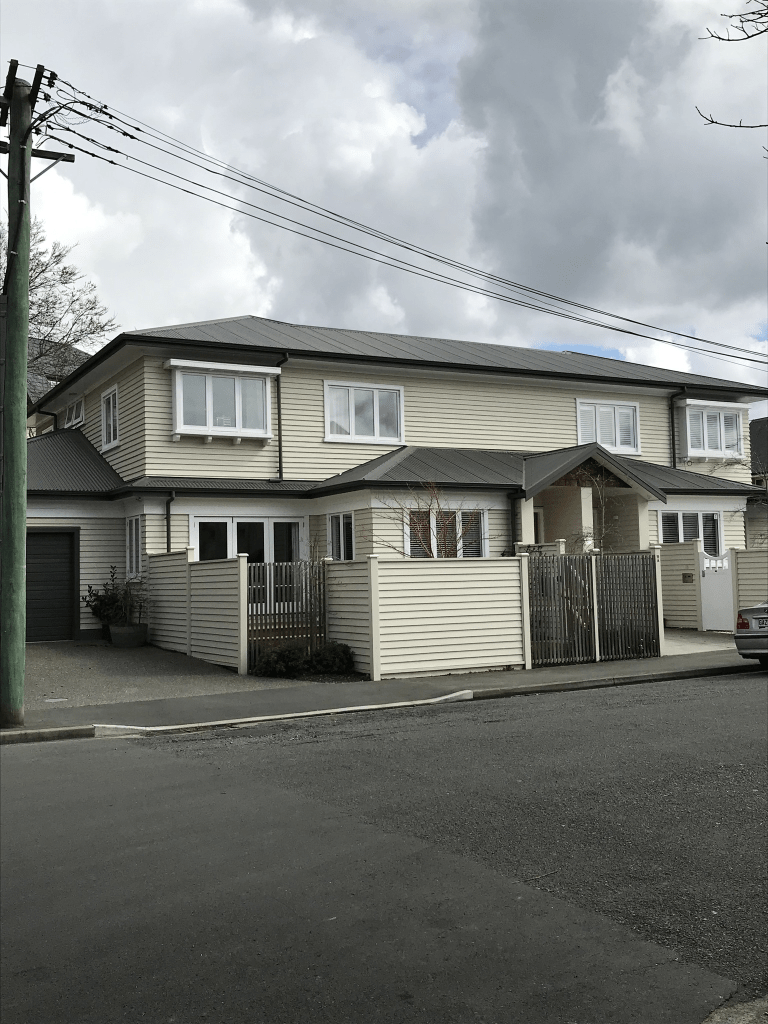
Most houses were built in 1990s and 2000s but one is from 1890 and I did like that house. The house that intrigued me the most was built in 1934 and the architect was Heathcote Helmore. The house was built for a widow and she wanted it to be flats. She lived in one flat and rented the others out to other widows. The house was damaged in the earthquakes but the new owners decided to restore it and it is now two flats. The house has always been called St Ives. The street obviously still has the school here and I believe that it is the boarding house part of the school on this street. The street runs from Helmore Lane and is split in half by Rossall St and it then comes to a dead end at Carlton Mill Rd end.
Carlton Mill Road in Merivale – formerly Carlton Street. Named after the Carlton Mill, a local flour mill. Richard Woodford founded the original Carlton Mill about 1853. Carlton Mill Road is first mentioned in The Press in 1871 when a Mrs Baber advertises for a general servant. First appears in street directories in 1887. Re-named Carlton Street on 7 March 1904 after amalgamation of St Albans with the city in 1903. In 1919 residents asked the city council for it to be returned to its original name of Carlton Mill Road. Residents felt there was confusion with Carleton Road (re-named Kirkwood Avenue).
A reasonable amount of information from the library website. There was a lot of information on Papers Past and it sounds like Richard Woodford only owned the mill for about 10 or 15 years. It got rather confusing and he moved to Kaiapoi after he went bankrupt in 1869. There were lots of birth notices plus many death notices. In 1870s there were complaints about the millrace damaging the road but in 1876 engineers report said that the millrace wasn’t damaging the road. In 1897 and 1899 residents were still complaining about the condition of the road. In 1880 several sections were for sale and possibly connected to the Carleton Mill being for sale in the same year. In 1898 there was a report of bats being seen near the river. I love bats. There was at least one shop called Moneys Store. A private hospital called Santa Cruz was mentioned in 1920s. In 1935 a guest house was refused permission to operate on the street as such businesses weren’t permitted to operate on this street. I was especially amused by a story from 1963 were a sheep escaped from Hagley Park and caused havoc on the street. The description of the public and the police trying to capture the sheep was funny. The mill also seems to have occasionally been referred to as Avon Mill.
Carlton Mill Road runs from Bealey Ave to Rossall St and for a fairly short street it has a large number of dwellings. There are several tower like blocks of multi dwellings that were built in 1970s, 1990s and a huge number built in 2000. A couple of nice villas from 1920s and I thought that there was a house from 1900 but that was outdated information as it has now been demolished. The Christian Science Church has an unusual looking building. There was an entrance to a house with the words Woodford Grace on it but I couldn’t see the house as it was a long driveway. Edited to say that I googled Woodford House and it is a passive house. It is worth googling and checking out their website. It wouldn’t let me post the link. Along the riverbank behind the houses there was the Carlton Mill Reserve and I didn’t attempt to walk along it as it gave off a private keep out type of vibe but when I was on the other side of the river I did see people walking there.
Millbank Lane in Merivale and there wasn’t any information on the library website. It is possibly a private lane but the signpost didn’t say private lane. The name is fairly obvious as the tiny street runs off Carlton Mill Road and the houses back onto the river. The street was developed between 30 and 42 Carlton Mill Road. Only 8 houses here and most were built in 2000. Personally I thought that they were really ugly. Well beyond my budget.
Dovedale Ave in Ilam – Named after Dovedale, a village in Derbyshire. Sarah Hodgkinson, née Mellor, (1825?-1895) was born in Dovedale. She and her husband Charles Hodgkinson (1826-1888) were employed at Ilam Hall, having been among the servants who sailed to Canterbury with the Hon. John Watts-Russell in 1858. Hodgkinson is described as a “gardener of Ilam farm” on the 1860-1861 Christchurch Militia List. He was the verger at St Peter’s Anglican Church, Upper Riccarton 1861-1888. First appears in street directories in 1972.
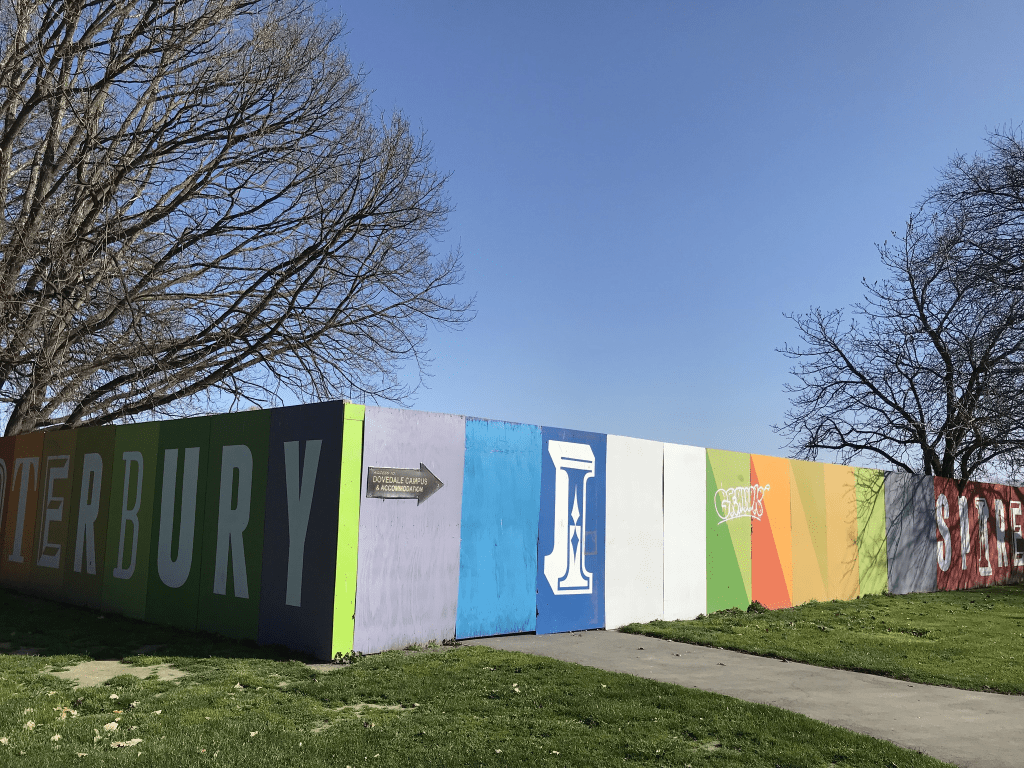
A small amount of information from the library website and there is a small mistake in this information as Dovedale isn’t a village in England. It is actually called Dovedale Valley and the village in Dovedale is called Ilam. I have also added Dovedale Valley to my list of places to travel to. Every entry in Papers Past related to the teachers college. I walked this street over a week ago when I was doing a geocaching lab adventure. One side of the street is part of the University Campus and there are student hostels here. The student hostel is called Sonoda Village. The other side of the street had houses that were built in the 1970s and 1980s. Many of the houses looked more modern than having been built in those two decades. I remember dropping off two overseas students here after a walk with the 360 trail group about two and half years ago. One of the students was studying braided rivers and New Zealand obviously have the best examples of braided rivers.
Athol Terrace in Upper Riccaton – Formerly Godley Street. Named after John Robert Godley (1814-1861). Re-named Athol Terrace. Godley was a lawyer, writer, administrator, coloniser and public servant. Godley Street first appears in street directories in 1930. Re-named Athol Terrace on 1 September 1948 when 120 streets were re-named.
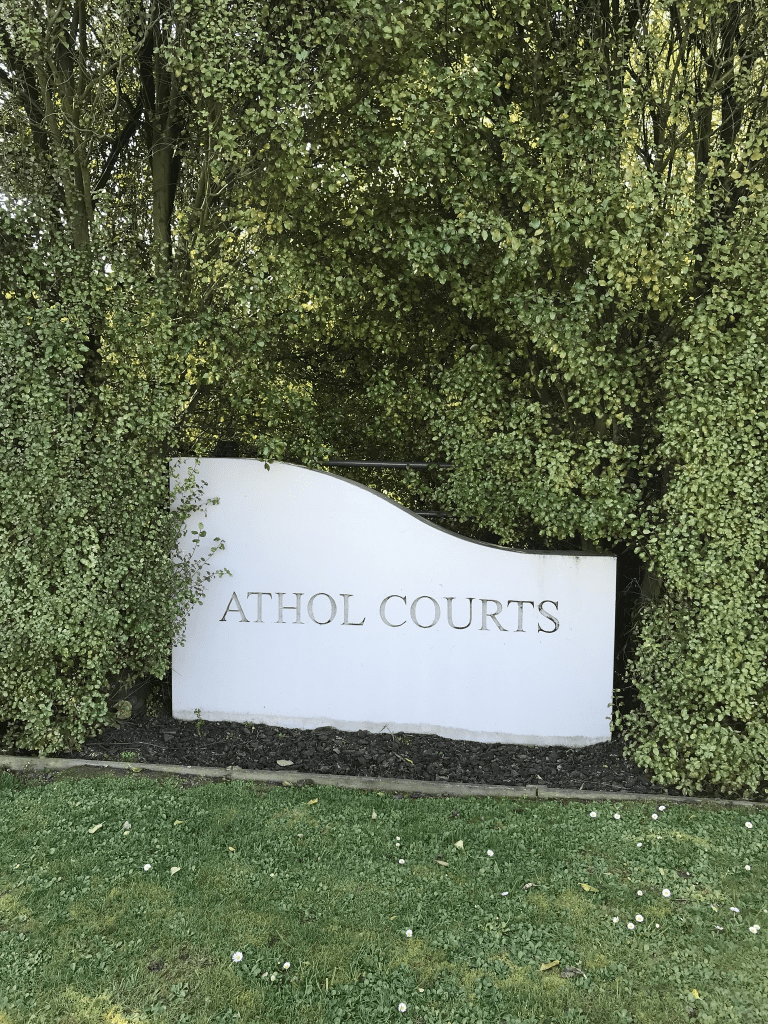
A small amount of inform the library website and couldn’t find out where the name Athol came from. It was either someone’s name or because it is in Riccarton it has been named after Atholl in Scotland but spelt wrong. Under the Godley name there was very little information on Papers Past. Under the Athol name most entries were about Carpet Manufacturing Company which was later known as Feltex Carpets. In 1963 University of Canterbury purchased 5 acres of land on the corner of Waimairi Rd and Athol Terrace and possible use to be a hostel for students. Where the Feltex Carpet Factory used to be is now Parkstone Retirement Village. I actually walked this just over a week ago when I was doing a geocaching lab adventure. The retirement village takes up a huge block of land here. On the other side of the road was a group of apartments called Athol Courts. I couldn’t find any information about these buildings but they are possibly student flats. The street is split in half by Peer St and the older houses from 1950s and 1960s seemed to be between Peer St and Waimairi Rd. I suspect that this street could be a nightmare because of the students and I personally wouldn’t like to live here.
Exeter Street in Merivale – formerly part of Winchester Street. Named after Exeter in the Southwest of England. Winchester Street was formerly Princes Street and had been re-named earlier
that year on 7 March 1904. Winchester Street from Andover Street to Carlton Road (later Carlton Mill Road) was re-named Exeter Street on 12 December 1904. Among a number of streets re-named in 1904 and given the names of place-names in the United Kingdom.
A small amount of information from the library website. Not many entries on Papers Past. A few death notices and in 1919 there were 3 houses being built that were being offered for sale. My main memories of Exeter in the UK is that I always seem to get lost in the area. There was an orange elephant and I always knew I was lost if it was on the wrong side of the road that I was driving down.
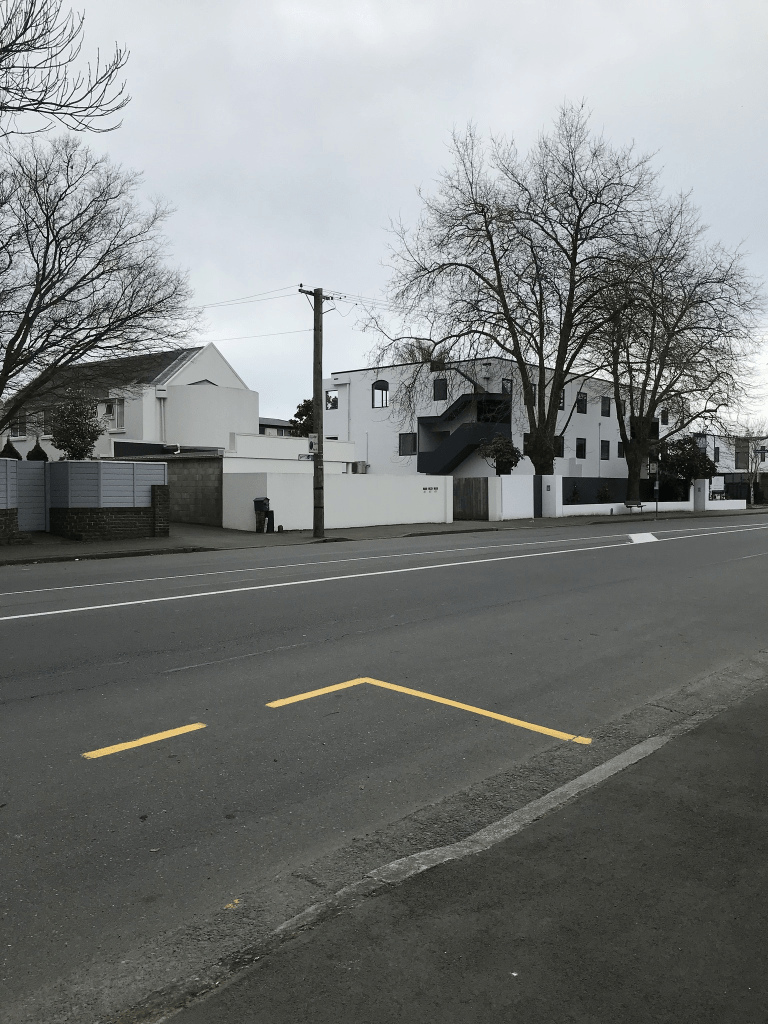
The houses date from 1990 onwards and many were multi dwellings. I didn’t particularly like this street.

 Lytteltonwitch's Walking the streets of Christchurch Project