Fox Lane in Cashmere – First appears in street directories in 1991.
A tiny amount of information from the library website. It is highly likely that this name is connected to the Allom family and the lane is opposite Allom Lane. Thomas Allom’s second wife was Eliza Fox.
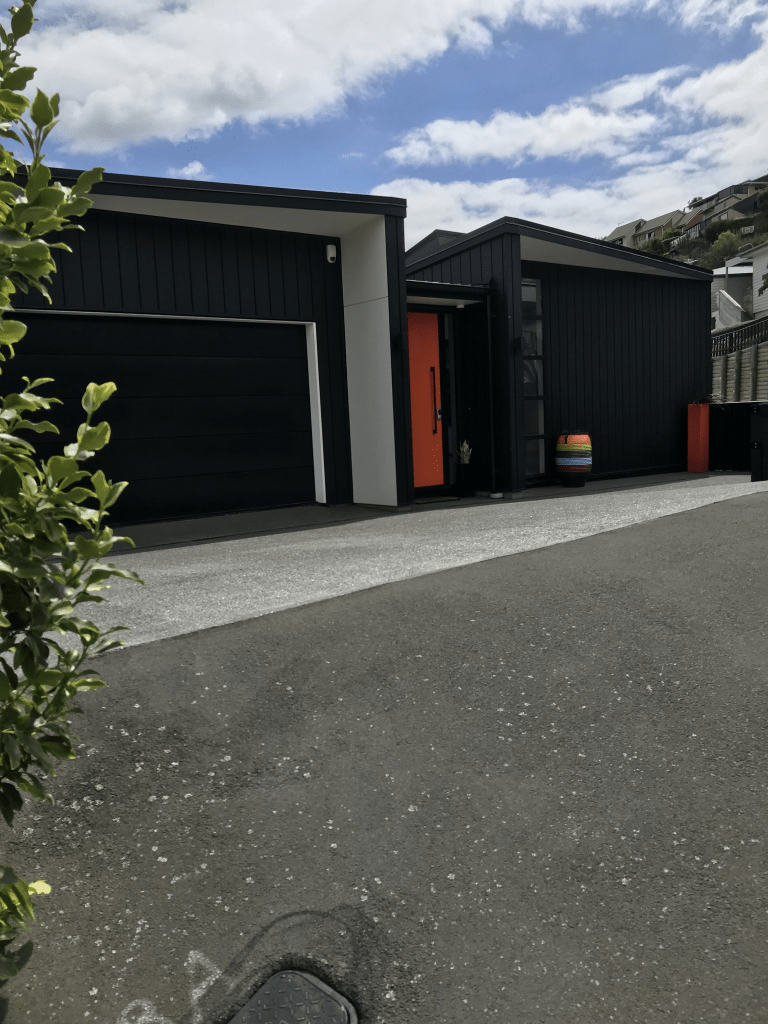
Another street that I had forgotten that I had already walked in 2019 when I walked Longhurst Terrace. I only partly walked it as you end up feeling like you are on private property. Only 5 houses here dating from 1980 and 1990. Another tiny street with great views over Christchurch.
Allom Lane in Cashmere – Named after Thomas Allom (1804-1872). Allom, an English artist, topographical illustrator and architect, was one of the founder members of what eventually became the Royal Institute of British Architects. He was a friend of Edward Gibbon Wakefield and spent some time in Canterbury where he lithographed some works of Heaphy. Two of his sons, Alfred and Charles, later emigrated to New Zealand. First appears in street directories in 1990. Information supplied in 2007 by Barry Allom in an interview with Margaret Harper.
A reasonable amount of information from the library website. There were a few entries on Papers Past and I thought that perhaps there was a mistake with the name Alfred but there wasn’t. There was also a brother Albert who came out to New Zealand and lots more entries about him on Papers Past. I wasn’t expecting this street to get interesting but I had a wee sidetrack. There were several entries on Papers Paper giving credit to Thomas Allom’s wife for the first bees in New Zealand. An article in 1895 said that bees were first introduced to New Zealand in 1845 by Mrs Thomas Allom who gave the bees to Miss Wakefield to bring to New Zealand. The author of the article then wanted to know who was responsible for introducing fleas and sweetbriars. I went googling as I expected there would be more information about this and there was more information as a Mary Bumby is credited with introducing bees to New Zealand in 1839. Mary Bumby is recognised by the Bee Keepers Association for this act.
I have actually walked this street twice as I also walked it in July 2019 when I walked Longhurst Terrace but forgot to write it up. If I don’t take photos I sometimes forget I have walked a street so this time I took a photo. Only 12 houses here and they were mostly built in the 1980s and 1990s. Great views but beyond my budget.
Whaka Tce in Huntsbury – formerly Whakakake or Whakakaka Road. Hancock’s Road was an early informal name. Named by Hannah Hancock (1854?- 1950) who said “whakekake” means superior”. Whakekake Road was named in 1923 at a meeting of the Heathcote County Council. Whakakake or Whakakaka Road appears in street directories 1938-1955. Hannah Hancock is the only resident in 1938. From 1957 it is Whaka Terrace.
A small amount of information from the library website. In Papers Past the only Hancock’s Rd I found was a street running off Normans Rd and nothing under that name for this street. There wasn’t anything under the Whakakake Rd. Under the name Whakakaka Rd in 1952 and 1953 there were several ads for the sale of fruit from the Plum Orchard. It was described as being between the sanatorium and the brickworks. Hannah died in 1950 and before her death was living in Canon St in St Albans so I don’t know who was running the orchard. In 1952 a contractor was required to lift and repile two rooms in the old house and apply to the new bungalow on Whakakaka Rd.
Between 1907 and 1922 Hannah Hancock was frequently fined for allowing horses to graze on a public road or for cattle to wander. In 1929 there was a fire in the shed behind the house and the neighbours were concerned for the safety of Mrs Hancock an elderly widow who lived by herself.
In 1975 there was an article by Gordon Ogilvie and the street is described as a narrow strip of housing between Murphy Bros and the old sanatorium. The subdivision dates from 1950s and is on the site of the Hancock’s Estate. The original homestead was burnt down. In 1969 residents objected to the use of coal at Coronation Hospital and in 1977 residents complained about the dog dosing strip. Main objection was the yapping dogs. In 1977 there was another subdivision of 45 sections with possible drainage issues.
I have spent all afternoon trying to figure out Hannah Hancock and her husband. The ancestry website wasn’t any help. In the electoral rolls between 1896 and 1841 she is at the property which is now Whaka Tce but by herself and no husband. She is described as married. In 1946 and 1949 she is living at 133 Canon St which was her address when she died. She is buried by herself. The only time her husband is mentioned is in 1903 when they allowed the Canterbury Highland Rifles camp on their property. Her death notice in 1950 says that she was 96 and the widow of Arthur Hancock. The various family trees on Ancestry say that Arthur Hancock died in Wellington in 1944 yet Hannah was described as a widow in 1929 by her neighbours.
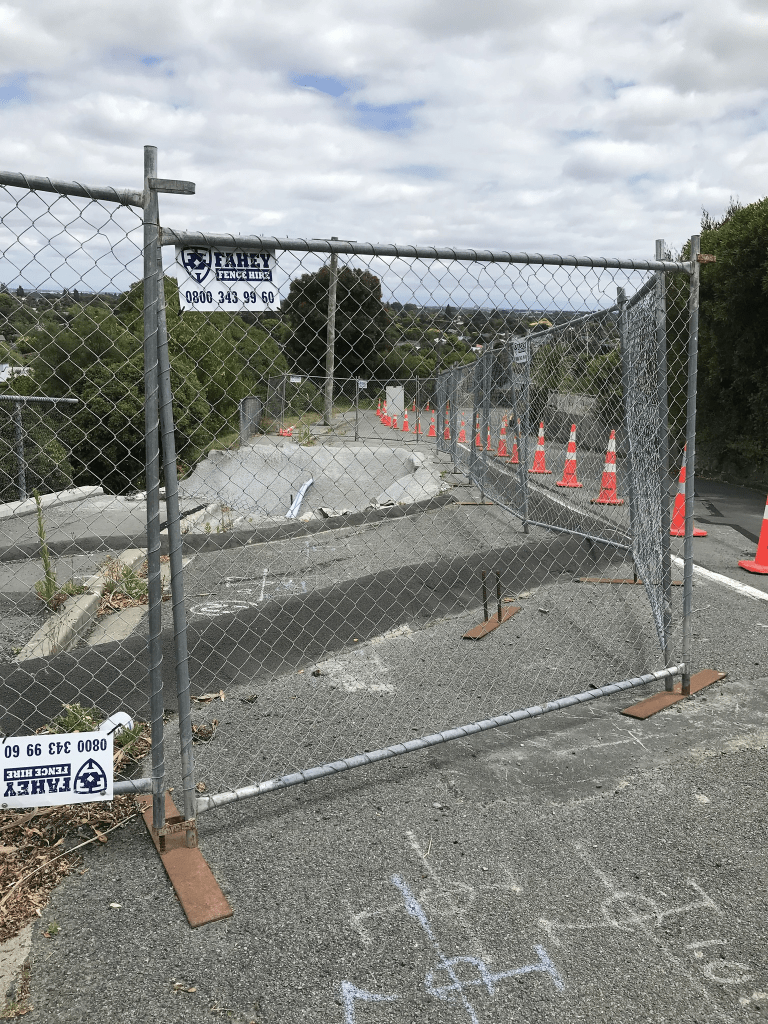
This was another steep street that I walked today and it has a mixture of house styles and still a few empty sections where houses have been demolished. A few houses left from the 1950s subdivision but many houses were built in the 1980s and 1990s. A large number of houses were built after the earthquakes and they are mostly likely rebuilds. None really stood for me. The Whaka walkway goes from the top of the street but I believe that it is just a short one that leads to another street. A big section of the road is one way controlled by lights. The reason for this is a big slip and I believe that it has been like this for several months. The traffic lights amused me as they obviously turn green when they sense a car coming towards them. Walking back down the hill the motion of me walking made the lights turn green.
Mamaku Lane in Huntsbury. It is too new to be on the library website or google maps but weirdly it showed up on apple maps. I didn’t walk the street as it honestly just looked like a driveway to one house. There are apparently 6 houses here all built in 2020. It runs off Woodlau Rise. Mamaku means tree fern.
Woodlau Rise in Huntsbury – First appears in street directories in 1987.
A tiny amount of information from the library website. Nothing about the name of the street on the library website. In Papers Past there was several mentions of a property called Woodlau in Prebbleton. Most entries were from early 1900s and I did wonder if the developer of this street had a connection to the Prebbleton property.
This street runs from Centaurus Rd and once you get to the top there are fantastic views. Most houses were built in the 1980s and 1990s with another burst of building houses between 2015 and 2018. I don’t normally say this when I walk a street which has modern houses on it but I liked this street. There were a few houses that appealed to me and one had a fantastic garden with interesting garden ornaments. I suspect that most houses would be beyond my budget. I would get plenty of exercise walking up and down this street everyday.
Sunhaven Place in Huntsbury and nothing on the library website. I assume that the name is because it is a sunny spot. A tiny street with no footpaths. Only 10 houses here and most were built in 1990s and 2000s. Not really a lot that I can say about it.
Lookaway Lane and Lookaway Place in Huntsbury – First appears in street directories in 1991.
A tiny amount of information from the library website and it only refers to Lookaway Lane as Lookaway Place wasn’t on the library website.
I am assuming that the name comes from the views across Christchurch towards the mountains. Most houses were built in the 1990s and many are huge. I almost missed Lookaway Lane as it looks like a driveway but there are 5 houses there. It wasn’t easy to walk on Lookaway Place and I was frequently forced to walk on the road. Between cars parked on the footpath and low hanging branches it made walking difficult. Still I did have a lovely chat with one of the residents. She had fantastic views from her place. I introduced myself and explained my hobby and that I had walked up from Centaurus Rd. She said that I had a lot more energy than her and she was then shocked to realise that I was older than her.
Brickworks Lane in Huntsbury – Named after the brick makers who operated in Centaurus Road. Wigram Bros., maltsters & brickyards, operated there from 1886. Their business was taken over by the Murphy Bros. (Chch) Ltd, brick and drain pipe manufacturers in 1924. Their premises were on the intersection of Port Hills Road (later Centaurus Road) and Whakakake Road (later Whaka Terrace). In 1928 Charles Thomas Trebilcock (d.1974), journeyman bricklayer, operated on the site where Brickworks Lane was later developed. Brightling’s Brick Works were near the intersection of Port Hills Road and St Martins Road. First appears in street directories in 1991.
A reasonable amount of information from the library website and I was slightly confused at first as I thought that Henry Bland Kirk was on this site. A quick check on Papers Past and T N Horsley had taken over Henry’s business and then in 1903 T N Horsley and Wigram Brothers amalgamated. The new company name was The Christchurch Brick Company. I am not sure what Charles Trebilcock has to do with it as he was just an employee.
The houses here date from 1980 onwards and I liked a couple of them but well above my budget. The footpath was on only one side of the street and we all know how much I dislike this.
Austin Kirk Lane in Huntsbury – Named after Austin, Kirk and Co., owners of the Farnley Brick and Tile Works. John Austen (1824- 1903), William Austen (1835-1910), Thomas Austen (1844-1918) and Henry Bland Kirk (1842-1927) owned the first of the local brickworks to produce domestic wares. They operated from a site in Port Hills Road (later re-named Centaurus Road) 1875-1888. First appears in street directories in 1987.
A small amount of information from the library website and there are mistakes in it. I don’t know why they spelt the brothers surname as Austen as it was Austin. It was John Austin who died in 1910.
The history of the business got very complicated and involves at least one bankrupt person, a possible falling out amongst brothers and a failed bank. The business was named Farnley after Farnley Iron Company near Leeds in the UK where Henry Bland Kirk had worked. The Christchurch company was mostly producing clay drainage pipes then the government offered a bonus for producing pottery household goods. In 1881 the company started producing crockery and other items. In 1888 when the Colonial Bank failed the partnership between Henry B Kirk and the Austin brothers was dissolved. In 1890 the Farnley Brick and Tile Works was reopened by Mr H B Kirk under his sole ownership.
In 1906 there were complaints about the smoke from the brickworks because of the consumption sanatorium being so close. The company had at least two more owners before they stopped using this site. This street is where the business used to be situated and the property website say that there are 6 houses here. I was so sure when I walked it yesterday that there were more houses than that. Real estate ads promote it as being close to schools but one ad was promoting an over 60s unit.
It was a steep wee street that runs off Centaurus Rd.
Sepia Lane in Huntsbury and nothing on the library website. This is a steep wee street that runs off Centaurus Rd. Most houses were built in 1990s and 2000s. At least one house was advertised as an over 60s unit but the rest promoted being convenient to the nearest school.