Rossmore Terrace in the suburb of Cashmere, Christchurch

Rossmore Tce in Cashmere – Named after the Rossmore family. The Rossmores were aristocrats with connections to the Westenra family. Captain Richard Westenra (1794- 1880) was a “grandson of a former Lord Rossmore”. Frederick Herbert Wilson (1832-1902) and Frances Sarah Wilson, née Westenra, (1831-1903) named their eldest son Rossmore Cracroft Wilson (1863-1942). First mentioned in The Press in 1912. First appears in street directories in 1921.

A reasonable of information from the library website and that is a seriously weird description of Lord Rossmore. Using the words former Lord Rossmore is strange. Captain Richard Westenra father was the third Baron Rossmore and his grandfather was the second Baron Rossmore. Captain Richard Westenra’s mother was Baron Rossmore’s second wife. The first Baron Rossmore didn’t have any children and the title went to a nephew.

Papers Past had lots of entries especially in what was called Social Notes. A family with the surname Maling is frequently mentioned. In 1922 there is mention of the need for a footpath from Rossmore Tce to the Consumption sanatorium and in 1926 there was mention that the footpath from Rossmore Tce to Sanatorium Hill is to be asphalted. The year 1933 had several entries as the septic tank and old trees at the corner of Cashmere Rd and Rossmore Tce were being removed so that a plantation can be planted.

The same year there was a very sad story about a young boy who fell into a quarry. This happened in July of that year and it was said that he fell 50 feet over a bank into the quarry. He broke his thigh and right arm plus had internal injuries. The note from the hospital said that he was seriously hurt but improving. The quarry was on private land and fenced off. The broken thigh and leg didn’t heal properly so they operated on him in the September but he died after the operation.

The year 1946 was another busy year as a man was charged with running a common gaming house on the street. This was the same year that a new convent was opened on the street. The description is that it was a new juniorate of the sisters of the missions and first of its kind in the South Island. Reading further articles it sounds like it was a place where they trained novices to be fully fledged nuns.

There were sections for sale in 1969 and 1971 and I was going to look up Mr E Maling to see when he died as the Maling family seemed to be the main householder on the street.

In 1974 two young men wanted to establish a grass ski run on this street but they withdrew their application because of the number of objections. They possibly continued doing this on an informal basis as there is a photo dated 1975 of a young man grass skiing. The footwear looked like modified roller skates. Growing up in the 1950s and 1960s we had toboggans that we used in the paddock next to our house in Lyttelton. The sheep stayed out of our way.

I walked this last night and I ended up having a lovely chat with a local. Part of the old convent fell down in the September earthquake and the rest fell in the February earthquakes. She said that it came down with a lot of noise. She also said that it was rumoured that naughty nuns who had been impregnated by priests were sent to this convent. I think that the church this owns this property. In this flat section of the street there were several houses built in the 1920s but they were on the high side of the street up long driveways. The glimpse that I managed to get showed gorgeous wooden villas. Most of the houses here are on only one side of the street because of the long drop on the other side of the street. On the lower part near Centaurus RD is the only part where houses are on both sides. At the top of the street there are huge modern houses which are unbelievable. Anyone got a spare couple of million to give me. At the top there looks like there is a walkway that leads to Whareora Tce but I didn’t attempt it as I had done of a lot of walking on steep roads and was getting tired.
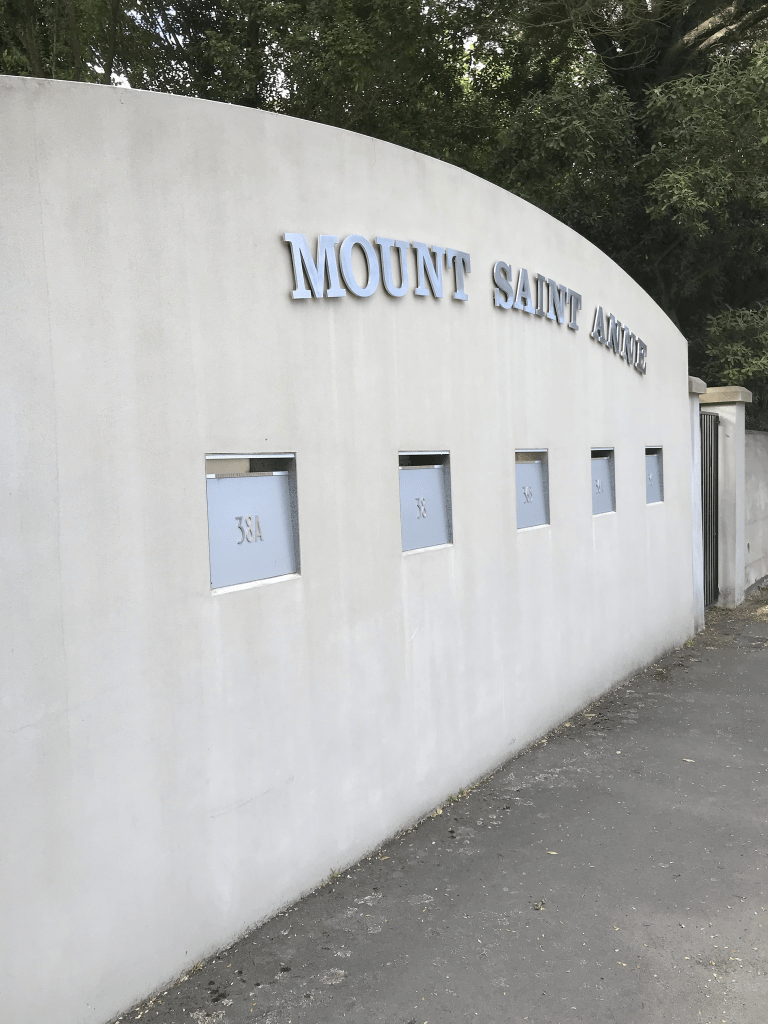
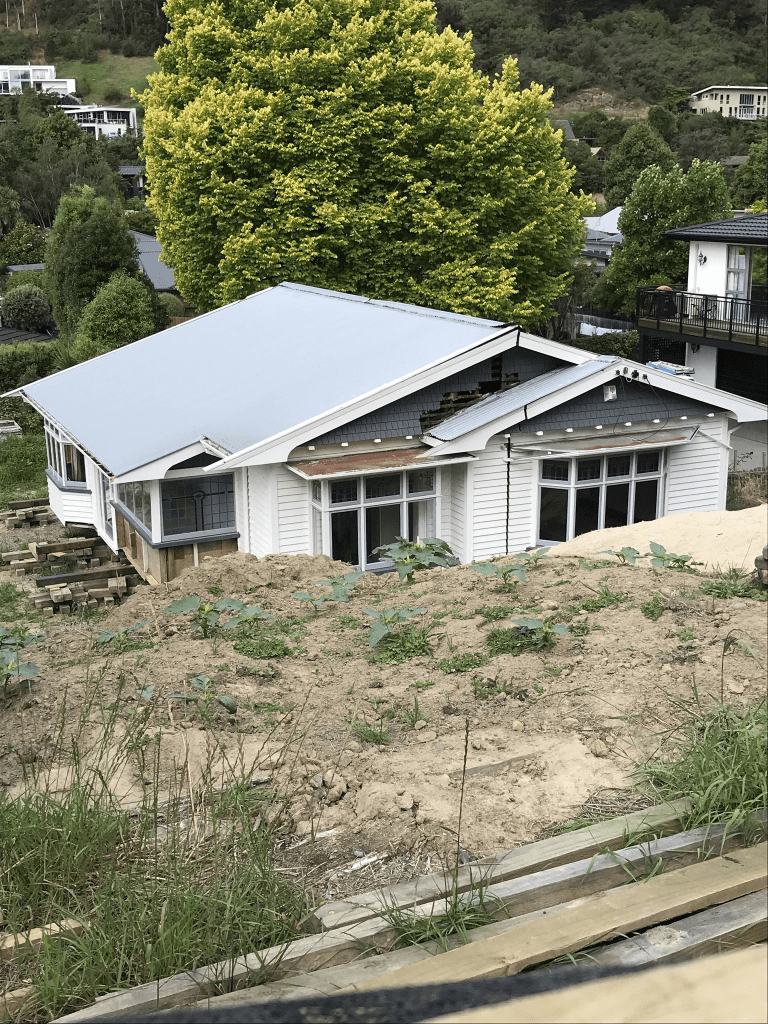
Roseneath Place in the suburb of Cashmere, Christchurch

Roseneath Place in Cashmere- First appears in street directories in 1970.

A tiny amount of information from the library website and my best guess about the name of the street is that it is named after a place in Scotland.

Not a lot that I can say about the street except most houses were built in the 1960s and 1970s. Looks like a few rebuilds and at least one empty section. Not much information on Papers Past and the entries were mostly ads in 1967 for the sale of sections in the Cashmere Downs subdivision. In 1973 a driverless truck rolled down the hill and hit the house at No 2 Roseneath Place. Thankfully the woman in the house was unhurt. When the men were using some sort of loading arm on the truck the brakes failed. The men chased the truck but were unsuccessful at trying to stop it.

It is a steep wee street but good views at the top.

Paulus Terrace in the suburb of Cashmere, Christchurch

Paulus Tce in Cashmere – Named after Petrus Paulus Hendrickus Blokker (1930?- 1982).Blokker was a mechanic and freezing worker. His signature appears on the two subdivision plans that laid out the right-of-way. First appears in street directories in 1964.Information supplied in 2007 by Bob Pritchard, subdivisions officer, Christchurch City Council.

A small amount of information from the library website. Most entries on Papers Past were sections for sale in 1966 and 1969 and these ones would have been the Blokker subdivision. The two sections for sale in 1977 was from land belonging to someone who lived on Whareora Tce, He wanted to develop the land at the back of his property.

Paulus Blokker had a few dealings with the council over the subdivision and there was apparently an easement causing issue. Paulus argued that it was an ancient right of way that is now obsolete. The council solved the problem by selling a narrow strip of land to Paulus for £50 in exchange for the council to be able to continue to use the easement. This was all happening in the 1960s and in 1971 when building the houses there was an incident involving a 5 ton truck. The truck lost control on the steep road but luckily the truck driver wasn’t hurt. It did cause a bit of damage. It is mind boggling to think that any truck was able to get up this steep and narrow street which is still signposted as a right of way.

The next story that mentions this street was in 1975 and it involved a very interesting bankruptcy story. The bankrupt man claimed to have purchased a house on this street and then resold it for $107,000.00. That is a huge amount of money for those days.

Paulus Blokker was frequently described a a freezing worker but he also farmed pigs in the Harewood area. Was fined for pigs wandering on the road at his Harewood property. His application to open two pigs on Lower Styx Rd was declined in 1966. Busy man.

I walked this last night and can I just say that it is very steep especially if you have already walked 10km for the day. I will confess that I only walked part of it as there wasn’t a footpath. I didn’t take up the offer to pick plums from the plum tree as I always use a backpack when out walking and they would have got squashed by the time I would have walked to the car. Thanks to the local who made the offer. I met some very friendly people on my walks in this area.

Landsdowne Terrace in the suburb of Cashmere, Christchurch

Landsdowne Tce in Cashmere – First appears in street directories in 1964.

A tiny amount of information from the library website. Most entries on Papers Past were ads for sections in 1966 but there was one interesting article from 1963. The secretary of the Historic Places Trust Christchurch branch requested that the name of the street be changed as it was misleading. This obviously didn’t happen. Reason for the request was that the property developer was promoting the various subdivisions in the area as having great views over Bowenvale Valley and Landsdowne Valley. Landsdowne Valley is miles away and closer to Halswell than Cashmere so I could see his point. In 1972 plans for a Community Centre were discussed and a site on this street had been selected. In September 1976 the Community Centre was opened. There was another Landsdowne Tce in Dallington in 1919 and I remember this from one of the Dallington streets that I walked a couple of months ago.

I walked this street in the early evening last night and it looks like a pleasant street. Most houses were built in the 1960s and 1970s and none of them stood out for me but many had lovely gardens. There are still a few gaps from where houses were demolished after the earthquakes. In one gap there is a house that has been relocated to the site. It is a 1920s wooden villa and it wasn’t there when I checked street view for September 2022. It looks very similar to a house that was recently removed from Strickland St. The drivers of those huge vehicles are amazing and watching the one on Strickland St made me appreciate their skill. There are a couple of ugly rebuilds but one house that took my eye was a fairly ordinary house with blue shutters. When I checked it was a house built in the 1940s which is 20 years before the street was created. I am getting very good at guessing the ages of houses just by the style of the house.

I used to visit this street in the 1980s as I had friends who lived there. Sadly he died in 1988 at the age of 37 leaving a young family and when walking the street last night I just couldn’t remember which house it was.

Kanuku Place in the suburb of Cashmere, Christchurch

Kanuku Place in Cashmere and there wasn’t anything on the library website yet this was a subdivision in 1963. It was mostly ads for sections on Papers Past plus a couple of death notices. Described as part of the Cashmere Downs subdivision.

None of the houses stood out for me and they were fairly typical for the 1960s. What I did like was the trees as the branches on them would be perfect for hanging books from. I haven’t done a book tree in ages. I meant to have done a themed Friday the 13th one yesterday and forgot.

Gunns Crescent in the suburb of Cashmere, Christchurch

Gunns Crescent in Cashmere – Named after the Scottish clan from which Sir John Cracroft Wilson (1808-1881) descended. Clan Gunn is a Scottish clan associated with north-eastern Scotland. First appears in street directories in 1968.

A small amount of information from the library website and nothing that I can add to it. There were sections for sale in 1966 and it was called Cashmere Downs subdivision. other ads for the sections called it Cracroft Wilson block. These ads were the main entries on Papers Past. There are 40 houses here and most were built in the 1960s with a few built in 1970s. A couple were more recent builds. There was a big house on a back section that looked interesting but I couldn’t get a good view of it.

Glamis Place in the suburb of Cashmere, Christchurch

Glamis Place in Cashmere – Named after Glamis, a castle in Scotland. First appears in street directories in 1966.

A tiny amount of information from the library website and nothing that I can add about the name of the street. I think that I have visited this castle in Scotland.

Most houses were built in the 1960s and 1970s with a couple built more recently. Most entries in Papers Past were ads for sections in 1968 and 1969. Nothing really stood out for me on this street but one of the new houses was rather ugly. The other just looked different. The footpath was on both sides of the street which is always a good thing.

Emerald Lane in the suburb of Cashmere, Christchurch

Emerald Lane in Cashmere and there was nothing on library website about it. Most houses were built in the 2000s. I ended up chatting to one of the residents and he said that it had been a market garden with lots of glasshouses before it was subdivided. It is possible that it was named after a hebe called Emerald Gem.

Scarff Place in the suburb of Cashmere, Christchurch

Scarff Place in Cashmere – Named after Walter William Prideaux Scarff (1880?-1944). Scarff was a member of the Heathcote County Council 1914- 1935 and, for a time, chairman. He was county inspector from 1935 until his death. First appears in street directories in 1995.Information supplied in 2007 by Alan Copping, a grandson of Walter Scarff, in an interview with Margaret Harper.

A small amount of information from the library website. I checked ancestry website and Prideaux was his mother’s maiden name.

A lot of information on Papers Past about Walter Scarff’s council work but the saddest information that I found was about his daughter. In 1927 Gwendoline Scarff was found murdered in Burwood. A taxi driver who had been her lover was arrested and he was charged with her murder and also charged with giving her a drug. The wording about the drug was rather strange but I found a court document on ancestry website which explained the strange wording. The drug was apparently for procuring an abortion. The man accursed was a married man with two children. He was found not guilty and it looks like he moved to Australia with his family.

Only 12 houses on this street and most were built in the 1990s. A variety of styles and the houses were huge. At the end of the street there is the start to the Latters Spur Track.

Barrer Lane in the suburb of Cashmere, Christchurch

Barrer Lane in Cashmere – Named after Bryan Amherst Barrer (1908-1980) and his wife, Margaret (1916-1982). The Barrers owned several acres of flat tussock land behind Queen Elizabeth II Park in Victoria Park Road which they landscaped, naming the property Four Winds. The property was subdivided after Mrs Barrer’s death. First appears in street directories in 1995.

A small amount of information from the library website and there is a mistake in the information. The park is actually called Elizabeth Park and it is named after the queen but has never been known as Queen Elizabeth II Park.

Bryan and Margaret’s daughter still lives here and she has named her house Four Winds but it isn’t the original house. Her parents were passionate about trees and plants and their daughter Jennifer is just as passionate. As well as her house Jennifer has about an acre of land planted mostly in native bush. Recently someone has been trespassing onto her land and poisoning the trees which she is very upset about. Jennifer is passionate about social history and she also is a poet. You can find her books at the library. Jennifer said her father was a wonderful and caring man. She went mountain climbing with him from a very young age. Last time I had caught up with Jennifer was at an open day at the Ngaio Marsh house which was about three years ago. We had a good natter today and she liked the sound of my street project.