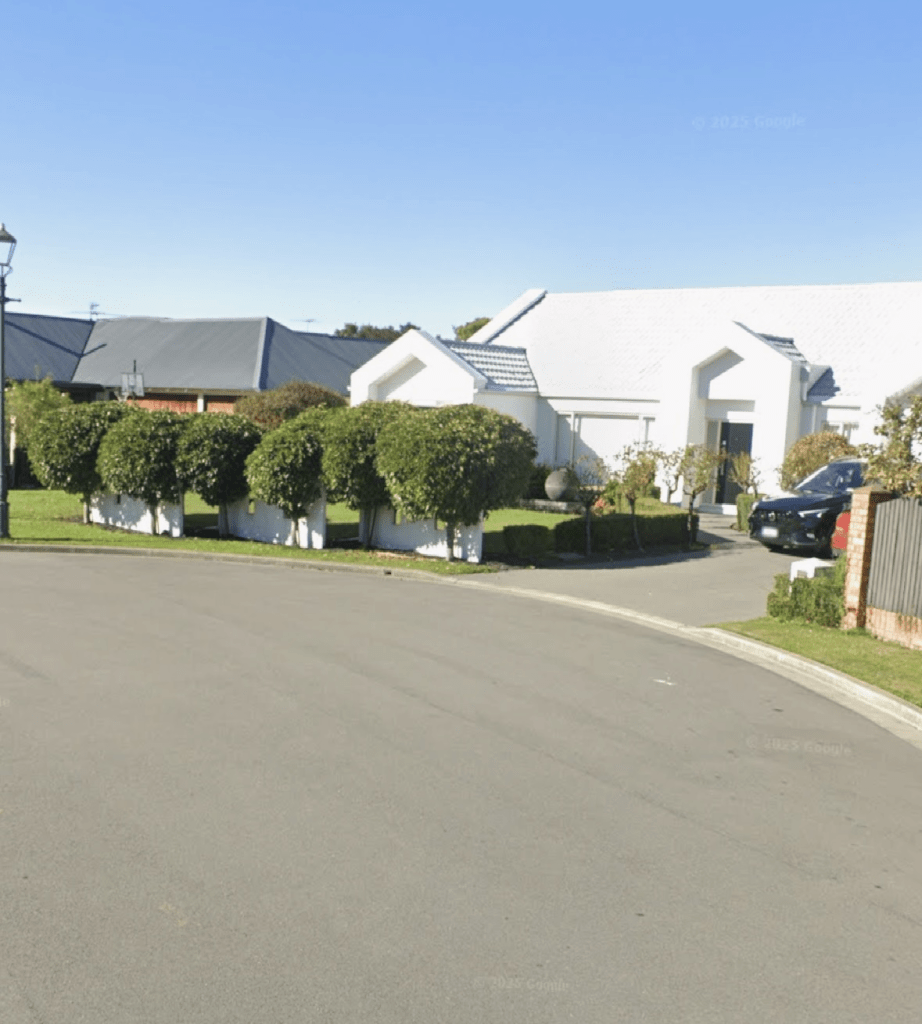
Teal Close in Woolston and nothing on old or new library website. It would have been named after the bird to keep within the theme of the rest of the subdivision.
Most houses here were built in the 1990s and 2000s and they are fairly large. The footpath is on only one side of the street and we know how much I dislike this. Nothing stood out for me on this street but the name plaque for the street is missing.
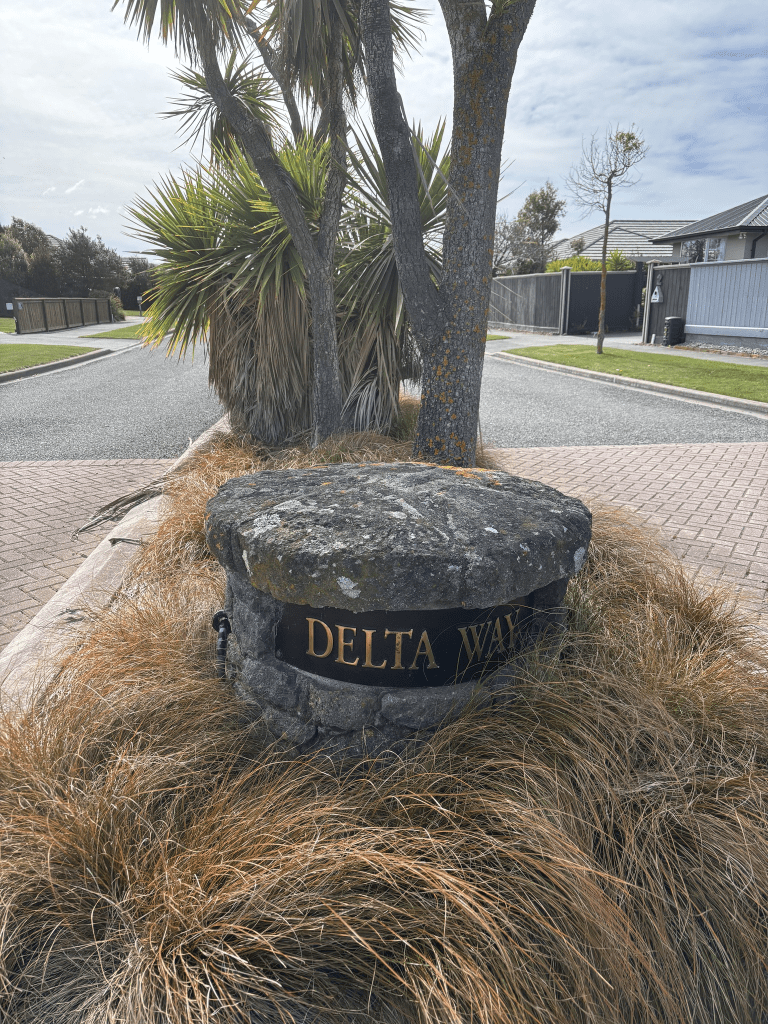
Delta Way and nothing on either old or new library website. I checked the council website and they seem to have changed the way you can search so I couldn’t find any information there. I suspect that it gets it name from a river delta.
The houses here were all built between 1990 and 2018 and none of them stood out for me. A neat and tidy but boring street. At least there was a footpath on both sides of the street.
My only photo is of the sign at one end of the street say Delta Way. It is the only one left in the subdivision as all the rest of them have been stolen. I have spoken with a city councillor and someone in the media about signs and plaques going missing and that they need to investigate scrap metal dealers. The situation hasn’t improved.
Fantail Lane in Woolston – Named to continue a theme already established in the Brookhaven subdivision. In a subdivision by Enterprise Homes developed off Shearwater Drive. Named in 1999.
A small amount of information from the library website and I was surprised that I hadn’t already done this street as I walked Shearwater Drive in 2019. I checked street view and it was definitely sign posted back then.
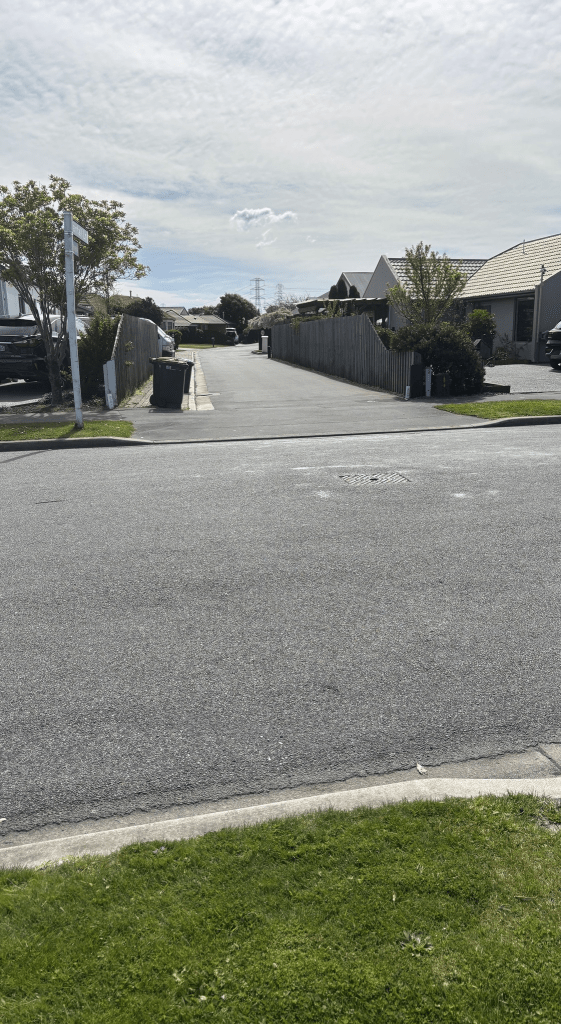
Not much that I can say about this street and houses here were built in the 1990s and 2000s. I only walked a tiny part of the street as it felt like a driveway with the footpath only going for a few metres plus there were rubbish bins blocking the footpath. I was surprised that there are 11 houses here as I thought that there was only about 5 or 6 houses.
Olds Place in Woolston – Named after William Ernest Olds (1894-1968). Formed as a new private street at the site of the then new fire station in Charlesworth Street. The Metropolitan Fire Board asked for the name to recognise the long association of Councillor Olds with fire protection. Olds was a city councillor 1956-1968. Named in 1960.
A small amount of information from the library website. William Olds was born in Oamaru but moved to Christchurch and went to school in Christchurch.
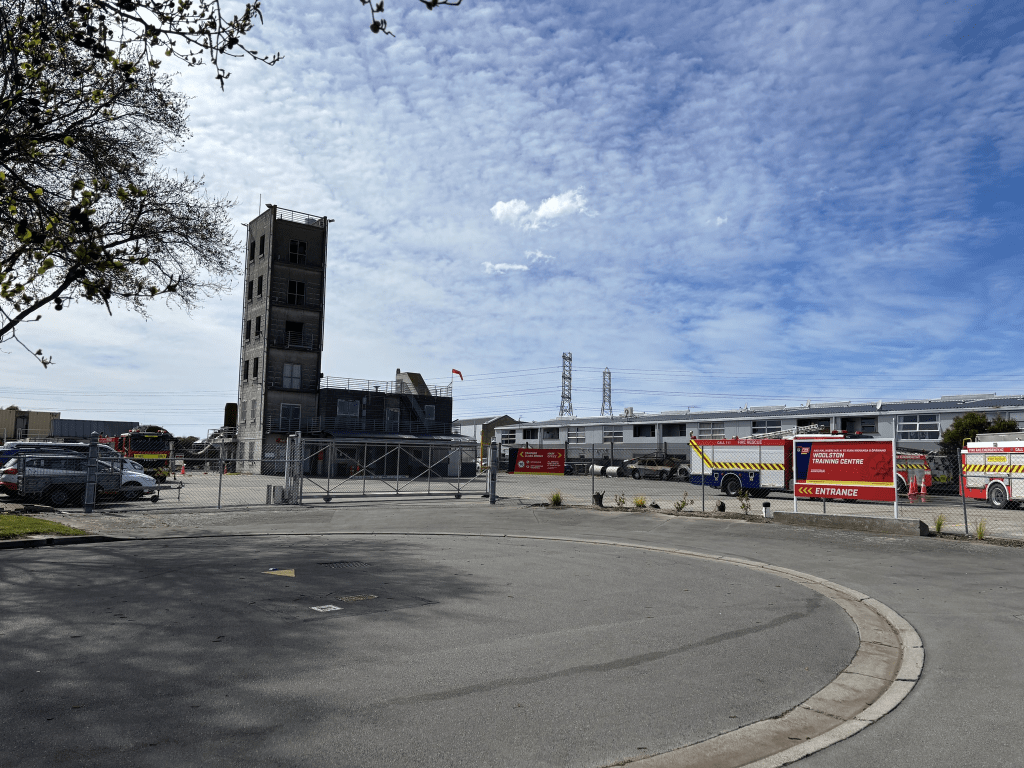
Not much information on Papers Past and there are a couple of entries in 1984 and 1985 about work expected to start on the new fire training building. In 1986 there were ads for the sale of new ownership flats in the street. There are only a few houses in the street and all bar one were built in the 1980s. The valuation website said that No 1 Olds Place was built in 1940 yet there is an ad for No 1 Olds Place as being a new house for sale in 1986. I looked at google maps and I suspect that they have renumbered the houses here and No 1 Olds Place probably used to have a Charlesworth address. The house next to it matches the description that was in the 1986 for sale ad. I now know what the tower is that I see if I have been walking in Charlesworth Reserve.
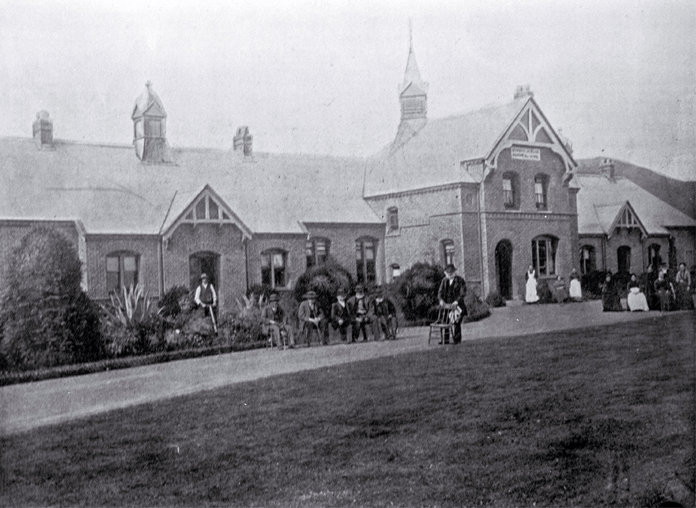
Queen Victoria Jubilee Memorial Home in Jubilee Street foundation stone was laid in February 1888. The words Queen Victoria Jubilee Memorial Home were on the building but the image I found is copyrighted so I can’t share it. It was mostly known as Christchurch Jubilee Memorial Home or as Jubilee Home. In 1970 it changed it’s name to Jubilee Hospital. Lots of entries on Papers Past and many were obviously death notices. Fundraising and activities for the inmates were also frequently mentioned. Yes the elderly in this home were called inmates. Because the Heathcote River ran behind the home there were at least two of the residents who drowned. The home was for the aged poor and there was at least one mention that they should look at a better class of the poor. Several articles were about men being allowed to live here. Some authorities said that yes elderly men are allowed to be admitted to the home. Other authorities said that only married men could be admitted along with their wives. If the wife died they were then moved to a home in Ashburton. One man after his wife died was moved to Ashburton. He ran away from the home in Ashburton and managed to make his way back to Christchurch. He was found by the police wandering around the Woolston area confused and lost. I didn’t found out if he was returned to the Jubilee Home or back to Ashburton.
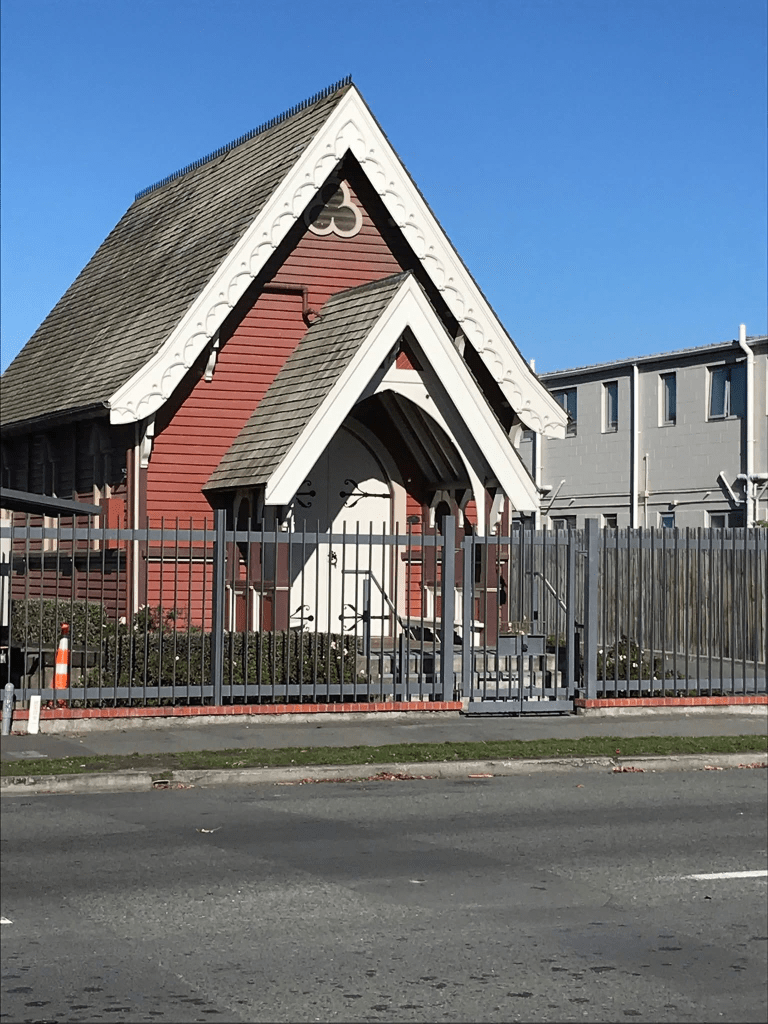
In 1888 a chapel was erected in the Woolston cemetery but once the cemetery was full up the chapel fell into disrepair. In 1949 the Church Property Trustees gave it to the North Canterbury Hospital Board who moved it to the Jubilee Home and renamed it St Luke’s Chapel. It was repaired and used for many years. The Jubilee Home was closed in 1990 against the wishes of the residents. The building was demolished and the site is occupied by a business. The chapel was moved to the city mission on Hereford Street so I looked on street view. I then checked my photos from when I walked Hereford Street and I have a photo of the chapel. The only photo that I could download for the Jubilee Home as it wasn’t copyrighted shows a group of men in front of the building. This surprised me as news articles made it clear that men weren’t encouraged to be residents of the home.
Jubilee Street in Woolston – Named after the Queen’s Jubilee Memorial Home in Woolston. In 1887 the Charitable Aid Board purchased a section of six acres at Woolston, belonging to Mr Hawker, as a site for the Jubilee Memorial Home. The Home was for the “aged poor” and was built to commemorate Queen Victoria’s 50th anniversary on the British throne (1887). It was opened in 1888 and has now been disestablished. Jubilee Street was named in 1889. First appears in street directories in 1890.
A small amount of information from the library website. The earliest entry that I found on Papers Past was in 1889 when the road board said that the road leading from Princess Street to Jubilee Home is now formed and metalled and to be called Jubilee Street. In 1894 a man was fined for letting his horse wander in the street. Between 1911 and 1914 there were drainage issues mostly from one property. There were several streets called Jubilee Street and they were in Addington, Bromley, Sydenham and North New Brighton. There was one in Linwood but that is probably the Bromley one. The one in Addington became Barrie Street.
Over the years it was mostly ads and death notices and obviously the Jubilee Home was frequently mentioned. From the 1960s onwards it was mostly industries that were mentioned especially Bowron Tanneries Ltd. Tom Mcguigan grew up on this street for those old enough to remember. AI was no help when searching for Tom McGuigan as it said that there wasn’t anyone with that name.
St Luke’s Chapel was mentioned in relationship to death notices.
The street now only has businesses here but at the Rutherford Street end there are a couple of abandoned houses.
Bamford Street in Woolston – formerly Bamford’s Road. Named after Henry Augustus Bamford (1842?-1941). Henry Bamford, a lawyer and second president of the Woolston Public Library, was a resident of the street in 1887, the year it first appears in street directories. Bamford’s Road is first mentioned in The Press in 1872 in a report of a meeting of the Heathcote Road Board. Bamford Street is first mentioned in The Press in 1881.
A small amount of information from the library website and the street was probably actually named after Henry Bamford’s father as the land belonged to his father John Dean Bamford. John Dean Bamford is credited with being one of the first solicitors in Christchurch and he specialised in conveyancing and mortgages. He died in 1874 aged 57 and he possibly went bankrupt in 1870. His land was on Ferry Rd and this street was formed through the property. John Dean Bamford came to New Zealand in 1851 with three sons. He had fairly recently become a widower. Henry Bamford was a solicitor in Christchurch for a while but left in about 1885 or 1886 to go to the North Island. He went bankrupt in 1885. In 1905 he was charged with failing to apply money of clients for specific purposes and was no longer able to work as a solicitor. In other words he embezzled money from his clients. His obituary doesn’t mention this. He died in Nelson in 1941 aged 99 years and 8 months. There was a drunkard in Christchurch named Henry Bamford who was always in the court news but don’t know if he was related.
The earliest entry on Papers Past for this street as Bamford’s Rd was in 1872 when Rainey and Pepprell asked for the road to be formed. A few entries in the 1870s about the forming of the road and for some reason Mr Rainey was blocking the street with a fence. In 1885 a large section of land was for sale at the Ferry Rd end of the road. This sale of land probably relates to Henry Bamford’s bankruptcy. From 1900 onwards mostly death notices and ads and the last entry as Bamford Rd was in 1919.
Under the name Bamford Street there was an entry in 1881 for the building of a house on the street. In 1884 concrete channels were mentioned and the road was metalled in 1888. This didn’t stop the complaints about the state of the street. In 1903 footpaths were to be formed and for reason in 1906 the street was to be lowered at the river end of the street. The bridge on the street gets mentioned. From 1915 onwards the tram is frequently mentioned and usually it was complaints about it. There were complaints in 1920 about night soil being dumped in the paddock on the corner of Bamford Street and King Edward Terrace. This paddock was already being used for the waste from the Tannery. This paddock was apparently not far from the Jubilee Home. In 1925 polio is mentioned. In 1926 a boiling down works is to be built for the Canterbury Soap and Glycerine Company. In the 1930s the street finally get a tram shelter plus they get a telephone box. A pumping station is to be installed. The Bamford School is mentioned for the first time in 1950 and it opened 1952. This school was built on the land where the Bamford family had lived.
From the 1950s onwards more and more businesses were on the street and these businesses were mostly at the King Edward Terrace end of the street.
In 1973 it was proposed that Bamford Street become a cul de sac and a foot bridge to be built across the river. This was because of something called the Woolston Cut and this is where they altered the flow of the Heathcote River. Bamford Street on the Ferry Road side of the river became Gould Crescent and Bamford School is now on Gould Crescent.
The residents of this street were an accident prone lot plus there were several accidents on the street especially when it went from Ferry Rd to King Edward Terrace. The residents had car accidents, motorbike accidents, cycling accidents or fell off the tram or tripped over tram lines. One young boy had to be rescued from a disused quarry. Sadly drowning accidents happened with the street being so close to the river.
The houses here date from 1880 to 2025 with a big block of them being built in the 1960s and 1970s. The houses range from being well kept to falling down. The houses are at the footbridge end of the street and it then becomes mostly industry.
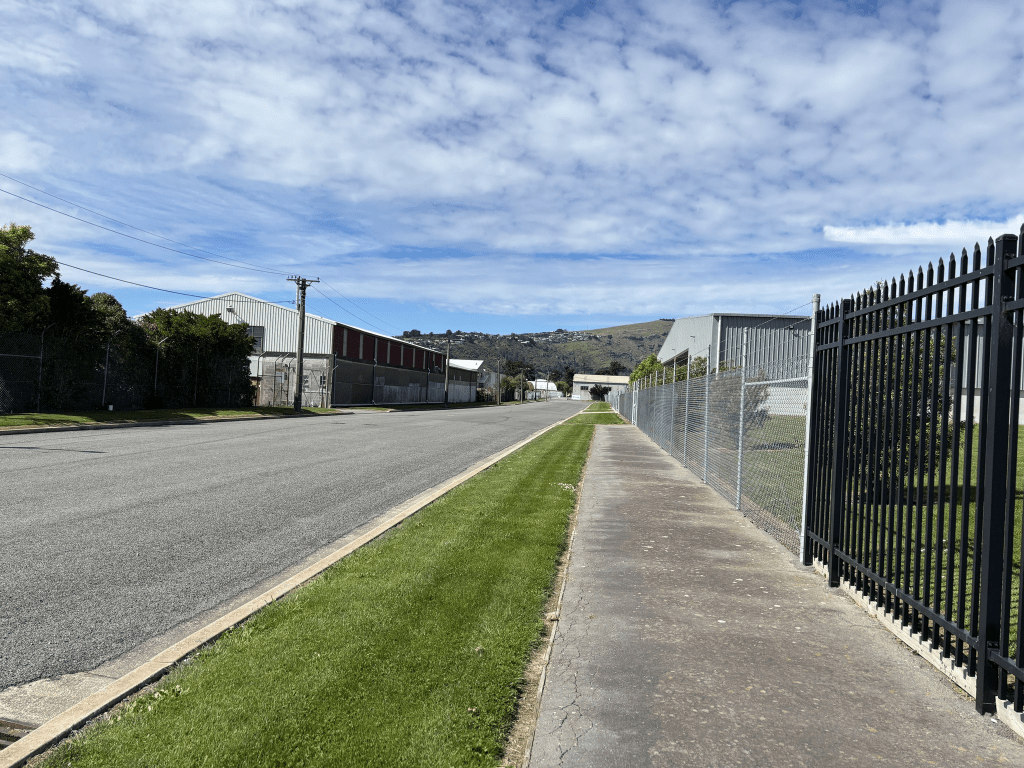
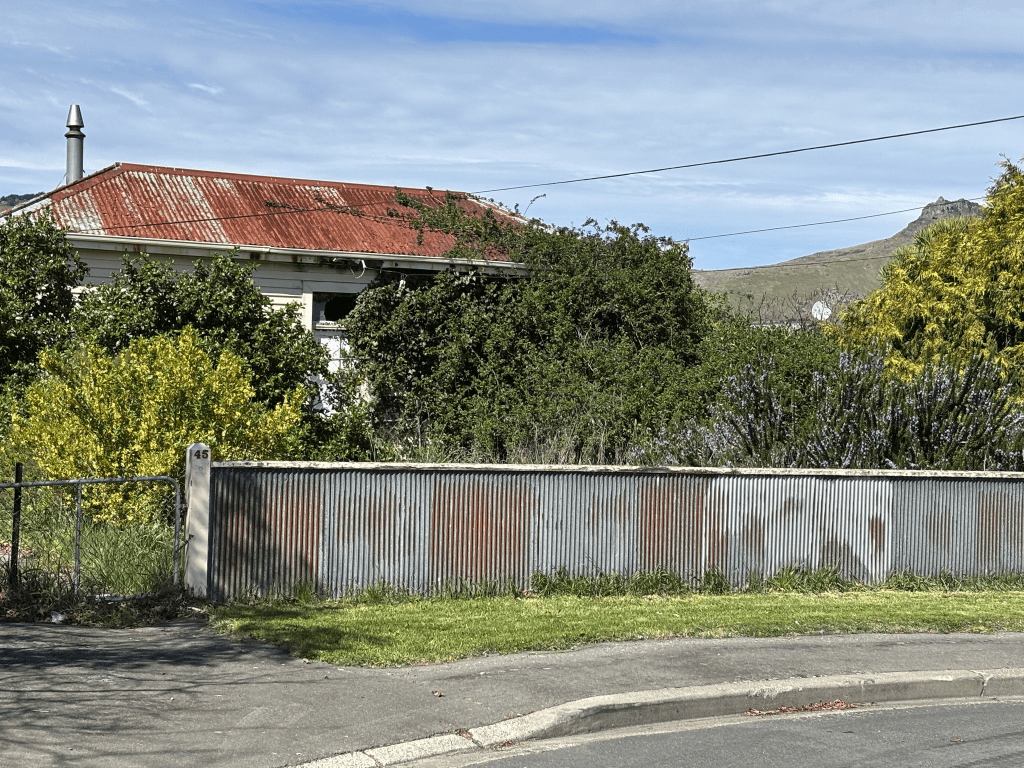
I started my walk at the footbridge end where most of the older houses are. One house is in a very rundown state yet looking at street view just a few years ago it looked OK. At Barton Street intersection the road is narrowed and you can’t drive through this narrow part and the street is divided here. It starts getting more industry and less houses at this stage. I wouldn’t like to live here and I didn’t feel that comfortable walking in this area yet some of the houses looked really nice. Some of the business premises looked a bit rundown and others looked brand new.
I seriously sidetracked today when researching Bamford Street. There was an interesting ad in 1895 which read Wanted if this should meet the eye of Mrs McCallum late of Oxford Terrace, Christchurch can you help me find out the persons that are trying to take my life by poison. If so please come at once to Mrs Weaver of Bamford Street, Woolston. A year earlier in 1894 Mrs Emily Weaver a respectable looking middle aged woman charged her husband with failing to provide for her plus ill treating her and beating her. They had been married for 23 years and had seven children. She frequently consulted fortune tellers McCallum’s and Noble. Her son also George Weaver said that these accusations were imaginary and that his father treated his mother fairly. Sadly George Weaver the son died in 1905 aged 32. In 1907 Albert Weaver died from the rupture of a blood vessel in the brain possibly caused by over exertion when rowing. There was a daughter Flora who died aged two in a fire in her bed. She had been left alone in the house. George Weaver pops up again in the court news and this time it is his wife Charlotte charging him with the lack of maintenance. The judge said that they were an elderly couple who had only been married a year. There were issues concerning adult children from previous marriages. The family trees on Ancestry website were useless as they have confused the father and son as both were called George. To confuse matters even further Emily Weaver died in 1928 and is buried with George. Charlotte was a widow when she married George Weaver but is buried with her first husband. George and Emily were divorced in 1915 but are buried together. George Weaver died in 1924 aged 73.
Roosevelt Avenue in St Albans – formerly Courtenay Street from Westminster Street to Innes Road. Named after Franklin Delano Roosevelt (1882- 1945). Roosevelt was 32nd President of the USA 1933-1945. First appears in street directories in 1947.
A small amount of information on the library website. Not much information on Papers Past as it was mostly ads plus death notices. I only looked for information when it was Roosevelt Avenue. A church is mentioned several times as being on the corner of Roosevelt Avenue and Malvern Street. The church was St David’s Church but then I was getting funeral notices for a Greek Orthodox Church at the same corner. A bit more searching and St David’s Church was established in 1928 and the last entry I found was dated 1957. The earliest entry for the Greek Orthodox Church that I found was in 1961. I couldn’t any entries explaining the change from an Anglican church to Greek Orthodox. For a while the Russian Orthodox Church used the building until they built their own church. Technically the address for the church is on Malvern Street but most of the facade is on Roosevelt Avenue.
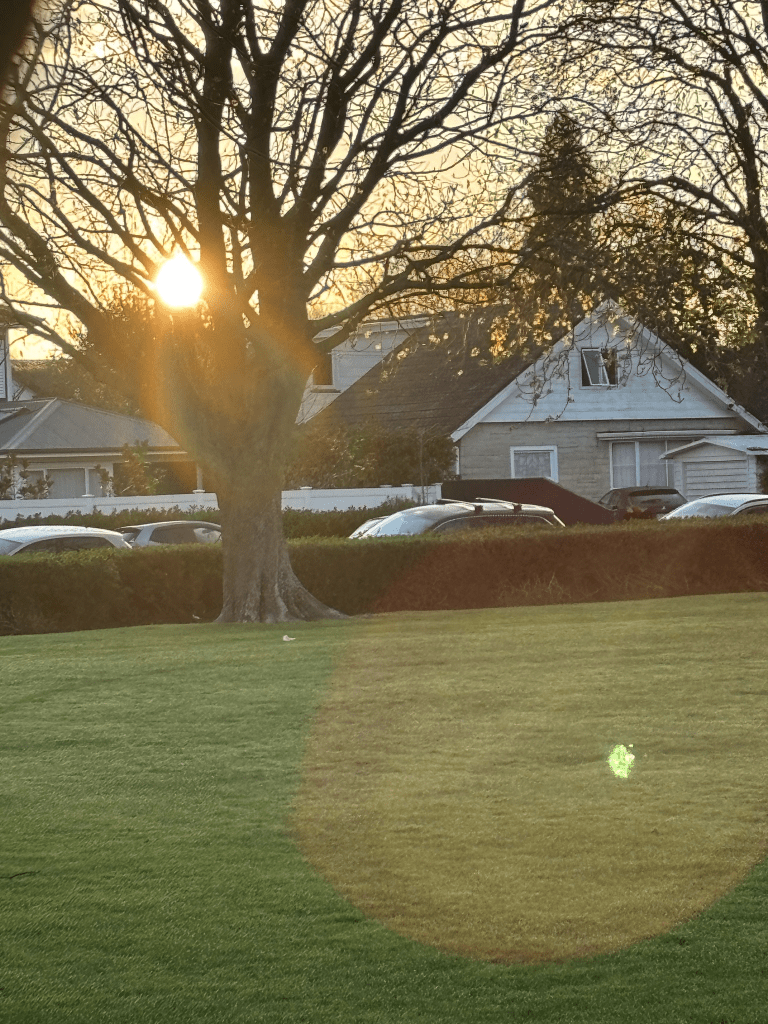
I walked this street early on Monday morning after I had been lurking behind trees in Malvern Park trying to get photos of the solar eclipse.
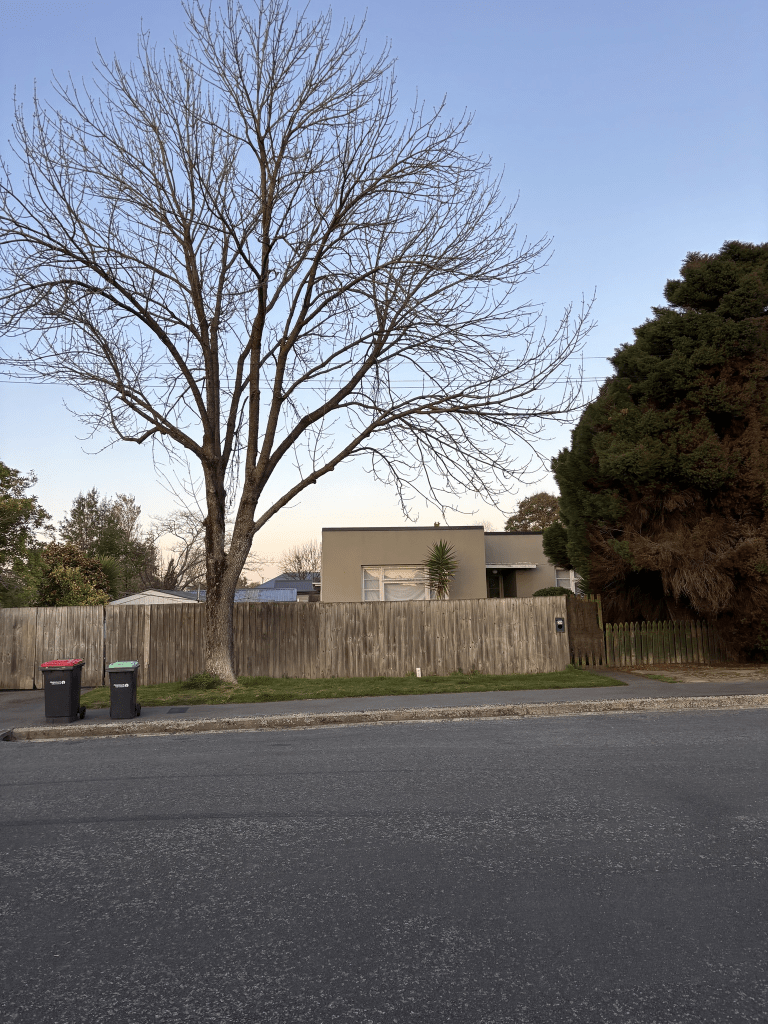
There are some modern ugly houses on the street but most houses were built between 1910 and 1930. It is a lovely tree lined street with Malvern Park at one end.
Jameson Avenue in St Albans – formerly Part of McFaddens Road. Also Jameson Street. Named after George Jameson (1850-1934). Jameson lived at 116 McFaddens Road in a large house named Ellerton. For a time he was secretary and general manager of the New Zealand Cooperative Association in Christchurch. His father, James Purvis Jameson (1824-1896), was the mayor of Christchurch in 1871. Jameson Street first appears in street directories in 1947. Becomes Jameson Avenue in 1950
A reasonable amount of information from the library website. George Jameson’s will had several donations to charities. He was born in Manchester and came to New Zealand with his family on the ship Sebastopol. He went to Christ’s College and was a stock agent in Ashburton for many years before coming back to Christchurch.
When looking at Papers Past I just looked at Jameson Street / Jameson Ave information. In 1947 the section of McFaddens Road running at right angles to the rest of McFaddens Road was renamed Jameson Street and in 1948 it was renamed Jameson Ave. Not much information on Papers Past. Several ads and the usual birth and death notices. The best street competition mentioned a few times plus discussion about bus routes.
I walked this street very early on Monday morning and at the end of the street by McFaddens Road there is a creek and it is possibly Dudley Creek as this creek has so many twists and turns in it.
There is also a Art Deco house this end as well. It is a pleasant tree lined street and most houses were built in the 1940s with a few built in the 1950s.
 Lytteltonwitch's Walking the streets of Christchurch Project