Joseph Harrap Hopkins plus the suburb of Woolston

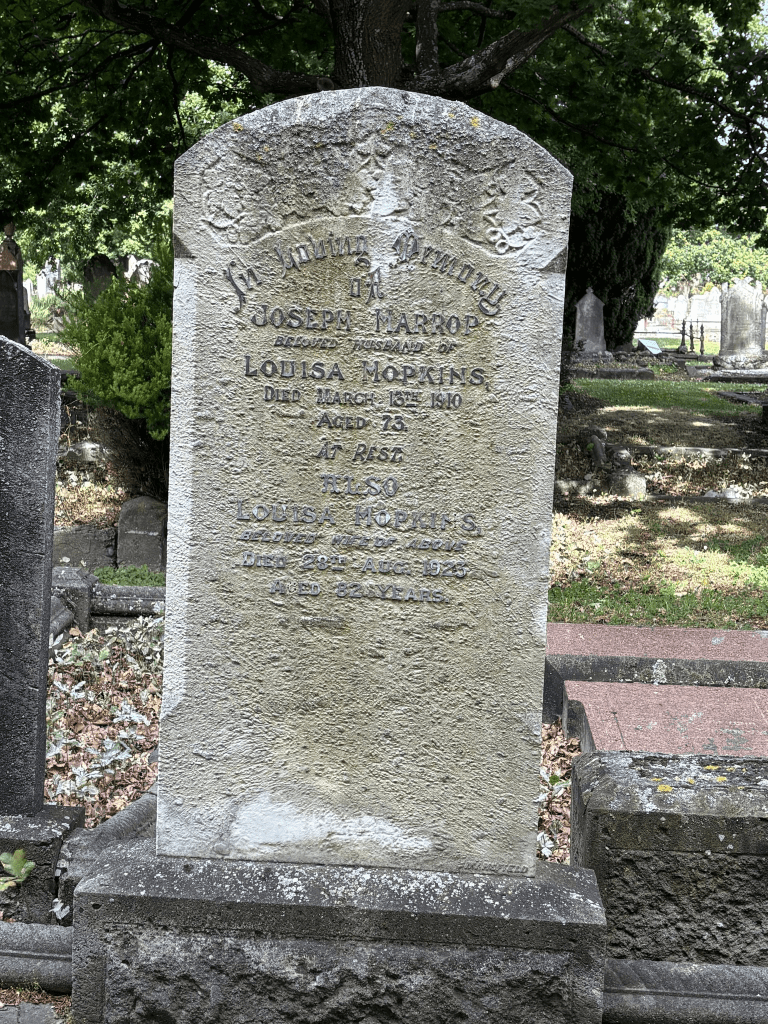
Joseph Harrap Hopkins was baptised on 2nd July 1837 at Kimcote and Walton in Leicestershire. His parents were Thomas and Eliza Hopkins and Eliza’s maiden name was Harrap. They were married on 27th June 1836 at St Margarets Leicester. She was born in July 1813 at Frolesworth to Joseph and Ann Harrap. Joseph Harrap Hopkins left Plymouth on the ship Roman Emperor on 22nd December 1862 and arrived in Lyttelton on 30th March 1863. He was a single man and when you search for passenger lists for Roman Emperor AI gives you some really strange information. Joseph was possibly working for a shopkeeper in East London in 1861 which will explain why he opened a shop in Ferry Road. It was a freehold property so he must have had some money. He married Louisa Parsons here in Christchurch in 1863. Joseph was a busy man as he also opened the first hotel in New Brighton called Hopkins Hotel. He operated a paddle steamer on the Avon River to take visitors to the seaside and this was before the trams started operating. He objected to the tolls on the Ferry Bridge and these were eventually scrapped. He was a member of the Woolston Borough Council and the Woolston School Committee. Was a member of the Woolston Cricket Club. He ran the Post Office from his shop on Ferry Road and he objected to the name Ferry Road Post Office and wrote to the Postmaster General and had it changed to Woolston Post Office. Nothing on Papers Past said why the district was given the name Woolston and the first mention of this name was in 1870. Joseph died in 1910 and is buried in the Addington Cemetery. He was living at Hagley Road in Lower Riccarton when he died and I have no idea where that street was but when his wife died in 1923 she was living on Peterborough Street. Some of his family came to New Zealand as a sister is mentioned in his death notice.

The Wikipedia entry for Woolston is interesting as it claims that it was named after Woolston in Southampton where Joseph Harry Hopkins was born. Joseph was not born in Southampton and there are two places in England called Woolston and neither are anywhere near where Joseph was born or where he lived. There was possibly a place called Woolston near where he grew up but it no longer exists. It wasn’t easy finding out about Joseph Harrap Hopkins and it took me all afternoon. I did have a quick walk to Addington Cemetery to find his grave.

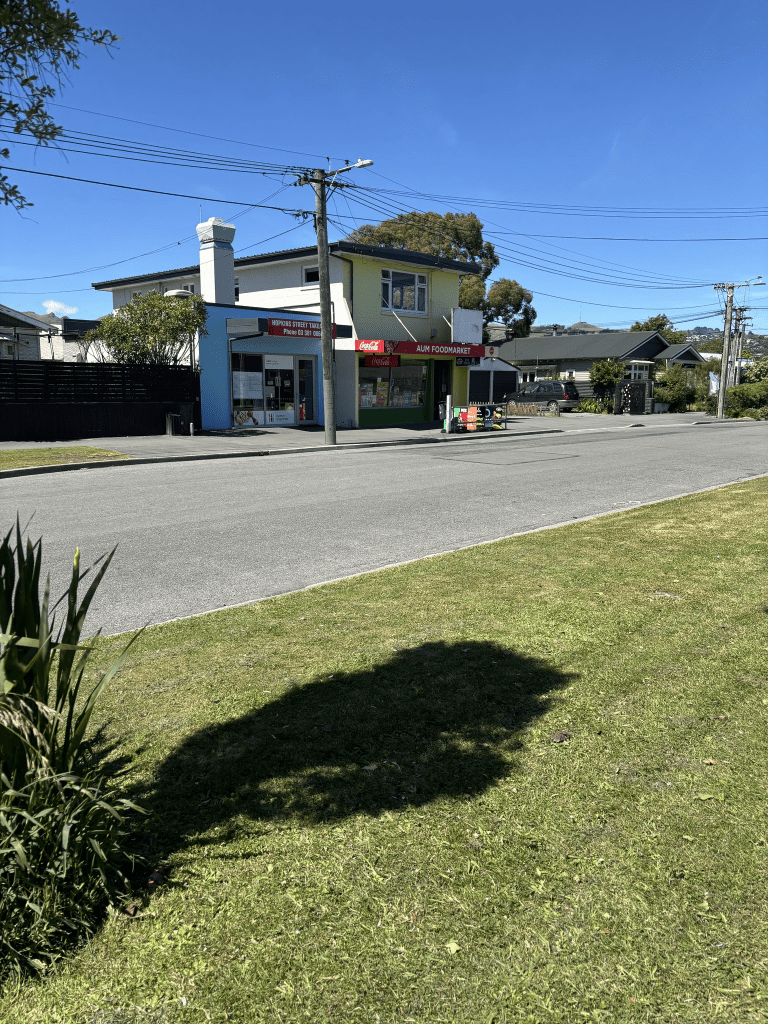
Hopkins Street in the suburb of Woolston, Christchurch

Hopkins Street in Woolston – Formerly Halfway Lane and Coronation Street. Named to commemorate the coronation of Edward VII (1841-1910) in 1902. Re-named Hopkins Street. Named after Joseph Harrap or Harrop Hopkins (1837-1910). Halfway Place first appears in street directories in 1894 as a blind street running off Ashbourne Street (later part of Ferry Road). Coronation Street first appears in The Press in 1903 when the road surveyor advised the Woolston Borough Council that at present there were no funds available for the “assistance or construction” of Coronation Street. Re-named Hopkins Street in 1922. Hopkins arrived in Canterbury on the Roman Emperor in 1863. He kept a store on Ferry Road called Hopkins Emporium and also built the first hotel in New Brighton. [Some records spell his middle name as Harrop; others as Harrap.]

A reasonable amount of information from the library website. Not sure why they named the street after Joseph Hopkins as it sounds like his shop was miles away from where this street is. Should have been named after a William Correll as he seemed to have owned most of the land in this area and sold it off to be subdivided. The information about Joseph Hopkins on the Ancestry website doesn’t match up the wikipedia page about the naming of the suburb. Joseph Hopkins was a very common name.

Nothing on Papers Past about Halfway Lane. The first entry for Coronation Street was in 1903 where the council said that work had commenced on forming the new street. In 1908 William Correll was selling 4 acres of land adjoining Woolston School and that the land was suitable for subdividing. In 1913 William Correll had shops and a dwelling available for rent. These shops would have been near McKenzie Ave corner and there are still shops there. William Correll was selling more land in 1919 and I suspect that this land was purchased by the government. In 1919 worker dwellings were to be built on the street and each dwelling would be on a quarter acre section and all the cottages would be made from concrete and designed by the Labour Dept architect Mr Temple. In 1923 there were complaints about the drainage issues with these cottages. A fairly dramatic headline about houses in Woolston Swamp. The health dept visited the houses and said that the Public Works dept were responsible for the drainage problem. The Public Works dept said that they were still waiting for a reply from Wellington. More sections for sale in 1937 and 1943 from the Public Trust Office. There was a poultry farm for sale in 1955. Mr A Smith’s garage is mentioned in 1959 and I think that this was on the corner by Ferry Road. In 1990 shops including the fish and chip shop along with a flat was for sale. In 1994 the Woolston Rugby Football League Club had a liquor license approved.

Lots of ads plus death notices over the years but not a lot of information considering the age of the street. Woolston Primary School is on the corner of Ferry Road and Hopkins Street but it was hardly mentioned. Woolston school has been around since 1870 but possibly had a Ferry Road address. I went to Woolston Primary School in 1967 as my sister was teaching at the school. It made after school care easier as my younger brother and I were too young to be left alone after school. The school looks very different these days to how it looked when I went there.

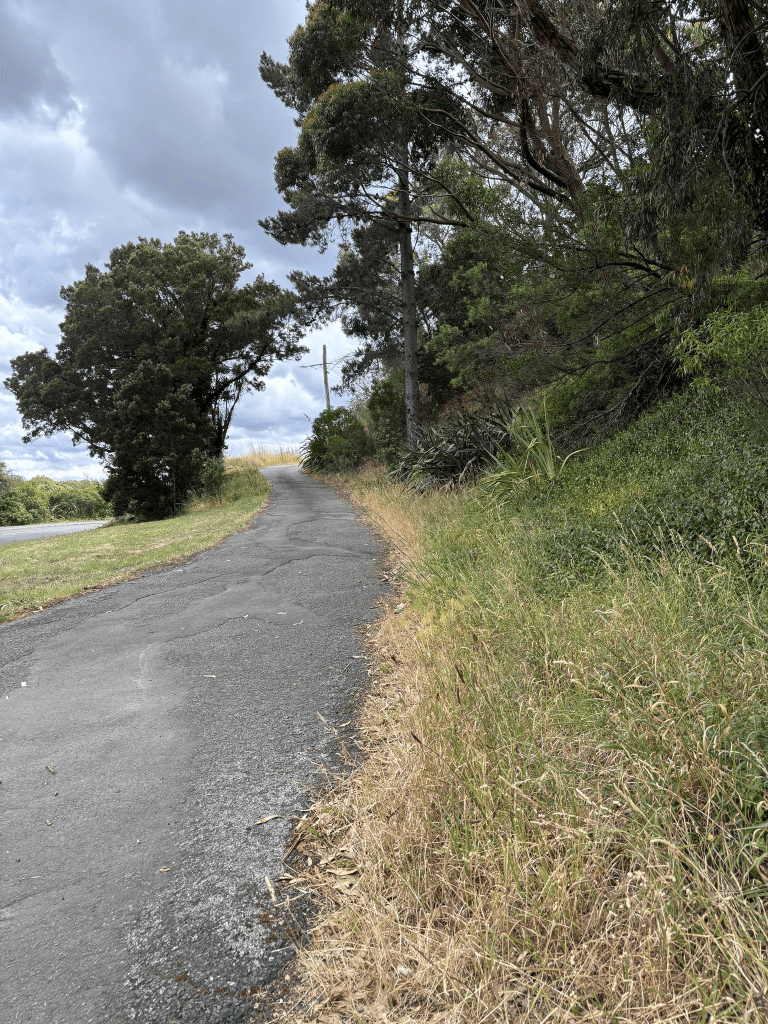
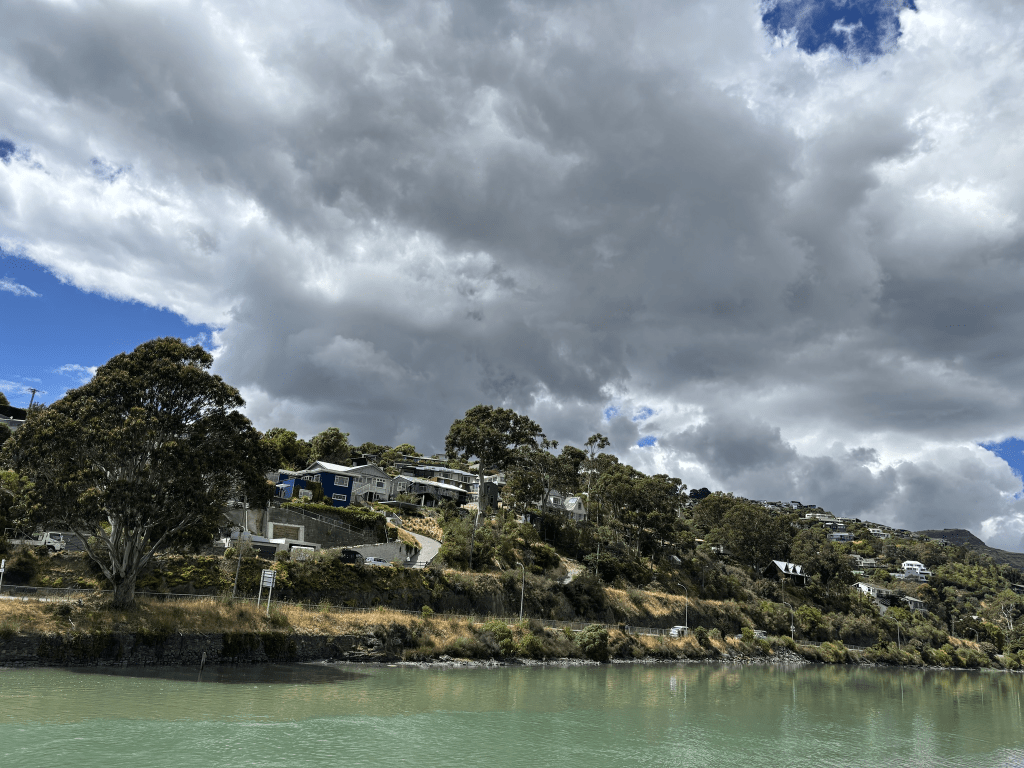
I walked this street last month and over half the houses are older houses and date from 1910. There are a few from 1990s onwards. The Woolston Rugby Club rooms are still there and look like they are still in use. The shops near McKenzie Ave corner are still there but the fish and chip shop was demolished after the earthquakes. It has since been rebuilt. I looked at street view from 2012 and the fish and chip shop just looked like a lean to against the shop but now it is a separate building. Still very tiny. When I think about it the street probably hasn’t changed much from when I used to walk down it from the school to a friend’s house on McKenzie Ave.

John Harper

John Harper was born in Norfolk in 1826 and he died on 8th December 1916. His wife Elizabeth died on 7th January 1916 and they are buried in the Woolston Cemetery. There were several brief obituaries but I extended my search to January 1917 and found one with more information. John Harper came to New Zealand on the Randolph with his wife and three sons. Note the passenger list for the ship only has John and his wife Elizabeth with son Elijah. Their son Randolph was born onboard the ship. There is no guarantee that the passenger list that I found online is correct. The obituary said that they lived in a cave in the Heathcote Valley when they first arrived and then in a sod hut near the Heathcote River. He farmed in what is now known as the Woolston district. Said to have been the first to use a horse driven threshing plant in New Zealand. Later he was the driver of the Ferry Road Coach. Lived on Ferry Road at a spot called Harper’s Siding. This is where Harper’s Road later Dampier Street was formed. He left 6 sons, 4 daughters, 60 grandchildren, 72 great grandchildren and 2 great great grandchildren. One of the obituaries was worded in such a way that it sounded like he had 160 children. None of the obituaries mentioned that he was a survivor of the shipwreck Taiaroa in 1886. His wife wrote a letter to the editor to correct the article which said that he was a brickmaker. She said that he was the owner of the Ferry Road Coaches

Dampier Street in the suburb of Woolston, Christchurch

Dampier Street in Woolston- Formerly Harper Street. Named after Henry John Chitty Harper (1804-1893). Re-named Dampier Street. Named after Christopher Edward Dampier (1801-1871). Harper Street first appears in street directories in 1887. Bishop Harper was the first Anglican Bishop of Christchurch 1856-1889. Dampier Street is first mentioned in The Press in 1909 in a report of a meeting of the Woolston Borough Council. Dampier was a lawyer and solicitor to the Canterbury Association. He arrived on the Phoebe Dunbar with the Association’s documents. He had bought Rural Section 33, 50 acres on the “North Bank Avon, near (Barbadoes) Cemetery”.

A small amount of information from the library website and I personally think that most of it is totally wrong.

Plenty of information online about Christopher Edward Dampier and he didn’t live in Christchurch for very long and within 10 years of arriving in New Zealand he moved to North Canterbury. The information that I disagree with is that the street was named after Bishop Harper. The Harper Street that was named after him was in Sydenham and it is now Orbell Street.

I spent ages on Papers Past trying to find a Harper Street in Woolston with no luck at all. The only Harper Street in Christchurch that I could find was the one in Sydenham. By sheer luck I found Harper’s Road in Woolston. There were ads in 1881 for new houses for let and there were new houses in 1882 and 1884. The ads in 1891 mention that the street was near St Peters Church on Ferry Rd. The most interesting information was in 1883 where a couple Mario and Fanny Simatti were charged with arson and attempting to defraud the insurance company. Because the street was known as Harper’s Rd and later as Harper’s Street this always means that it is named after a person. There was a death notice and obituary in 1933 for Elijah Harper who lived on Dampier Street. He came to New Zealand on the Randolph with his parents Mr and Mrs John Harper and he was two years old. He was born in Norfolk but lived most of his life in the Woolston area and went to Woolston School. His father purchased a large section of land in Heathcote and Woolston. His parents lived on Ferry Road and this street runs off Ferry Road.

It would have been renamed because of the confusion between the Harper Street in Sydenham and the one in Woolston.

Not much information on Papers Past about Harper’s Road or Harper’s Street apart from the ads and the arson. Nothing about the name change. The earliest entry that I could find under the Dampier Street name was in 1909 when there was repairs to the asphalt. Lots of ads over the years plus death notices. Recruitment notices during World War One.

In 1919 there was a court notice where John Grant successful applied for a prohibition notice for his wife. Sounds like the scene in the court could have been interesting as his wife claimed that her husband should also have a prohibition order. He appeared in court with a black eye which he possibly received when drinking in a pub. Sadly Bridget Grant drowned in the Heathcote River in 1920 and the inquest said that she probably fell into the river when drunk.

From 1915 onwards there were several mention of the Woolston Brass Band rooms. At one stage the Dampier Street Sunday School were using the band rooms to hold their meetings. In 1932 they had to vacate the band rooms and find their own premises. In 1954 there was discussion about building a new band room as the building had been occupied for 50 years and was in bad repair. In 1961 the new hall was opened. This building didn’t survive the earthquakes and was demolished. It is still an empty section.

Seemed to be an accident prone lot on this street plus there were several small fires over the years.

Most of the houses on this street were built between 1905 and 1930 and many still look like they are in good condition.

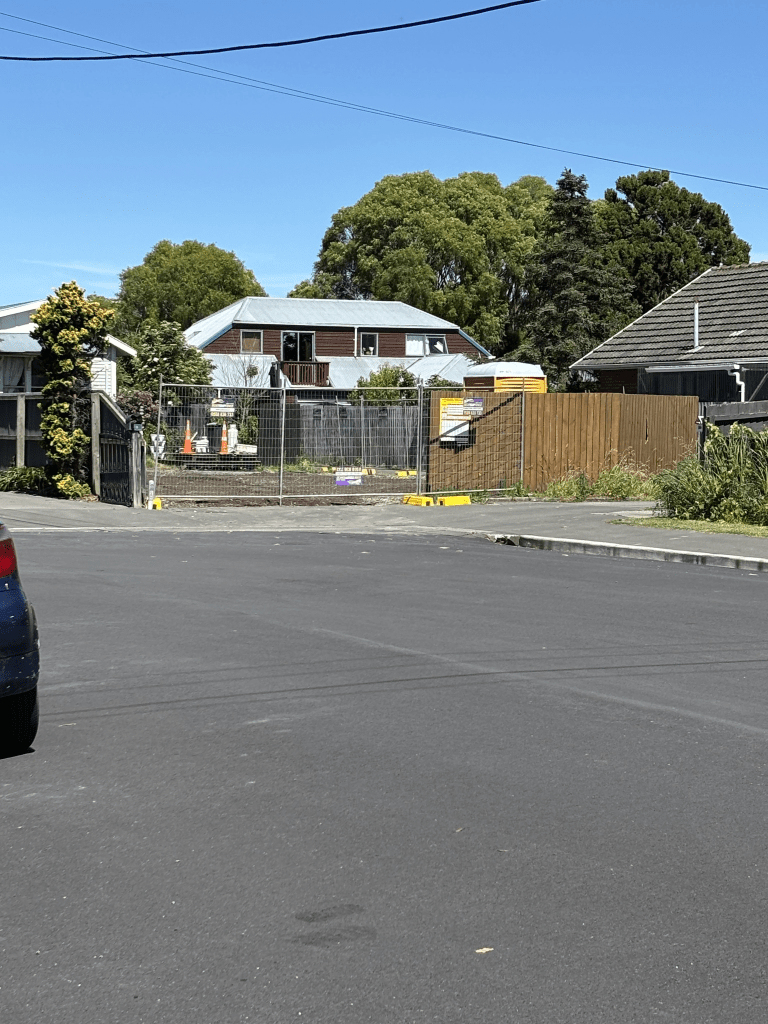
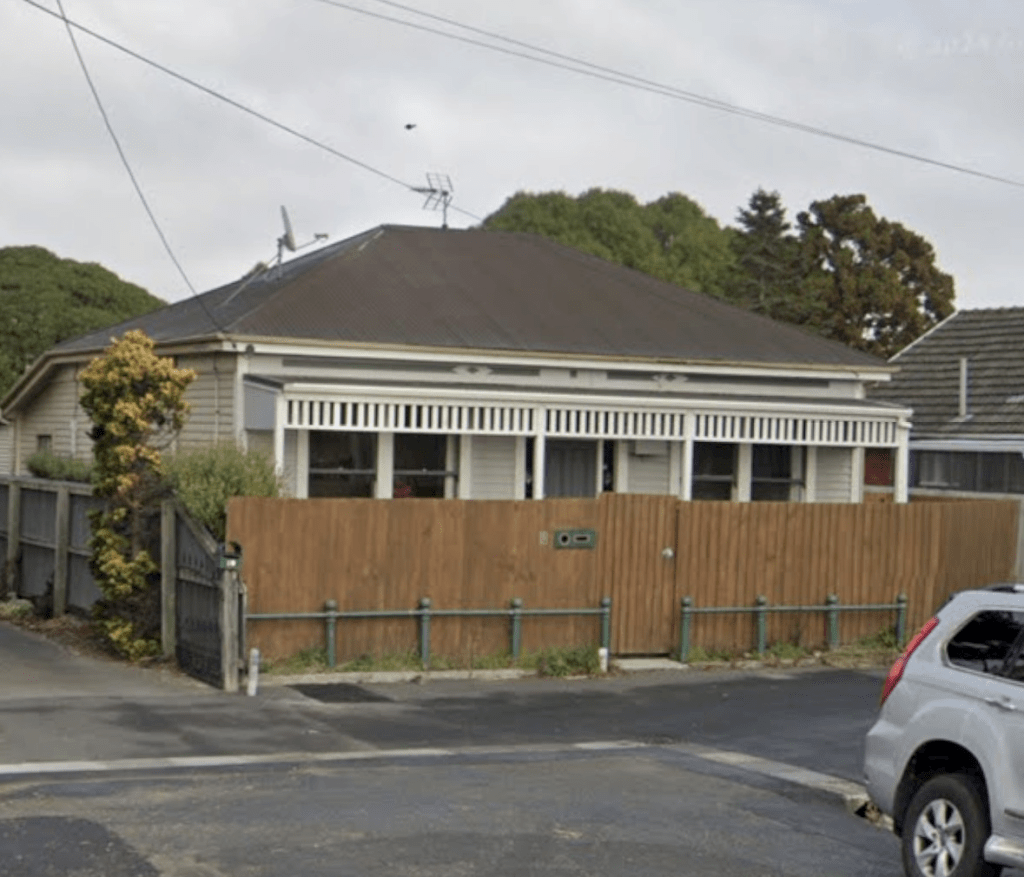
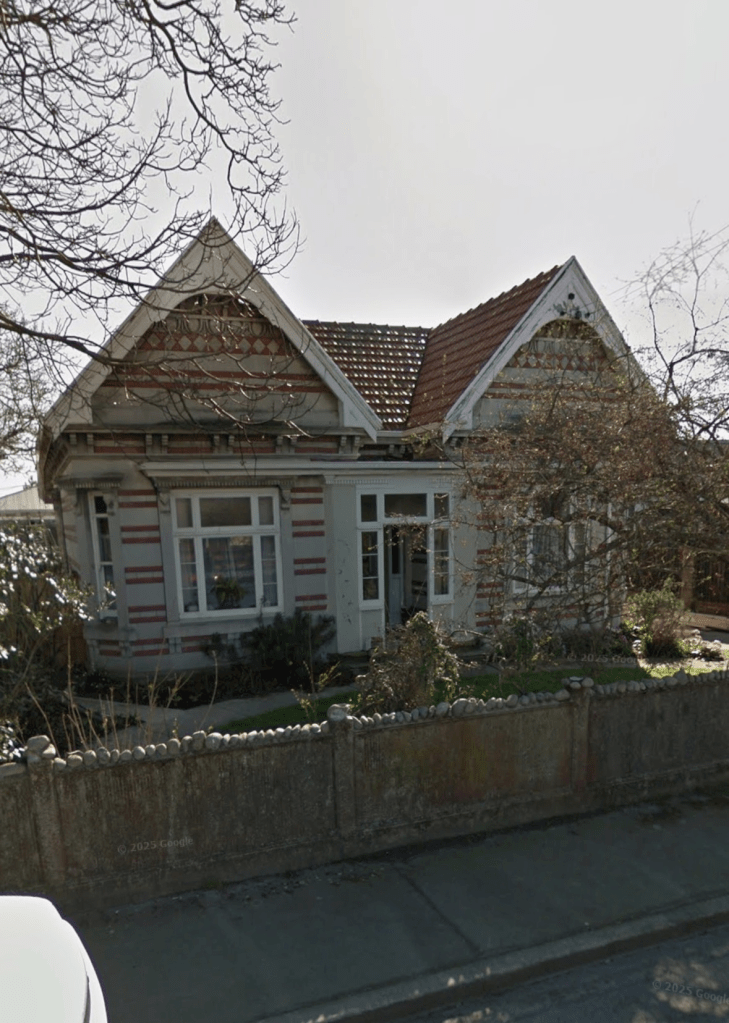
I actually walked this street way back in November and I am so behind in researching streets. The reason that I decided to walk this street was because there was an article about a house that was being demolished. Apparently it was the childhood home of Ray Columbus. This house was built in 1905 and I think that it is sad that it was demolished as I looked on street view and it looked cute. I took a screenshot from street view of this house and of the Woolston Brass Band Rooms. I quite liked this street and it is a strangely shaped street as it looks a bit like the letter Z but the middle part of the Z is almost straight. Edited to say that the street was developed at a site known as Harper’s Siding and for a few years the street was known by this name.

Silvester Street in the suburb of Woolston, Christchurch

Silvester Street in Woolston – First mentioned in The Press in 1909 when building sites are advertised for sale there.

A tiny amount of information from the library website. I searched Papers Past and Ancestry website for anyone with the surname Silvester and there were several families but most lived out Springston way but the others lived in Sydenham. I couldn’t find a place name Silvester. I would have expected if it was named after a person that the street would have an s on the end of it. The earliest entry on Papers Past was in 1907 when a shed belonging to H Stewart was destroyed by fire. In 1909 there were several sections for sale and they were abutting to the New Recreation Grounds.

From 1911 onwards most entries were ads for grazing land being available. In 1916 an electric wire was to be run from Woolston Railway Station to the street to connect residents to electricity. More sections available in 1924. In 1929 a footpath was formed from Ferry Rd to Silvester St through the park. From 1930s onwards it was mostly death notices. In 1940s and 1950s there were a few mentions in connection with the best street competition. There was a factory called Robinson Tile Surrounds Ltd mentioned a few times in 1955. In 1974 a couple of dogs were poisoned in the street and the bowling club was mentioned in 1977.

The houses date from 1905 to ones currently being built. Several were built in 1920s. It was hard to the one built in 1905 and most of the other older houses were in good condition except for one rundown looking. The units built in 2024 were interesting but the property that I did like was because of the fun letterbox. The bowling club is next to the walkway to the park. I found a geocache near here. The new units being built had the builders working on them and don’t builders take time off these days. There are new units being built on my street and they have been working seven days as well. An interesting street. It is bugging me as I feel that I should know this street from when I went to Woolston Primary School in 1967. I feel that I had a school friend who lived on this street.

Hobson Street in the suburb of Woolston, Christchurch

Hobson Street in Woolston – Named after Captain William Hobson (1792- 1842). Hobson was a naval officer and the first Lieutenant Governor of New Zealand. First appears in street directories in 1941. New Zealand had celebrated its centenary in 1940.

A small amount of information from the library website and there are at least three websites that have information about William Hobson including Wikipedia. He was born in Waterford in Ireland and died in New Zealand aged 49. He died after having a second stroke. So many streets in New Zealand named after this man.

I didn’t much information on Papers Past but I did have to narrow my search to Hobson Street, Woolston. A few engagement notices and several death notices and I found a death notice for an indirect ancestor. Without checking my family tree notes I think that this woman was Nana Cave’s aunt. I also narrowed my search to between the years of 1935 and 1945 expecting to find information about it being state houses but nothing. In 1956 the street was voted the best State House block in the best street competition.

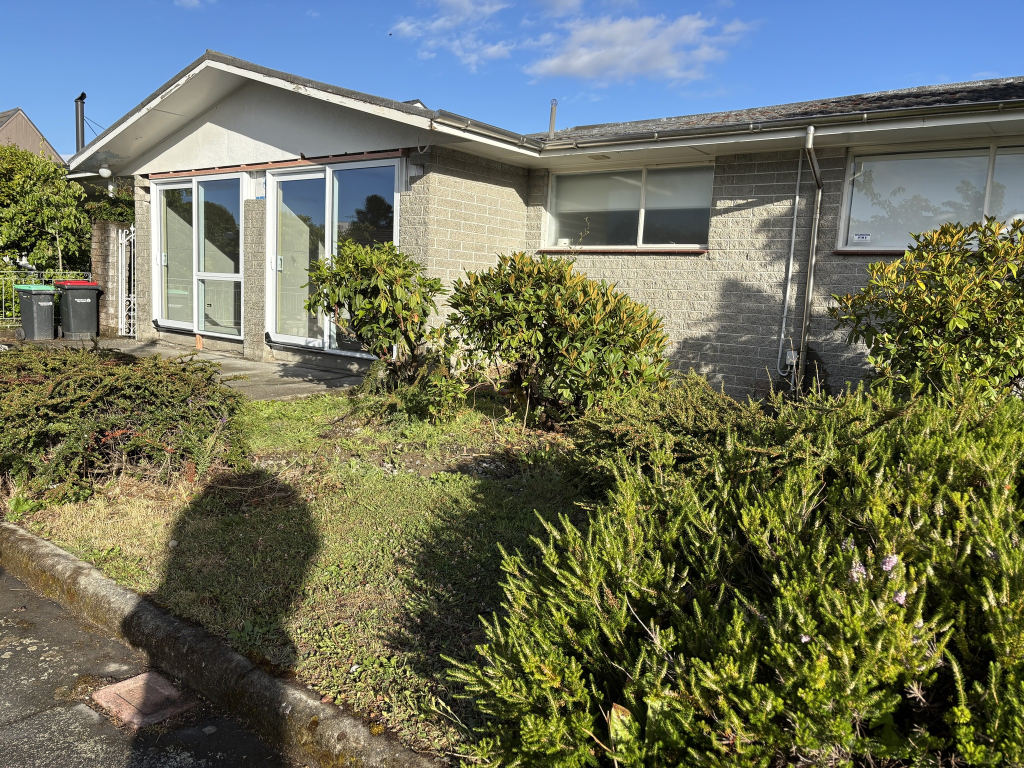
When I walked this street this morning my gut feeling told me that it was a State House street as the style of the houses were typical of 1940s state houses. At the end of the street there are modern looking units but they also had a State House / Kainga Ora look about them.

I check the valuation website that I use and some of the 1940s state houses are now privately owned. A few houses that were built a bit later. I had a look on street view and where the new units had been built there were neat and tidy state houses. They were still there in 2022 but street view for 2024 shows the new units being built and there is a sign next to them saying Kainga Ora project. Interesting as when state housing was first proposed it was stated that the tenants needed plenty of outdoor space for children to be able to safely play. The new units that they are now building has everyone crammed in like sardines.

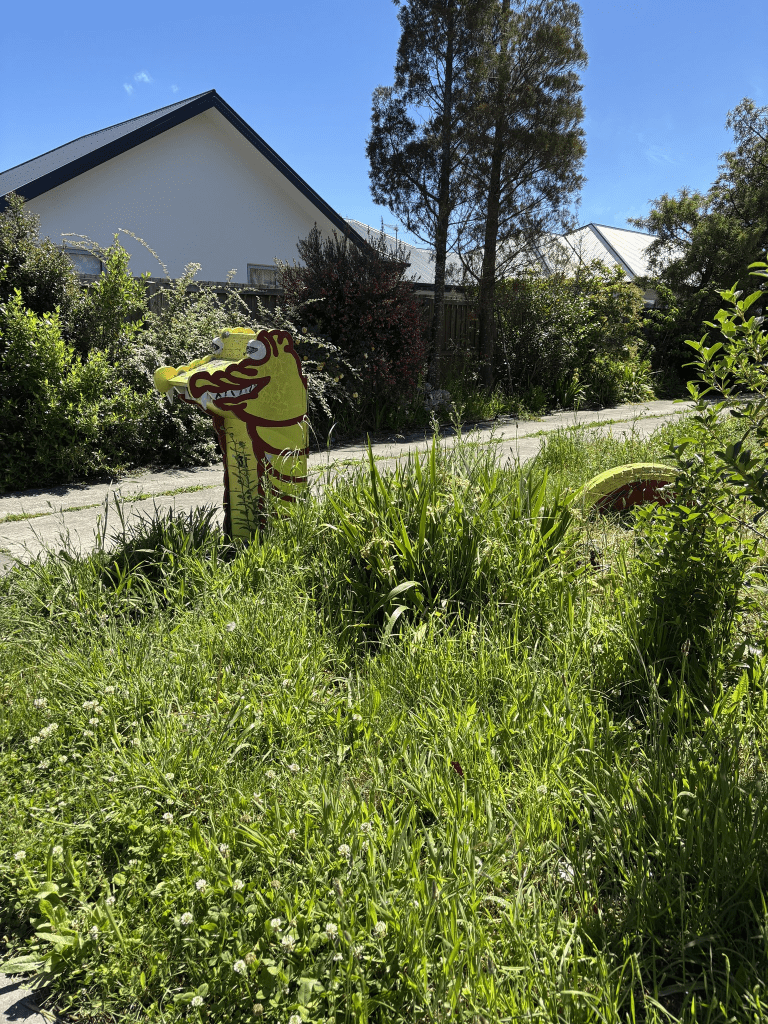
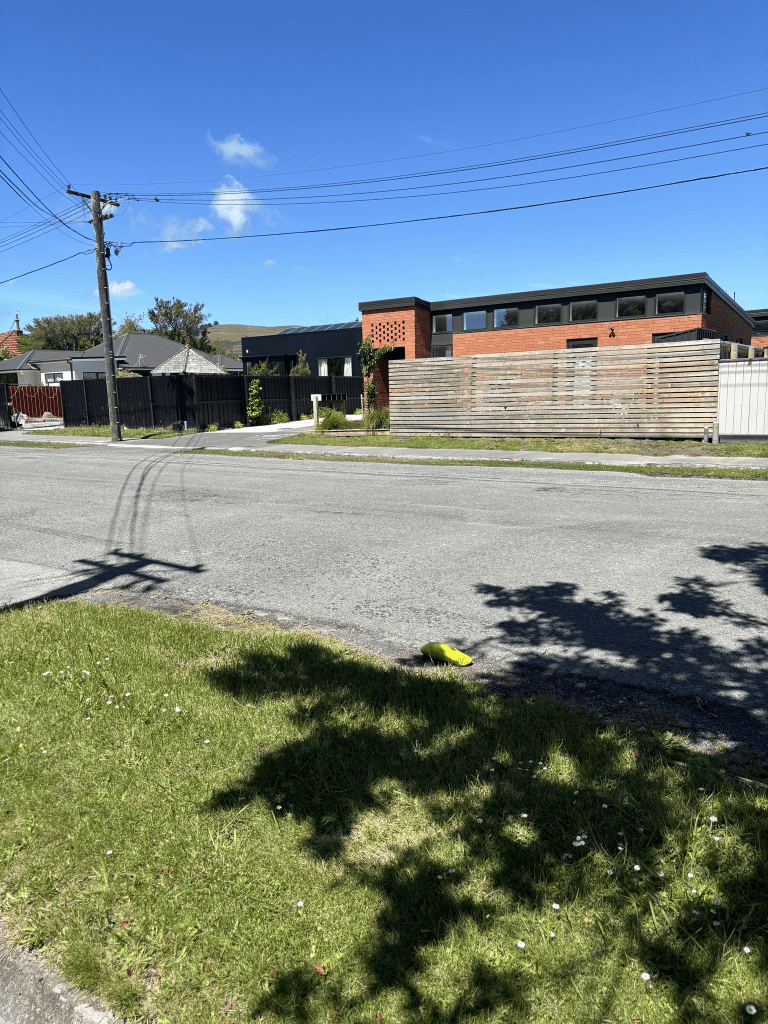
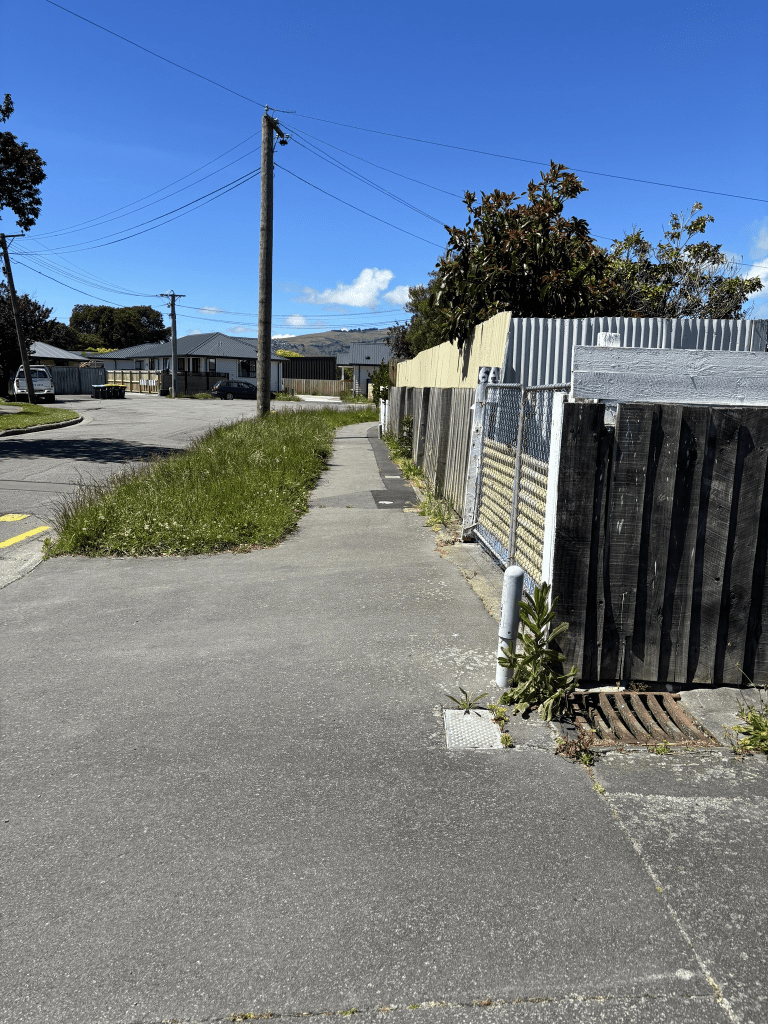
The street actually looked fairly pleasant but no one seems to be mowing the grass verges. I shouldn’t criticise as my lawns and gardens look dreadful at the moment. I will blame the pulled chest muscle as it meant that I couldn’t do much for about three weeks and this weekend my neighbours have borrowed my green bin. Good excuse to not do any gardening.

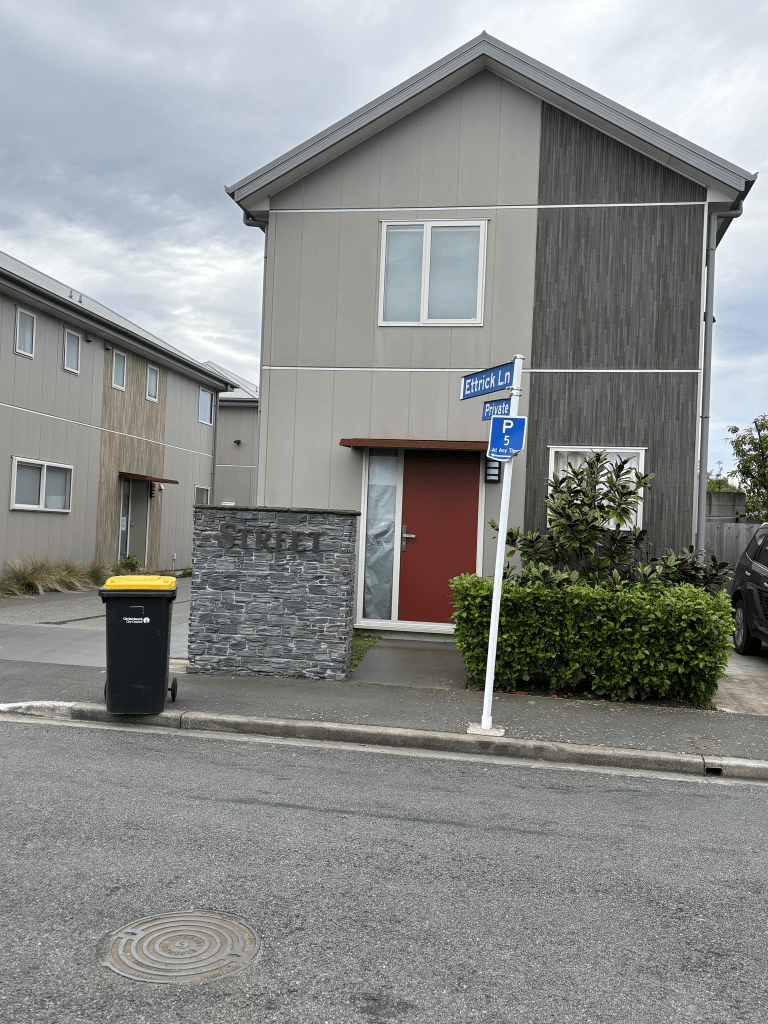
Ettrick Lane in the suburb of Richmond, Christchurch

Ettrick Lane in Richmond and nothing on the library website. The only reason that I knew is was a separate street was the sign post. I couldn’t find out how the lane got it’s name. There was a family with that surname who lived on Bealey Ave and London Street which are reasonably close to where this lane was developed or it was a name connected to the developer. The units here were built in 2019 and they are ugly plus don’t seem to have car parking available. I looked at street view from before the earthquakes and the house here was gorgeous. By googling 19 Forth Street I managed to find lots of information about the house. Personally I think that the lane should have been called Muschamp Lane. The original house at 19 Forth Street was built in 1914 by LDCM Muschamp and he used Oamaru stone and brick. The house was being considered for heritage status when the earthquakes happened. The house was sold as no insurance or ECQ being transferred to new owners. The insurance company put it into the too hard basket when it came to repairing it. Sadly I thought that the house had been demolished but it had actually been deconstructed. The new owners only wanted the land and weren’t interested in the house but an architect who missed out on buying the house to restore it made an offer to the new owners. He offered to demolish the house for free and he deconstructed it and one day he wants to rebuild the house. He took the house apart in such a way that it can be rebuilt. Google Muschamp House and you can found the whole story there along with photos.

Warwick Street in the suburb of Richmond, Christchurch

Warwick Street in Richmond – formerly George Street. Named after Warwick, a town in Warwickshire, England. George Street first appears in street directories in 1887. Re-named Warwick Street on 7 March 1904. Among a number of streets re-named in 1904 and given the names of place-names in the United Kingdom

A small amount of information from the library website. I looked to see if I had been to Warwick as I know that I have visited Warwick Castle. I vaguely recall that I did it as a day trip from Stratford upon Avon.

Not as much information on Papers Past as I was expecting. The usual death notices and ads. Under George Street the earliest entries were a couple of ads in 1885. Drainage issues were mentioned in 1897. The street changed names in 1904 and the entries under the George Street name were in 1906. Under Warwick Street it was mostly death notices and ads. There was one ad that was written as if it was an article that was repeated over and for at least 20 years. It was Mrs C Smith of 9 Warwick Street claiming that some pills cured her daughter of kidney problems but sometimes it was liver problems.

In 1950 there were complaints about the state of the road and footpaths. Because of the market at Avebury Park and the other market nearby this street was full of cars today. I would hate to live here. I also couldn’t get a decent photo of the houses dating from 1905 because of all the cars so I cheated and took screenshots from street view. A few of the houses here were built in 1990 and 2000 but a huge number were built after the earthquakes. When I looked at street view from before the earthquakes I realised that I knew the street. I texted my son to doublecheck and yes Robert and his wife were renting here before the earthquakes. The units where they were living didn’t fare well in the earthquakes and I was so pleased that they were living in my house when the earthquakes happened. I was living in the UK at the time. These units were at the end of Warwick Street where there is the stream. I still can’t find a name for this stream. There is an entrance to the Stanmore Road supermarket on this street.

Gowerton Place in the suburb of Richmond, Christchurch

Gowerton Place in Richmond – formerly Part of Vogel Street. Named after Gowerton in Wales. Gowerton was the birthplace of George Manning (1887- 1976), the mayor of Christchurch 1958-1968. Every year at Gowerton School a major prizegiving award is given in Sir George’s memory as he attended the school. Named in 1959.

A small amount of information from the library website and yes I know that I said that I wasn’t going to walk any more streets until I have researched all the ones that I have already walked. I visited Avebury House today and had to park miles away.

I only checked Papers Past for Gowerton Place and the new pensioner cottages were opened in April 1960. There were 30 new units for single women. There was a letter to the editor a few months later from someone complaining that the council didn’t make a profit from such cottages. The rest of the information on Papers Past were death notices and all the death notices were for women. There was an article in 1989 about the Richmond area and it commented about the stream’s grassy gully can be seen winding along beside the flats on Gowerton Place. I found the 1963 maps for drains and streams but this stream wasn’t on it.

I did walk the street and the grassy area has a wee path to walk on. You can’t see where the stream goes but it would be beside the path. All the units here were built after the earthquakes and the old units were demolished. It is now social housing rather than pensioner cottages and they are crammed in like sardines whereas the old cottages had plenty of grassy spaces. I felt safe walking here which doesn’t usually happen in such streets. I looked at street view from before the earthquakes and it was a very different looking street. I took a screenshot of the street from before the earthquakes. I did doublecheck google maps for Gowerton in Wales and I haven’t been there.

Broad Street in the suburb of Woolston, Christchurch

Broad Street – Broad Street, Woolston first appears in The Lyttelton Times in 1906 when R Davidson is advertising for the owner of a stray bay gelding to collect it from his property.

A small amount of information from the library website. On Papers Past I had to limit my search to Broad Street Woolston as there were thousands of entries. There were so many streets with the same name and for some reason our media in the early days posted a huge number of articles about a Broad Street in London. I don’t know how this street got it’s name. It could have been a wide street. There is a Long Street nearby. It could have been someone’s surname but when a street is named after a person it frequently has an ‘S’ on the end of it.

Because I restricted my search I didn’t get as much information as I would have liked. There were a few people living on the street until the 1960s but it was mostly industries here especially ones that needed water from the Heathcote River. The Armigers Dye Works opened a new works here in 1909. The Heathbank Poultry Farm AKA Heathbank Egg Farm was mentioned frequently over several years. In 1939 there was the Canterbury Co-op Poultry Producers mentioned and they possibly purchased a poultry farm in 1933 from the widow of a poultry farmer. William Hadler had died in 1932 and I found his obituary.

A Wine and Spirit Merchant was mentioned along with a scrap metal business plus K B Turner Ltd.

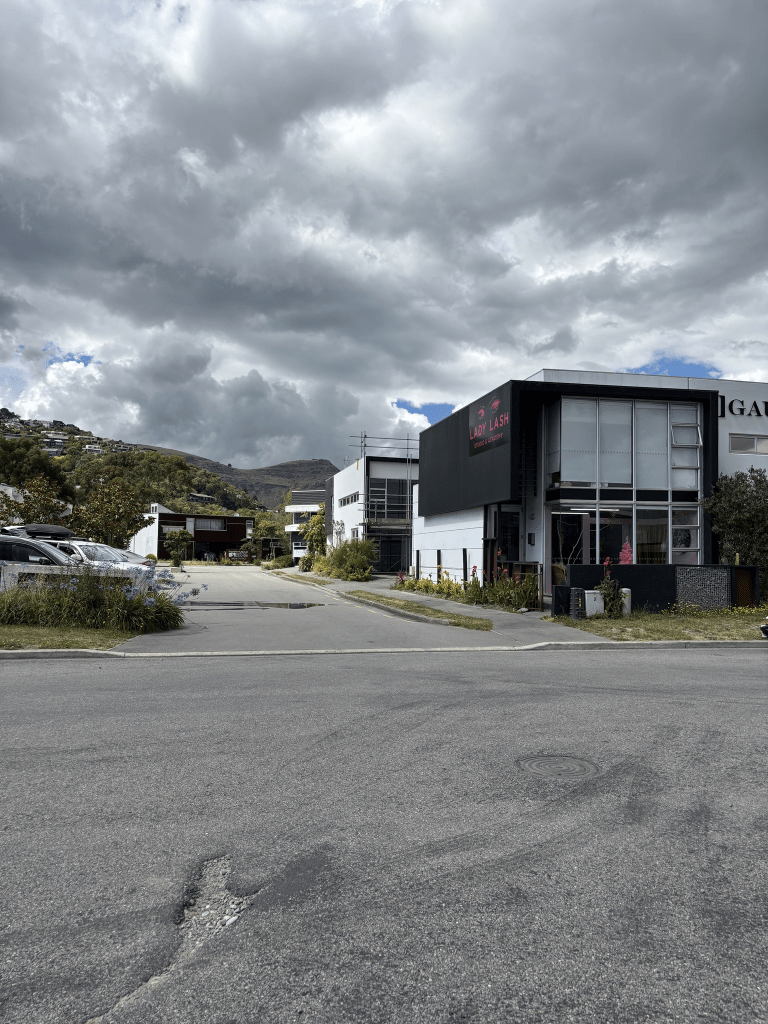
I actually walked this street last month but only now getting time to research it and write it up. The street is purely industrial these days and I walked it on a Sunday as I find that Sunday is best for walking industrial areas and much safer. Independent Fisheries take up all of one side of the street. I would post a photo but the site is no longer letting me do this. Telling me that my photos are too large yet I was able to load photos on Wednesday. Looks like I might have to start paying for this rather than using the free option. Edited as I obviously have now paid a subscription