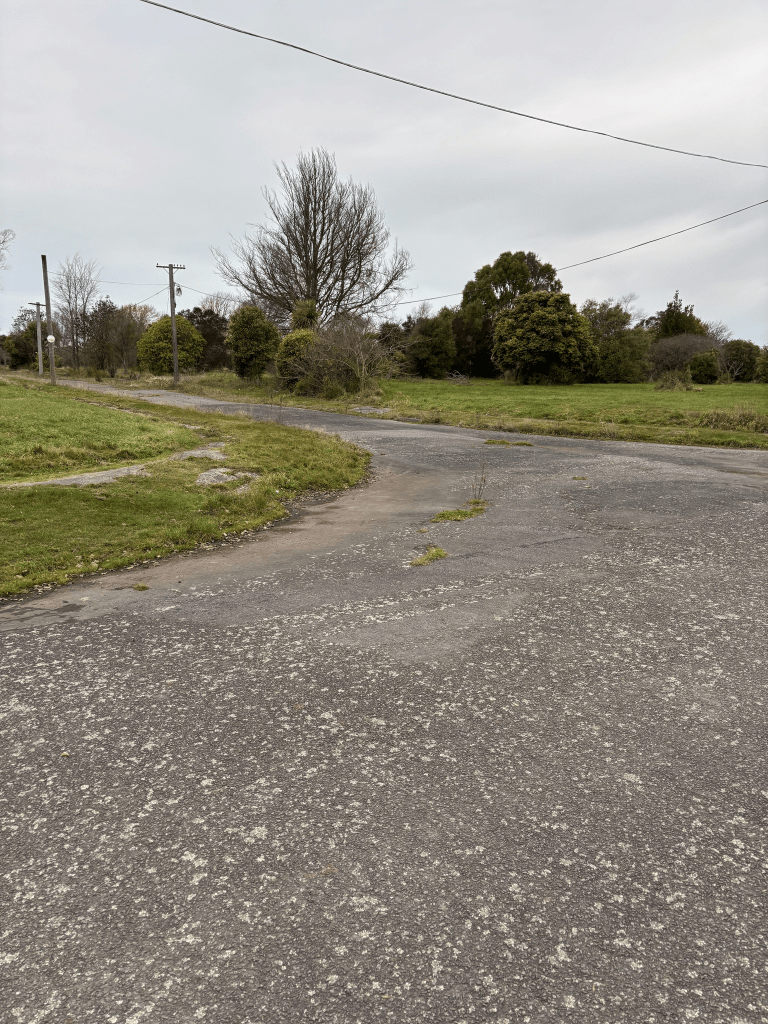
Kim Place in Dallington Red Zone – Named after Kim Novak (1933-).Kim Novak was one of America’s most popular movie stars in the late 1950s. One of two streets named by Harry Morgan, a draughtsman with the Ministry of Works. First appears in street directories in 1957. Information supplied in 2005 by Bob Pritchard, subdivisions officer, Christchurch City Council.
A small amount of information from the library website and nothing that I can add about the name of the street.
Not much information on Papers Past as it was just a few ads and a few death Notices.
I couldn’t find out what the street looked like before the earthquakes as google maps no longer show these images. This must be a fairly recent change as I was able to do this in 2023.
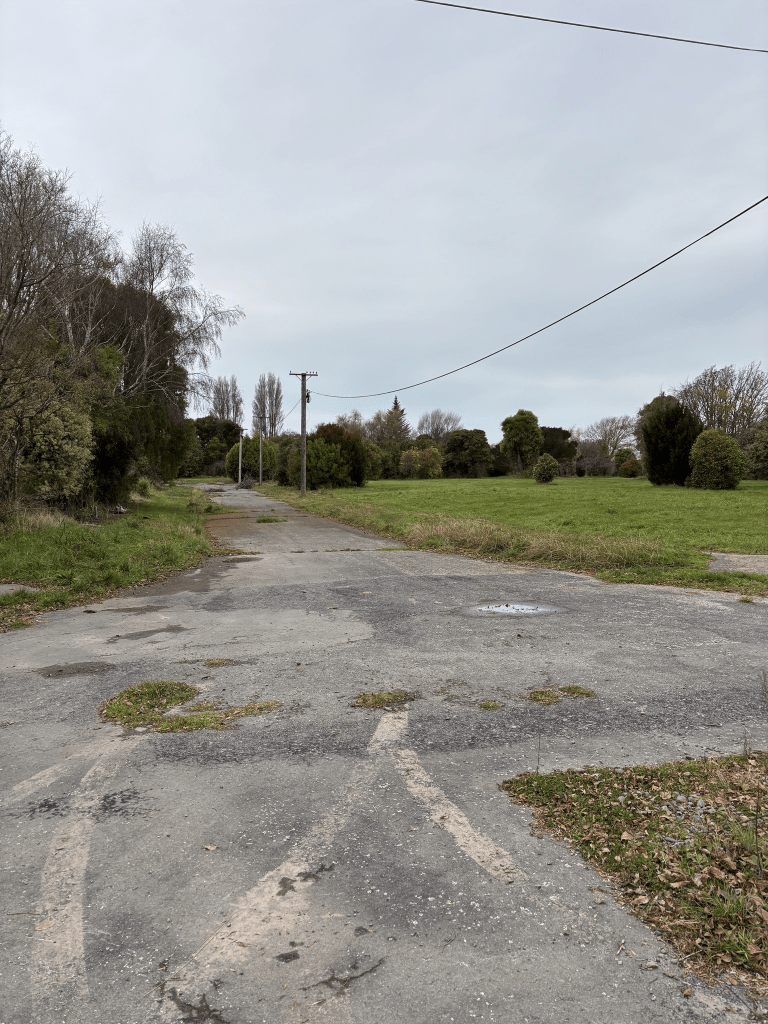
Ava Place in Dallington Red Zone – Named after Ava Lavinia Gardner (1922-2001). Ava Gardner was an Academy Award nominated American screen actress. One of two streets named by Harry Morgan, a draughtsman with the Ministry of Works. First appears in street directories in 1957. Information supplied in 2006 by Bob Pritchard, subdivisions officer, Christchurch City Council.
A small amount of information from the library website and nothing that I can add about the name of the street.
Not much information on Papers Past with just a few death notices and a couple of engagement notices. There were sections for sale in 1956.
Another street where google maps no longer show what the street looked like before the earthquakes
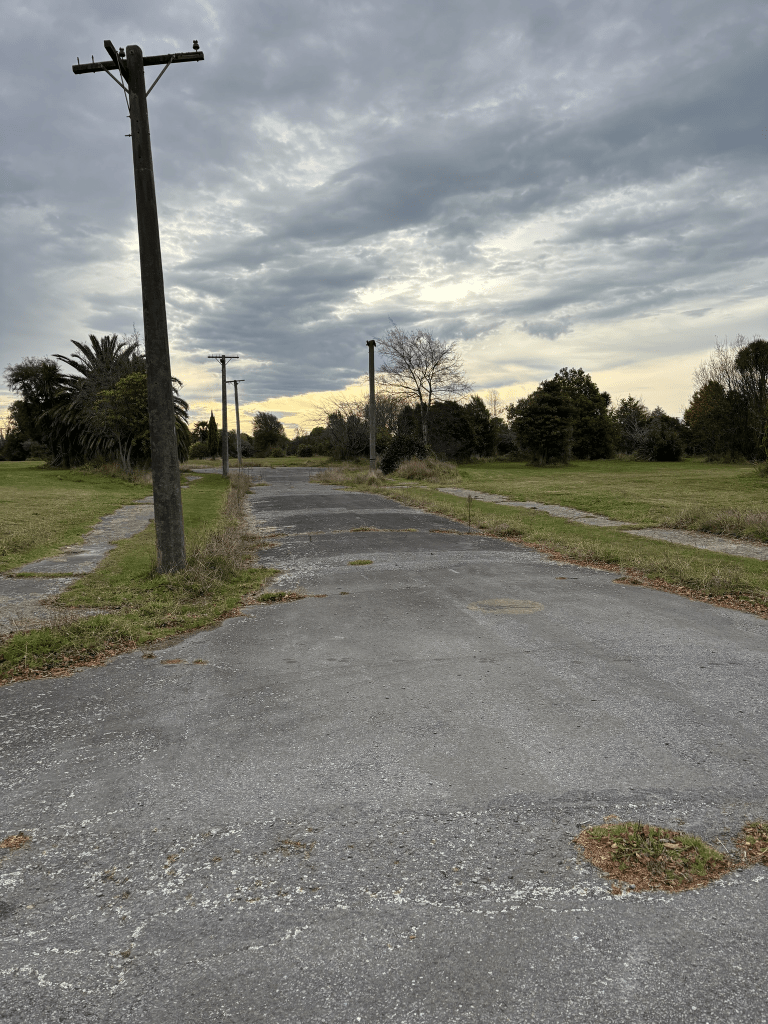
Tilbury Place in Dallington Red Zone – First appears in street directories 1960.
Not much information on the library website and it was probably named after Tilbury in the UK.
Not much information on Papers Past. There were sections for sale in 1957. There were a few death notices and a few ads plus in 1967 a car plunged into the river near here. I can’t tell you what the street looked like from before the earthquakes as google maps no longer offer this function.
Westminster Street in St Albans and Mairehau – Formerly Green’s Lane and Green’s Road. Named after Green, a local milkman. James Green, of Papanui, is listed in street directories in 1890. Greens Road and part of Shirley Road were amalgamated and re-named Westminster Street. Named after the City of Westminster, a metropolitan borough of London. Green’s thatched-roof, sod house was on the corner of Hills Road and Greens Road. Green’s Lane first appears in street directories in 1892. Shirley Road from Rutland Street up to, and including Green’s Road, was re-named Westminster Street in 1909.
A reasonable amount of information from the library website and nothing that I can add about the name Westminster. This street has been one of the most confusing streets that I have researched. I couldn’t find a James Green who was a milkman and there was a James Green who lived on Springfield Rd but he was a bootmaker. There was a George Green who lived in the area who was a milkman. George Green kept getting fined for short changing customers.
I looked at the Ancestry website, Papers Past and old maps of Christchurch. I thought that the maps would help but it made things even more confusing. I couldn’t find Green’s Lane on any maps but Papers Past had two entries in 1879 with a request for the road to be shingled.
Greens Road is just as confusing as there were two Green Roads within a short distance of each other. There was the Greens Road that ran off the Main North Road and this one became Grasmere Street. There were lots of entries for this Greens Road. Just to further confuse things there was possibly a Greens Road in Addington.
In the 1880s and 1890s there was discussion about who should be responsible for the repairs to the Greens Road bridge and J Mahar was mentioned in connection with the bridge so it will be the Greens Road that became Westminster Street.
In 1909 Shirley Road from Rutland Street to Greens Road to be renamed Westminster Street. I did find a map dated 1903 that shows Shirley Road running between Cranford Street and Toons Road. Toons Road is now Thames Street. This was on a plan for a subdivision in the area.
In 1914 an elderly man dropped dead in the Baptist Church while singing a hymn. The saddest death would have been the young woman who died after a short and painful illness. The inquest said that she died after an illegal miscarriage that was caused by an instrument. The court praised the fact that she hadn’t named the man responsible for her condition and therefore blackening his good name.
In 1927 there was a large block of land to be subdivided and it was known as Rhodes Block and Mairehau Estate. In 1930 St Albans school were raising money to improve the entrance to the school as it was only a narrow footbridge over the St Albans stream. Two issues mentioned in the 1930s were flooding and wandering cows. There was an article in 1933 where a Mr T Allen was interviewed on his 84th birthday and he used to be a market gardener on Westminster Street but he said that it was called Shirley Road those days.
An article in 1932 said that Greens Road to retain its name but Greens Lane in Riccarton to have a name change. Greens Way in the city also to have a name change. Also Greens Road to be changed to Grassmere Street. This was when I looked at maps but this left me even more confused. The map for 1912 showed Westminster Street going from Rutland Street to Hills Road. A map for 1930 also showed Westminster going from Rutland Street to Hills Road. I then found maps for 1922, 1929 and another one for 1930 showing Westminster Street going from Rutland Street to Cranford Street and Greens Road going from Cranford Street to Hills Road. These maps also showed the other Greens Road running off the Main North Road. In 1925 the council wanted suggestions for renaming Greens Road in Papanui, Greens Road in Lower Riccarton and Greens Road in Shirley.
There was mention in 1916 about passengers on the trams were also confused about where Greens Road, Westminster Street and Shirley Road were and they frequently ended up taking the wrong tram.
Especially for a friend I would like to mention that women’s underwear was stolen from the home of Mr T Murfitt. The residents were still complaining about cows in the 1940s as they were herded on the road every Wednesday. Also in the 1940s the Westminster Street tip is mentioned as in 1949 they acquired a bulldozer.
Still complaining about cows in 1952 and the cows were kept in a paddock near the shops on the corner of Hills Road and Westminster Street.
In 1955 it was proposed that the site on the corner of Mahars Road and Westminster Street to be used for new RSA Club rooms. They were still talking about it in 1960 and in 1961 they dropped the idea. In 1958 they talked about establishing the Mairehau playing on the land adjoining the proposed RSA building. Both the RSA and the playground were to be developed on the site where the Westminster Street rubbish dump used to be. There is a playground on this site and it is called Mahars Playground but it also has a boundary on Westminster Street.
The drainage board were still talking about installing sewage in 1956. It is surprising how late some areas of Christchurch were still without sewage.
In 1961 Western Association Football Club was given permission to build club rooms. By 1967 it was called Western Soccer Club Hall. In 1989 land was purchased for a new sports complex. This land was next to the Soccer Club grounds.
In 1971 a new council yard was opened and the Samoa and Assembly of God Hall was opened on the corner of Hills Road and Westminster Street.
Over the decades there were lots of birth and death notices plus lots of accidents especially cyclists.
There was some other random information on Papers Past residents claiming it to be the worst street ever. Issues with wandering cows and horses. One year the residents complained that the road was too boggy and in the same year complained that it was too dry and wanted it watered. The bridge gets mentioned a few times but I am not sure which bridge as there were possibly two bridges on the street. Not that you can tell these days that there were bridges here but one does have a plaque.
The houses on this street cover every decade dating from 1905 up to 2024. Still a large number of older houses.
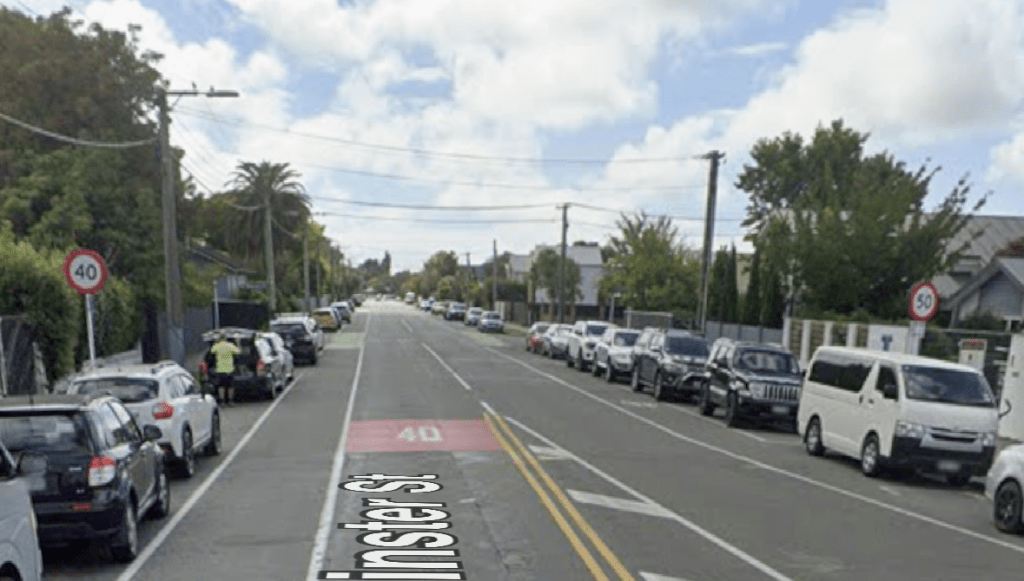
I decided to walk this street on Sunday as it had been in the news last week because of conflicting speed limit signs. The day that the article appeared in the Press was a horrible wet day which is why I waited until the weekend. By this time they had fixed the conflicting sign issue but I was able to get screenshots of them from google maps.
I started my walk at the Rutland Street end where there is a church on the corner of Rutland Street and Westminster Street. Lots of lovely older houses this end of the street and there is a stream that runs alongside the houses here until you reach St Albans School. This is near the Westminster Street and Courtenay Street corner. Westminster Street then curves around so that it is no longer following the stream. A mixture of house styles and ages on this section of the street. At Cranford Street there are shops and it looks the the dairy on the corner is now closed. Between Cranford Street and Hills Road as well as houses there are two big empty sections. One of the empty sections used to have a business called Edgeware Mowers. Next to this empty section there is a drain or stream that now goes under the road but going by the plaque dated 1931 there used to be a bridge here. There is St Albans preschool which has a very colourful fence. On the other side of the road there is Christchurch Park and Westminster Park. The playground is still there and I wonder if the parents realised that it was built on land that was originally a rubbish dump. There is a very overgrown empty section next to the playground and I did peep through the damaged fence. Going by google maps there was a fairly nice house here. It was possibly built on land that was originally the dump and where the RSA was going to be built. Then I came to the shops at the corner of Hills Road. The Samoan Church is still here and I possibly upset a young man here. There were lots of people entering the premises. A couple got out of their car and the man handed a large very heavy looking pot of food to his wife to carry. She was tiny in comparison to her husband and she was struggling to carry it. She asked if he could carry it and he refused. Yes I did tell him that he should carry it. A shocked look from him and a smile from her.
This was a long and confusing street and it took me at least three days of researching.
Gosset Street in St Albans – Named after Archdeacon Charles Hilgrove Gosset (1851- 1923). Gosset was the vicar of Woolston 1891-1902, and from July 1902, vicar of St. Mary’s Anglican Church, Merivale. One of three streets named in 1923 and formed on land that had been originally owned by the Anglican diocese. Sales of land were made for “increased revenue for Diocesan purposes”. First appears in street directories in 1924.
A reasonable amount of information from the library website. I did see the name spelt Gosset and Gossett on Papers Past and on a map dated 1941. Family trees on Ancestry also had both spellings but his birth registration had Gosset.
I was looking at maps as there were a couple of entries on Papers Past said that it was in Burwood. I couldn’t find a second Gosset Street. There were several birth and death notices over the decades and in 1923 it was described as a new street. There were also ads for sections available for sale in the 1920s. In the 1930s I sidetracked a bit as there were lots of birth notices for babies born at Nurse Steven’s at 36 Gosset Street. Mary Alice Steven’s husband died in 1929 and they were living on Fendalton Road. From 1930 until her death in 1940 Mary was living at 36 Gosset Street. Births at the nursing home were between 1930 and 1938.
There was a very good article in 1947 headed The Story of 700 Acres of Church Property which included this street. In 1965 the residents petitioned to have the trees in the street removed. The council replied that the lime trees will remain. It is still a tree lined street. In 1984 there were complaints about a resident who they claimed was running a business from his house. He was into racing cars and worked on his car in his garage.
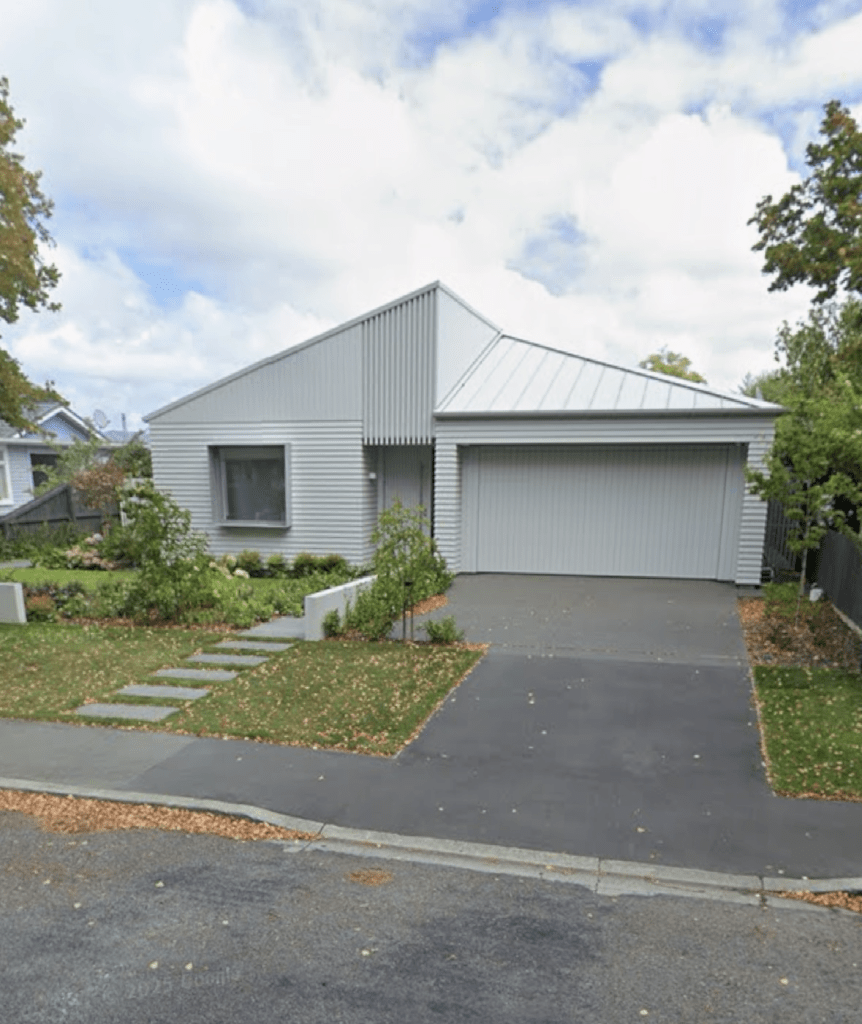
It was a pleasant street with lovely wooden villas and most houses here date from 1920s. There is one house that was built in 2023 and it just doesn’t fit in with the rest of the street.
Carrington Street in St Albans – Named after the Very Reverend Charles Walter Carrington (1859- 1941). Carrington was the dean of Christchurch Cathedral 1913- 1927. One of three streets named in 1923 and formed on land that had been originally owned by the Anglican diocese. Sales of land were made for “increased revenue for Diocesan purposes”. First appears in street directories in 1924.
A reasonable amount of information from the library website and nothing that I can add about the name of the street.
Not a lot of information in Papers Past and it was mostly birth and death notices. Between 1923 and 1926 there were ads for the sale of sections. In 1925 Mr W Newman was mentioned as erecting houses in the street. Might explain why the houses all looked very similar. In 1927 and 1928 the Carrington Street Sunday School were meeting in a private home belonging to Mr and Mrs Bishop. In the 1960s and 1970s there were mostly entries about the best street competitions.
It was a pleasant street and apart from a couple of houses built in the 1970s the houses were built in the 1920s. They also had nice gardens.
Pascoe Avenue in Mairehau – formerly Shaw Avenue. Shaw Avenue first appears in street directories in 1939. Re-named Pascoe Avenue on 1 September 1948 when 120 streets were re-named.
Unusual for a cul de sac to be called an avenue as I would have expected it to be place. The council didn’t give a reason for the name Pascoe but I wouldn’t be surprised if it was named after a person.
A small amount of information from the library website. The street was renamed because there was a Shaw Avenue in New Brighton. Not a lot of information on Papers Past. Under Shaw Avenue there were sections for sale in the late 1930s plus death notices. In the 1960s there were lots of ads for selling Siamese kittens and pup puppies.
Apart from one house built in the 1960s all the houses here were built in the 1930s. Most of the houses seemed quite nice but the residents are really bad at parking.
Kensington Avenue in Mairehau – Named after Kensington, a district of west and central London, England within the Royal Borough of Kensington and Chelsea. Named because it runs off Westminster Street. First appears in street directories in 1923.
A small amount of information from the library website and nothing that I can add about the name.
The entries in Papers Past in the 1920s were mostly birth notices and flooding issues. There were also sections for sale in the late 1920s. There were complaints about the state of the road which seemed to relate to the flooding issues plus in 1942 there were complaints about cows on the street. In 1952 there was a letter to the editor saying that there wasn’t a need for another shop in the area as there was already a shop on the corner of Kensington Ave and Westminster Street. In 1958 the 19 residents of the street requested that the trees on the street be removed. This was declined and the trees are apparently hornbeams. I had to google them as I hadn’t heard of these trees. In 1959 it was proposed to build a library and in 1961 the new children’s library was opened. In 1964 the adult section of the library was opened. There wasn’t many entries in the 1970s and the 1980s.
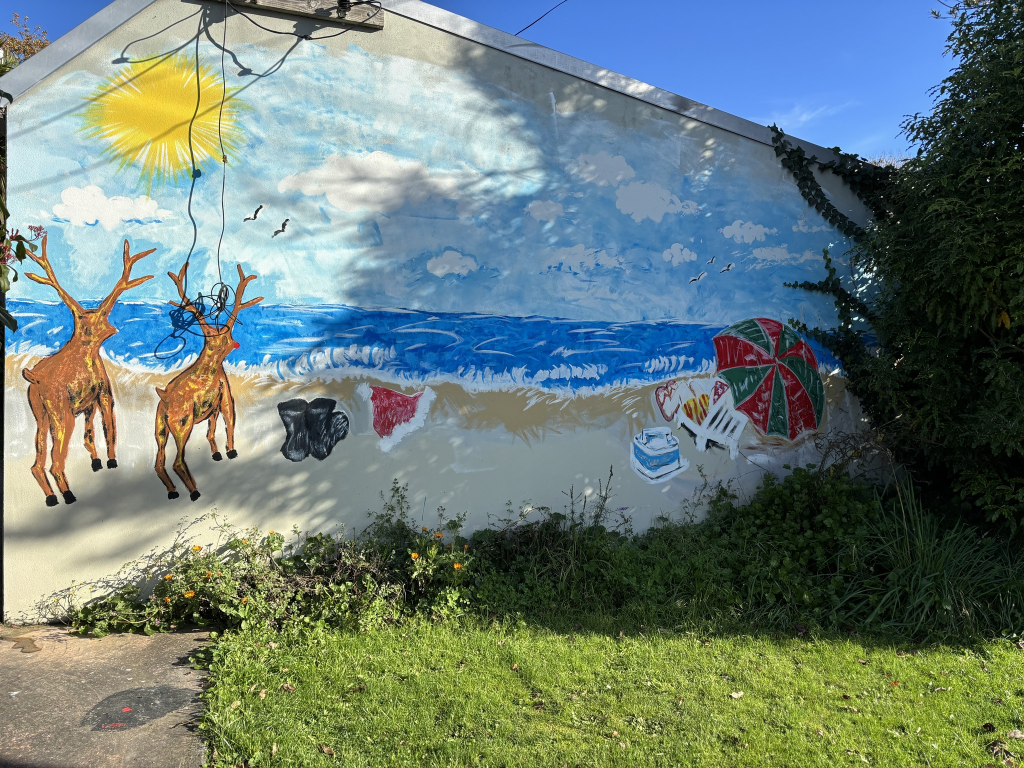
I came onto the street through a walkway beside the library and there are still trees lining half of the street. Most of the houses on this street were built in the 1920s and the 1940s with only about six houses built in other decades. Many of the older houses on the street are lovely but the house that really stood out for me was painted in a Christmas theme. Near the Westminster St end of the street there is a drain which is the drain which caused the flooding issues in the 1920s and the 1930s. The building that used to be a shop is in very poor condition.
Fergusson Avenue in Mairehau – Named after General Sir Charles Fergusson (1865-1951). Fergusson was the Governor General of New Zealand 1924-1930. Described as a “new” street in The Press in 1927 when land is advertised for sale there. First appears in street directories in 1930. [His surname is spelt correctly in 1930 but over the years one “s” was dropped. This was corrected in 1959.]
A reasonable amount of information from the library website and nothing that I can add about the name of the street. I found the entry in 1959 about having to change the street signs to fix the spelling mistake.
I remember a Governor General Sir Bernard Fergusson and he was Governor General in the 1960s. He was the son of Sir Charles Fergusson.
In Papers Past there were ads for the sale of sections in 1927 and 1928. Between 1929 and 1931 there were complaints from the 9 residents of the street about the state of the street especially with the damage from the cattle that roamed the street. The street was eventually sealed in 1954. There was a rabbit farm on the street in the 1930s and it was sometimes called Mairehau Rabbitry and sometimes called H Lawrence Rabbitry. H Lawrence leased land from the council to grow rabbit food. The land was supposed to be a reserve. There were a few death notices over the years. In 1958 it was announced that a kindergarten was to be built and it was opened in February 1959. Most entries in the 1960s and 1970s relate to the kindergarten.
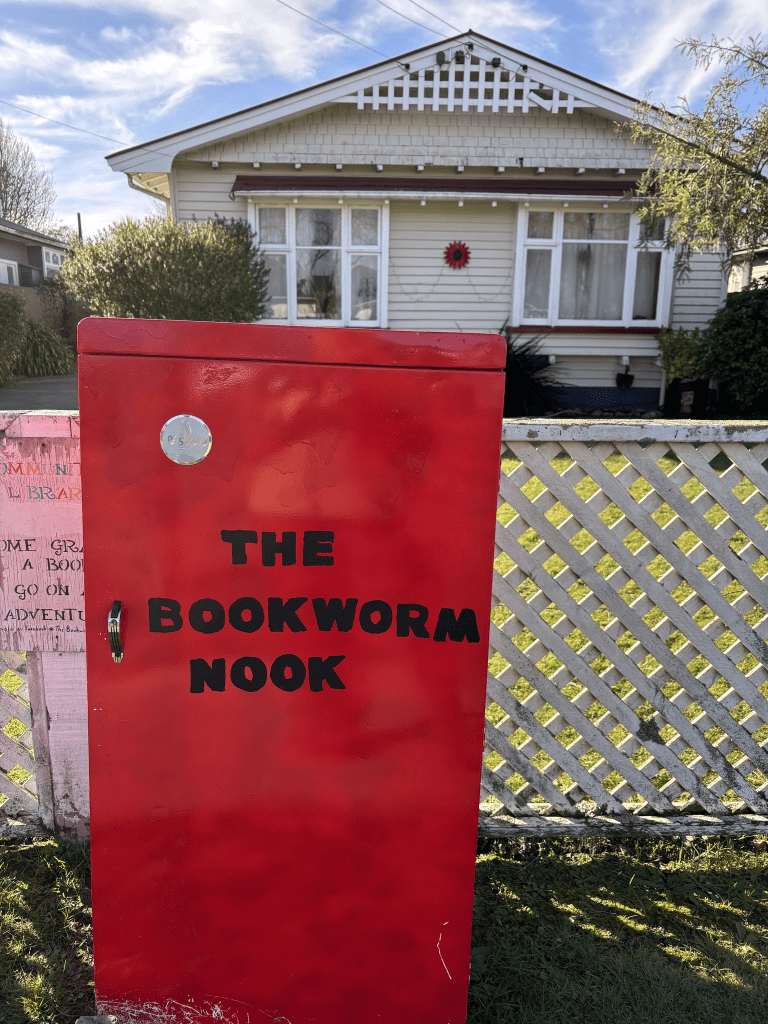
Most houses on this street were built in the 1920s or the 1950s and it looked like a pleasant street. There is still a kindergarten here on the street. One reason that I liked this street was that there is a book exchange here and we all know how I love these little street libraries. I did take a book called A Good Girl’s Guide to Murder. The book exchange is in front of a nice 1920s house.
Greenwood Close in Mairehau and wasn’t any information on library website either the old or new website.
I searched the Ancestry website for anyone with the Greenwood surname but couldn’t find any who had lived in this area.
The only entry in Papers Past under Greenwood Close was from the council in 1989 about changing the street name from Greenwood Street to Greenwood Close. There were lots of Greenwood Streets throughout New Zealand. For this Greenwood Street I could only find a few death notices, a couple of accidents plus sections for sale in the 1950s.
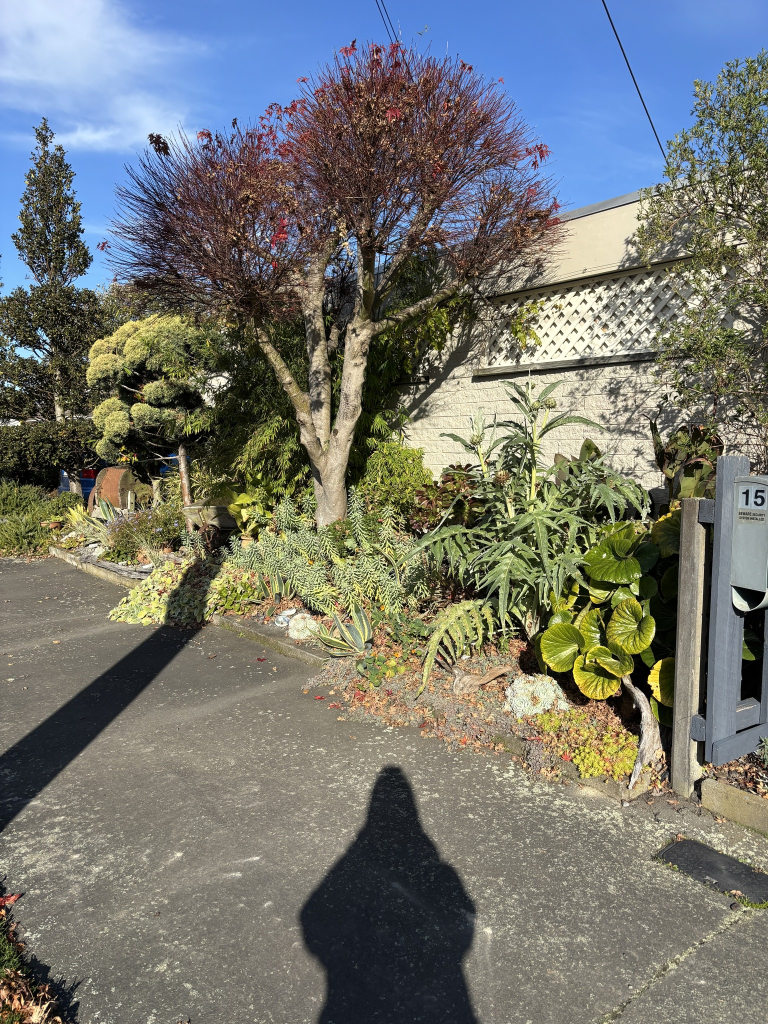
I walked to this street through a walkway from Innes Road and most houses here were built in the 1950s with a couple built later. One house had a fun looking garden.
 Lytteltonwitch's Walking the streets of Christchurch Project