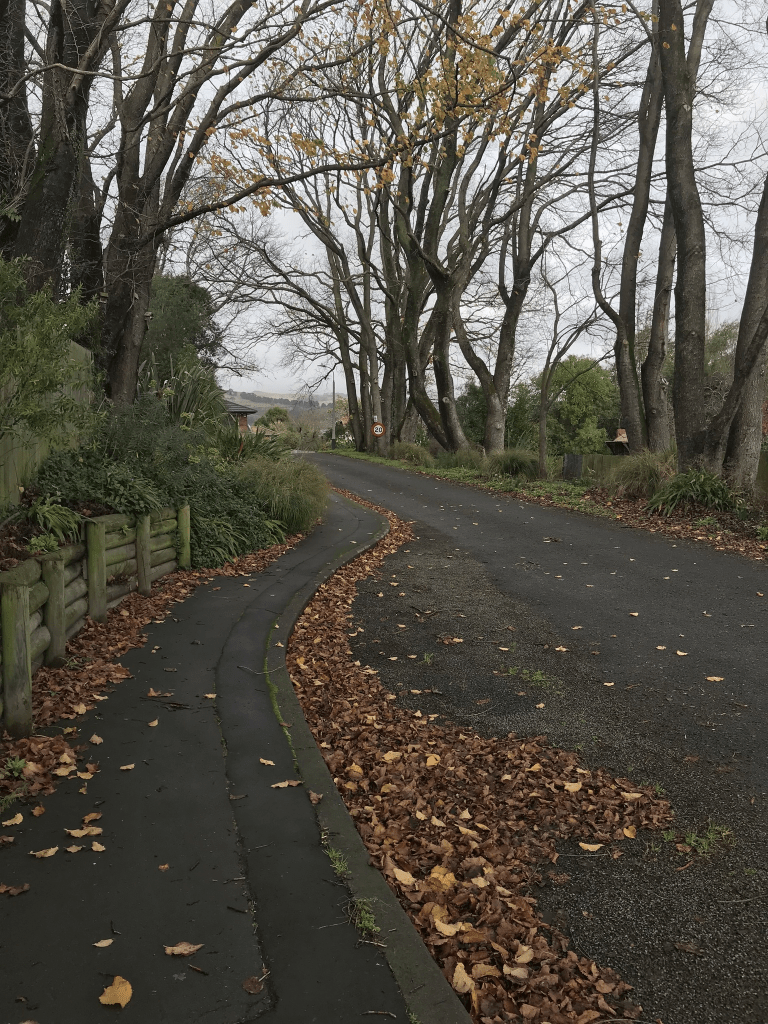
Tabart St in Woolston – Named after Francis Christopher Tabart (1830- 1901).Tabart was the mayor of Hokitika 1869-1877. He later moved to Opawa and became an auctioneer and general merchant in Christchurch. First mentioned in The Press in 1909 when “five fine building sites facing Tabart Street” are advertised for sale. First appears in street directories in 1911.
A small amount of information from the library website and nothing that I can add about the name of the street. Not a lot on Papers Past or Ancestry website about Francis Tabart.
Papers Past had sections for available in 1909 and 1913 and they were described as being part of the Opawa Estate. Several birth and death notices. In 1917, 1920, 1935 and 1942 there was grazing land available. In 1922 there was a section available that overlooked the Technical Hostel grounds.
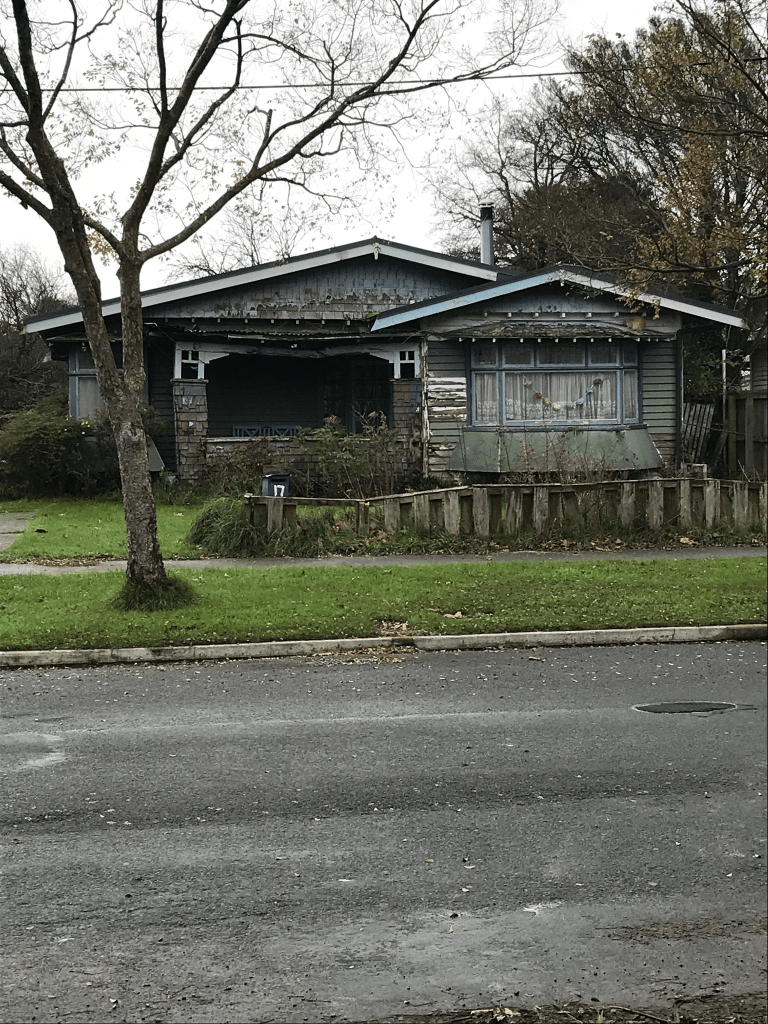
There was a huge number of houses from 1910s and 1920s but sadly many of them looked rundown. A few looked in reasonable condition. I went to Woolston Primary School for one year and used to travel by bus from Lyttelton to go to school here. I have this memory of knowing someone who lived on this street but can’t remember his name. I am going to have to hunt up school photos from my year at the school.
Whittington Ave in Woolston – formerly Rhodes Street. Probably named after Whittington, a small village near Worcester. Rhodes Street first appears in street directories in 1908. Whittington Avenue is first mentioned in The Press in 1909 in a report of a meeting of the Woolston Borough Council.
A small amount of information on the library website and I couldn’t find any evidence that it was previously called Rhodes Street. I checked Papers Past and old maps. The street is also possibly named after a family with the surname Whittington. There were at least three families with that surname who lived in the area.
Most entries on Papers Past are about the residents in the area wanting a pedestrian crossing across the railway line. These entries were between 1909 and 1927 and the Railways declined their requests every time. The Technical College was mentioned occasionally. There were sections available between 1913 and 1929. Someone owned kennels called Roimata Kennels on this street in the 1930s. Most of the entries for 1976 were about a murder on this street and it involved a rather messy love triangle.
There were some lovely older wooden villas on this street and there is also Whittington Avenue Reserve on this street. I would be concerned about parking and noise if I lived here. There was broken glass in the reserve area.
Edited as I found out that the street was known as Rhodes Avenue at the same time that it was known as Whittington Ave. So Rhodes St was a mistake by the library. As Rhodes Avenue there were the same articles about the residents wanting a pedestrian crossing across the railway lines. The land was subdivided in 1904 and the owner Mr Schauman completed the forming of the streets and then requested in 1905 that the council take over the streets when they have been completed. In 1913 the Technical College sold off land on Rhodes Ave so that explains the sections that were available in 1913
Vintners Lane in Woolston – Named because the German couple who owned the property for many years grew grapes in glasshouses on the property. The development company, Opawa Residential Ltd, wanted to recognise this in the name of the right-of way, developed at 83 & 85 Mackenzie Avenue. Named in 2007.
A small amount of information from the library website. I thoroughly searched Papers Past and ancestry website but couldn’t find out the name of the German couple. The property was sold in 1966 as part of a deceased estate and in 1988 someone living at the property was a bankrupt.
The valuation website said that there were 4 houses here built in 2000 and 2010 but there were at least two more houses than this. The later ones were built in 2021. Not a lot that I can say about the street as nothing stood out for me.
Youngston Lane in Woolston and nothing on the library website. I suspect that this lane is named after a person but I couldn’t find anyone with that surname in Christchurch. There were several people with the surname Youngson but none seemed to live in this area.
Only 7 houses here and most built from 2016 onwards but one is from 1960s. The house from the 1960s was probably on a large section and subdivided. None of the houses stood out for me but I did only walk part of this private lane.
Seaforth Place in Woolston and nothing on library website. I did find a couple of people with the surname Seaforth but they lived in Lyttelton and died in 1919. It also wasn’t their real name as their original name was German and they adopted an English sounding name. Seaforth is a place near Liverpool.
Most houses here were built in the 1970s and none of them stood out for me. Not a lot of information on Papers Past. A few ads and a couple of death notices. There was mention in 1988 about stopping a portion of street so I checked maps. I thought that it possibly went as far as Sullivan Ave but couldn’t find any evidence of this. It was possibly connected to the one house that was built in the 1980s. No photos as nothing appealed to me.
Palamino Place in Woolston and nothing on library website. I thought that it was possibly a surname but no one with that surname in Christchurch that I could find. It is probably named after a grape as there is a nearby lane called Vintners Lane. Most houses here were built in the 1980s and 1990s but none of them stood out for me. Footpath was on only one side of the street but it looked like a pleasant street. Only photo that I took was of some spring flowers.
MacKenzie Ave in Woolston – Formerly Parkes Street. Named after either Sir Harry Smith Parkes (1828- 1885) or his cousin, Horatio John Parkes Horatio Parkes was a cousin of Sir Harry Parkes, a Chinese-based British diplomat, who had purchased Rural Section 37, a land order of 50 acres in “Heathcote, near Ferry Road”. Horatio Parkes received a regular remittance from his cousin and lived on a section of his cousin’s land called The Grange. In 1895 the executors of Sir Harry’s will sold his land to the Liberal Government for a workers’ settlement, Roimata. Parkes Street was formed in 1895. First appears in street directories in 1898 and was taken over by the council as a public street in 1899. Re-named Mackenzie Avenue on 24 May 1926 when 21 streets were renamed. [Residents of Parkes Street had protested against the name of the street being changed to Barnsley Street and suggesting the name of McKenzie Street. The name was changed to Mackenzie Avenue instead.]
A reasonable amount of information from the library website. Horatio Parkes came out to New Zealand on the George Seymour and lived a quiet life on the property owned by his cousin or Harry Parkes was possibly his uncle. He was paid an income by his cousin/uncle so he didn’t have to work. The various news articles in Papers Past state that Harry Parkes was Horatio’s uncle but their ages are fairly close so it is more likely that they were cousins. Harry Parkes lost his parents at a very young age and went to live with his uncle which would mean that Harry and Horatio would have been bought as brothers. After Harry died in 1885 his land in Christchurch was sold to the government minus a small amount of land for Horatio to continue to live on. Note Horatio was what was known as a remittance man and he is even described as this in Papers Past. In 1897 Horatio was charged with murder after killing another man with an axe. The charges were changed to manslaughter but were eventually dropped.
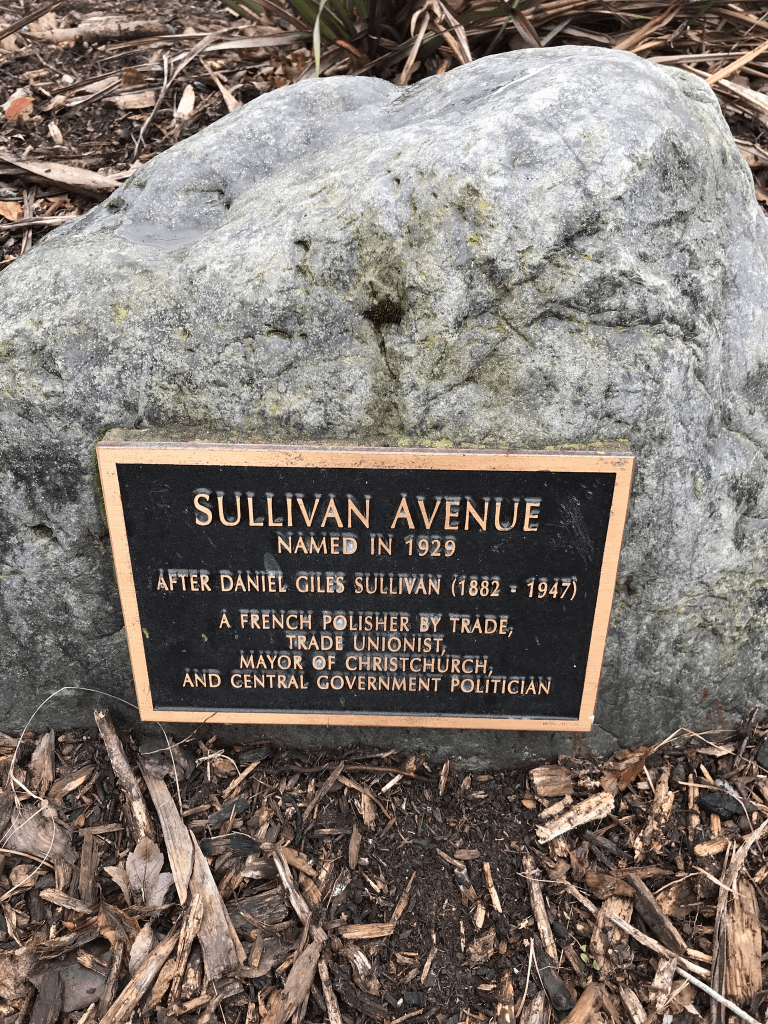
Lots of information on Papers Past and I obviously got sidetracked by Horatio Parkes. In 1895 there were tenders for the formation of Parkes St and there was discussion about the forming the road in 1896 and 1898. In 1902 there were complaints about cattle damaging the footpaths on the street. The block of land was called Roimata Settlement and it was also described as a Crown Settlement. In 1907 there were complaints about a piggery on the street. In 1926 the new name suggested for the street was Barnsley St and in the same year it was changed to MacKenzie Ave. In 1934 the house belonging to the mayor D G Sullivan was destroyed by fire. Lots of ads plus birth and death notices in Papers Past. I even managed to find a couple of articles useful for my family tree research.
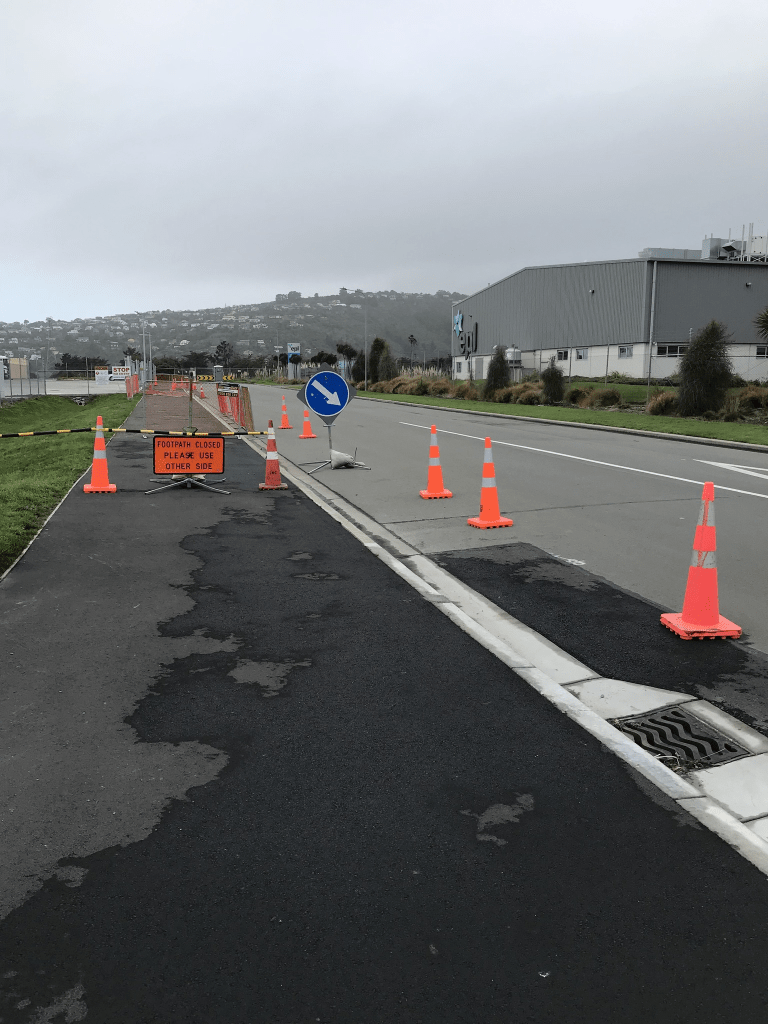
The houses on this street cover every decade from 1890 to 2022. Most houses were built between 1950s and 1970s but there were also a large number built in 1910s and 1920s. Most houses are in very good condition but much of the road is a mess at the moment because of roadworks. I spoke with a local to ask how the residents are able to access their houses but apparently they can’t and they have to park further down the road and walk to their houses. Can’t be much fun if you have to cart groceries or if you are an older person. The houses near the river end of the road are on land that is raised above the road. On the Ensors Road end of the street there is a church for the Latter Days Saints. In the late 1960s and early 1970s I knew this street really well as I had friends who lived on the street. I did like many of the houses on this street.
Keswick St in Woolston – Named after William Keswick (1835-1912). Keswick was a China based businessman and a British politician. He established a branch of Jardine Matheson & Co. in Japan in 1859. He was a trustee and executor of the will of Sir Harry Smith Parkes (1828- 1885), a diplomat in China who owned Rural Section 37, 50 acres in Opawa. The two families were related by marriage. In 1895 the executors sold Parkes’ land to the Liberal Government for a workers’ settlement, Roimata. Shown on a 1912 street map. First appears in street directories in 1924.
A reasonable amount of information from the library website and not a lot that I can add about the name of the street. There is no evidence that William Keswick ever visited New Zealand.
Papers Past mostly had ads plus birth and death notices. There was an article in 1907 about the decision to name the new street that is between Parke St and Richardson St as Keswick St. I was amused by an article in 1984 where one of William Keswick’s descendants claimed that she couldn’t pay a traffic fine. Her excuse was that she had taken a vow of poverty because she was now a novice nun. She was a heiress to millions.
This was a pleasant street with several lovely 1920s villas and one art deco house. There was even a modern house that I quite liked. I did assume when walking the street that it would have been named after Keswick in the Lake District but I was obviously wrong.
Judge St in Woolston – First mentioned in The Press in 1909 in a report of a meeting of the Woolston Borough Council. First appears in street directories in 1912.
A small amount of information from the library website and I suspect that this street is named after a person. There were at least two or three families with this surname who lived more or less in the area but I couldn’t narrow them down to the exact spot.
A reasonable amount of information on Papers Past and the earliest articles were in 1909 and they were about the Railways Dept refusing a crossing across the railway lines for pedestrians. The crossing was obviously eventually approved as in 1980 the Railway dept built a fence to stop people from using the crossing. As the Opawa Railway Station was no longer in use there was no need for a pedestrian crossing across the railway lines. Many residents in the area protested about closing off the crossing and they were still arguing about it in 1988. In 1920 there was a large property for sale that belonged to the late Dr Titheridge and it was over 3 acres in size. There was another large property that was formerly a tennis court that was for sale in 1959. There was flooding issues in 1942.
The oldest house is dated from 1910 and there are several houses from 1920s and 1930s. Most are in good condition with nice gardens but it was impossible to get photos of the nice houses. There was one older house that looked like it is occupied by a hoarder and it was in a terrible state.
When I walked this street I could remember the pedestrian railway crossing to the Opawa Railway Station and I would have caught the train home to Lyttelton after visiting friends in this area. These days there is a short walkway that leads to Richardson Tce.
Finlay Place in Woolston – Named after William Duncan Finlay (1871?- 1955). Finlay is listed in early 1940s street directories living at 108 Mackenzie Avenue where this street was later formed. First appears in street directories in 1950.
A small amount of information from the library website and nothing that I can add about the name except that the original plan was to call it Finlay Ave. This information was in Papers Past in 1948. A few death notices and several ads but not a lot of information on Papers Past. There weren’t any ads for selling sections or houses in Papers Past.
Most houses here were built in 1940s apart a few flats built in 2015. I was very surprised that there wasn’t any Housing Corp houses here as most of the houses looked like typical Housing Corp houses from the 1940s.