Blowers Place – Named after Raymond Frederick William “Freddie” Blowers (1849?- 1943). Blowers was an early Halswell apiarist and labourer. He farmed in Paterson Avenue (later Kennedys Bush Road). Named in 2001.
Interesting information from library website. Another street with modern houses. There was one house that I would have loved to have been able to get photos of because of garden decorations. Trouble was the owner was sat at her window having a cuppa. The best description of the garden decorations would be kitsch but I quite liked them.
Garforth Green in the suburb of Halswell, Christchurch
Garforth Green – Named after Samuel Garforth (1839-1901). Garforth was a member and also chairman of the Halswell Road Board 1885-1901. In 1870 he purchased Spreydon Lodge. Named in 2001.
Interesting information from library website. A short street with modern houses and many featured columns at the front doors. As usual with these modern short streets there was a footpath on only one side of the street.
Edward Stafford Avenue in the suburb of Halswell, Christchurch
Edward Stafford Ave – Named after Edward William Stafford (1819- 1901). Stafford was a runholder, provincial superintendent, premier and sportsman. He named the Halswell property he had bought in 1873, Landsdowne. Named in 2001.
Interesting information from the library website.
Modern houses and many had columns at the front doors. Columns seem to feature in many modern houses. The Halswell Domain runs along the one side of this street. I did manage a few photos and one is of the footpath which comes to a sudden end.
Everyone will soon realise that I prefer older houses rather than modern houses. Note I actually live in a 1990s brick townhouse.
Bean Street in the suburb of Hillmorton,Christchurch
Bean Street – Named after Canon Walter Stanley Bean (1856?-1949). Canon Bean was a former pupil of Christ’s College. He was the vicar of St. Mary’s Anglican Church, Addington 1892-1933 and a canon of Christchurch Cathedral 1913-1931. He was also a son-in-law of Richard John Seddon. One of the streets in the area formed on land belonging to Christ’s College. First appears in street directories in 1970.
Interesting information from library website. Similar houses to West-Watson Ave and West-Watson Park is also bordered by this street. Another street where any land that was still owned by Christs College was sold off to an Auckland developer and stopped house owners from freeholding their land. Again I didn’t manage decent photos here.
Pilgrim Place in the suburb of Sydenham, Christchurch
Pilgrim Place – Named after the Pilgrim, the first steam engine to run in Canterbury. Named because it was developed near the site of the Moorhouse Avenue railway station subdivision. First appears in street directories in 1995.
That information from the library website was more interesting than I expected. This street has several shops and a medical centre on it. Lots of new businesses in the area including Paragon Computers. Being so close to Moorhouse Ave there is of course a car yard.The restaurant Dennys that has been here for years. My first memories here are from when the railway station was here and I used to travel to high school on the train from Lyttelton. When the passengers trains stopped running the railway station was turned into Science Alive plus there was a movie theatre. I loved taking my sons to Science Alive and the best memory is sleeping with Dinosaurs. There was a huge dinosaur display and they had an event where you could stay overnight. I don’t recall getting much sleep that night as I took my sons and all their friends. I don’t recall the other parents doing the same things that I did with the boys.
My photo is of street art beside an empty section.
Durham Street in the Central City, Christchurch
Durham Street – Enfield Street was incorporated into Durham Street. Blackheath Place was incorporated into Durham Street. Named after Blackheath in south-east London. Frank Hathaway Hitchings (1844-1921), a bricklayer, bought land there in 1876 and began building houses on it. He also built the first double-brick house at 63 Durham Street. First appears in street directories in 1908. Incorporated into Durham Street in 1917. Named after the bishopric of Durham. One of the original streets of Christchurch named in 1850 by Captain Joseph Thomas (b. 1803?) and Edward Jollie (1825-1894). The names were taken from bishoprics listed in Burke’s Peerage. The section north of Bealey Avenue was developed in 1929. A Mr Reid of Eversleigh Street requested that the new part be named Enfield Street because his family had come from Enfield, at one time in Middlesex, England and now part of Greater London. In 1933, residents asked the city council for the name to be changed to Durham Street. On 21 October 1985 the council resolved for the two separate sections (with Gloucester Street and Cashel Street in between) of Durham Street to be renamed Durham Street North and South. At the same time a new piece of road from Cashel Street over the Bridge of Remembrance was formally named as Durham Street South.
A lot of information from the library website.
Part One – from Brougham St to Moorhouse Ave it is purely a business area with a mixture of businesses including a WINZ office. Took a photo of a giraffe and a giant sheep here. Also a photo of the Blackheath building. The Blackhealth building has several businesses here and it is an historic building. I vaguely recall that I had a book about this building at one stage.
Part Two – from Moorhouse Ave to Cambridge Tce. The new building for a supermarket is here and again this is a business area of the street. I chatted to a man who was painting a new street art painting. St Michael’s Church is here but I didn’t take photos as I have previously taken lots of photos of this church when they had an open day. Did take a photo of the new law courts building. There is a lovely Tudor looking building that has been various restaurants over the years but is currently empty.
Here the street becomes Cambridge Tce and then at Gloucester St it becomes Durham St again.
Part Three – from Gloucester St to Bealey Ave. Here are the Canterbury Provincial Council Buildings which are still closed to the public. I really hope that these buildings are repaired as they are lovely. The Casino is along here and this is an interesting building. The empty sections where buildings were demolished are slowly getting new buildings. A couple of the interesting looking buildings here looked like church types of buildings. One was a chapel and the other was possibly a Synagogue.
Part Four – from Bealey Ave to Springfield Ave and Caledonian Rd. Southern Cross Hospital is on the corner of Bealey Ave and Durham St. Then along the rest of the street here was what looked like a pensioner housing complex. The street then splits into a T shape. Most of the houses here were older and most were lovely. There were some newer houses and at the Caledonian Rd end there was a huge building being built and it looks like it will be apartments or possibly social housing.
I actually walked the full length of this street in July 2019 and the New World supermarket is now open. This street covers more than one suburb as it is a long street. The Blackheath buildings in Sydenham are lovely and I still can’t find my book about them.
Peacock Street in the Central City, Christchurch
Peacock Street – Named after the Hon. John Thomas Peacock (1827- 1905) Peacock was elected the first mayor of St Albans in 1881. He was a Methodist, associated with the St Albans Methodist Church. He may have been present at the Methodist Conference in 1874 which led to the naming of Conference Street. Beveridge Street also has Methodist connections. The council was asked to take over Peacock Street as a public street in 1875. First appears in street directories in 1878 but was not recognised as a public street by the Christchurch City Council until 1960.
A reasonable amount of information from the library website for a short street.
This street runs from Durham Street to Montreal Street and there are still a few older houses left but most have been replaced by modern houses. This area would have been hit badly by the earthquakes. The Peacock Fountain in the Botanic Gardens was also named after the same man.
Winchcombe Street in the Central City, Christchurch
Winchcombe Street – Probably named after Winchcombe in Cheltenham, Gloucestershire.
Not much information on the library website and this street runs off Durham St and has the car park for South City Mall on one side and Stationery Warehouse and St Johns Ambulance on the other side.
Winchcombe in the UK was fairly near Brockhampton where I worked briefly and it is a lovely area of the UK. I decided to research this street and found out a lot of information. From Papers Past I found council records which said that at the council meeting on Monday 20th April 1891 that they were taking over the Winchcombe St as a public road. The road had been formed and metalled by Mr Fisher at his expense. Going by news reports in Past Papers this was a residential street those days and included a boarding house called Christina’s House.
I found an obituary for Mr Fisher and he was known as Rev Thomas Richard Fisher and he died in January 1890 at Cotswold House, Lincoln Rd. He was born at Winchcombe on 20/12/1806. Sounds like he was a successful businessman in Christchurch and Fisher House was named after him. I also found a blog that mentioned him.
Found Rev Thomas Fisher’s grave in the Addington Cemetery.
Marsden Street in the Heathcote Valley, Christchurch
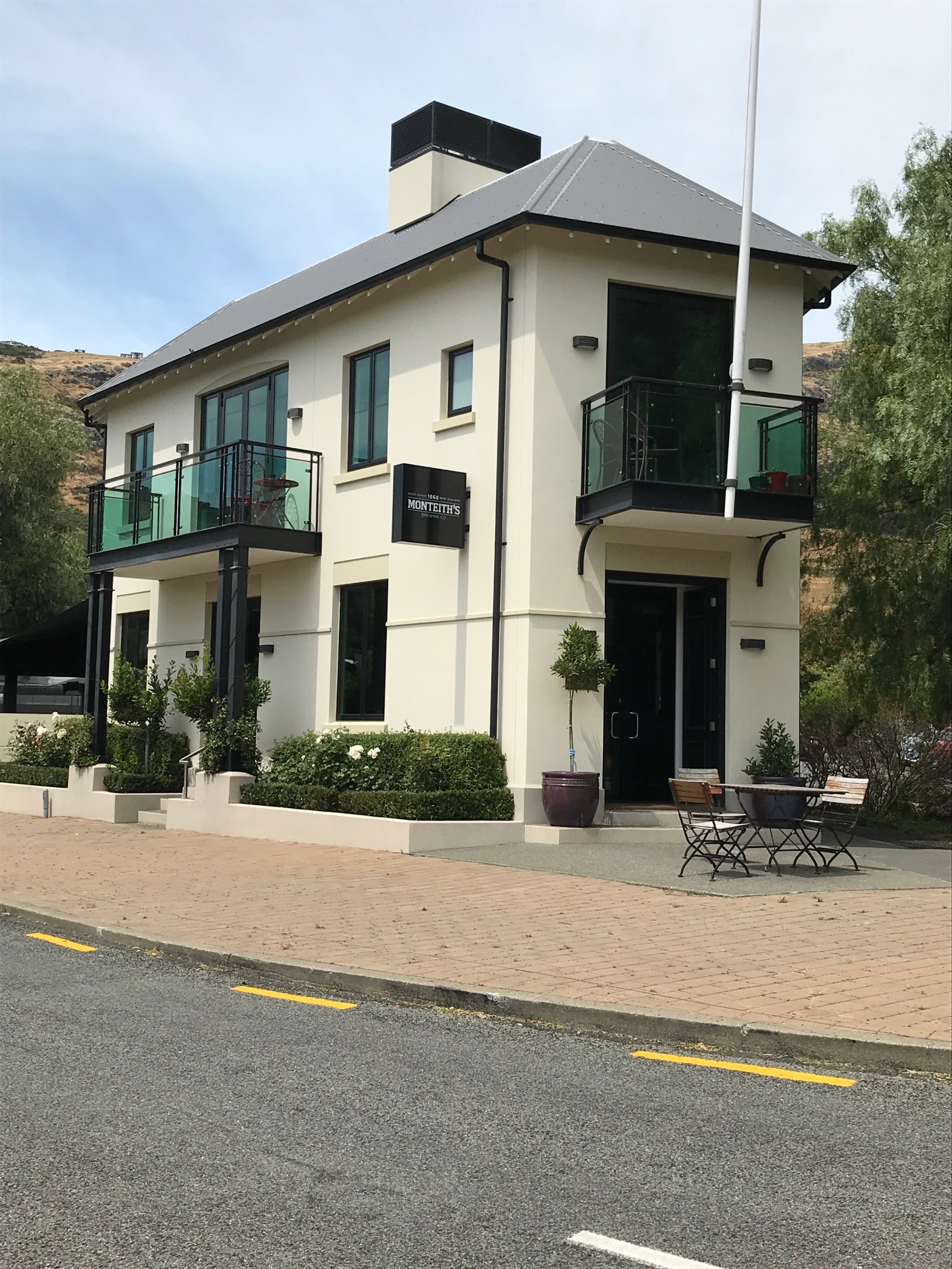
Marsden St – Formerly Vogel Street. Probably named after Sir Julius Vogel (1835-1899). Re-named Marsden Street. Probably named after Joseph Marsden (1832- 1888) Vogel was the Prime Minister of New Zealand 1873-1875 and 1876. Named by Alfred Lee Smith (1838-1917) who operated a malthouse on the site. In 1873 Smith developed three streets in the Heathcote Valley, naming them Lee Street, Smith Street and Vogel Street. Vogel Street was renamed Marsden Street in 1933 by the Public
A reasonable amount of information from the library website. Papers Past had the information that the street’s name was changed to avoid duplication. Past Papers also had interesting information about Joseph Marsden. Marsden owned the Heathcote Valley Hotel which is now the Valley Inn. The original Valley Inn was demolished after the earthquakes and the current one is a new building. I have only visited the new Valley Inn once but in my younger days I frequently visited the old one as I was living in Lyttelton those days. Joseph Marsden accidentally drowned in Petone in 1888. His body was found at Days Bay and there was comment about Joseph having gone missing. I didn’t find an inquest. He was frequently charged for serving people who were not bona fide travellers. Sounds like he was an interesting person. Because the Valley Inn is here within the triangle of Marsden St and Favell St it would have been a good reason to rename the street with his name,
Another street with a mixture of new and old houses and there are several flats which look a bit like pensioner cottages. I vaguely know someone who lives in one of these cottages. My photo of the Valley Inn would have been suitable for either Favell St or Marsden St but decided that because of the history will use it here.
Found the inquest and I had missed it because it was obviously held in Wellington and on my previous search I had limited my search to local papers, Joseph Marsden had been staying in Petone with his son for health reasons. He had been in Petone for three months. Joseph was described as an elderly man but he was only 55 years old when he died. He was subject to epileptic fits and was partially paralysed. His son said that Joseph had been free from fits while staying with him.Verdict was accidental death by drowning. His legs had fishing line twisted around his legs. Also the reason he was charged with serving people who weren’t bona fide travellers was that he served people on Sundays.
Rollin Street in the Heathcote Valley, Christchurch
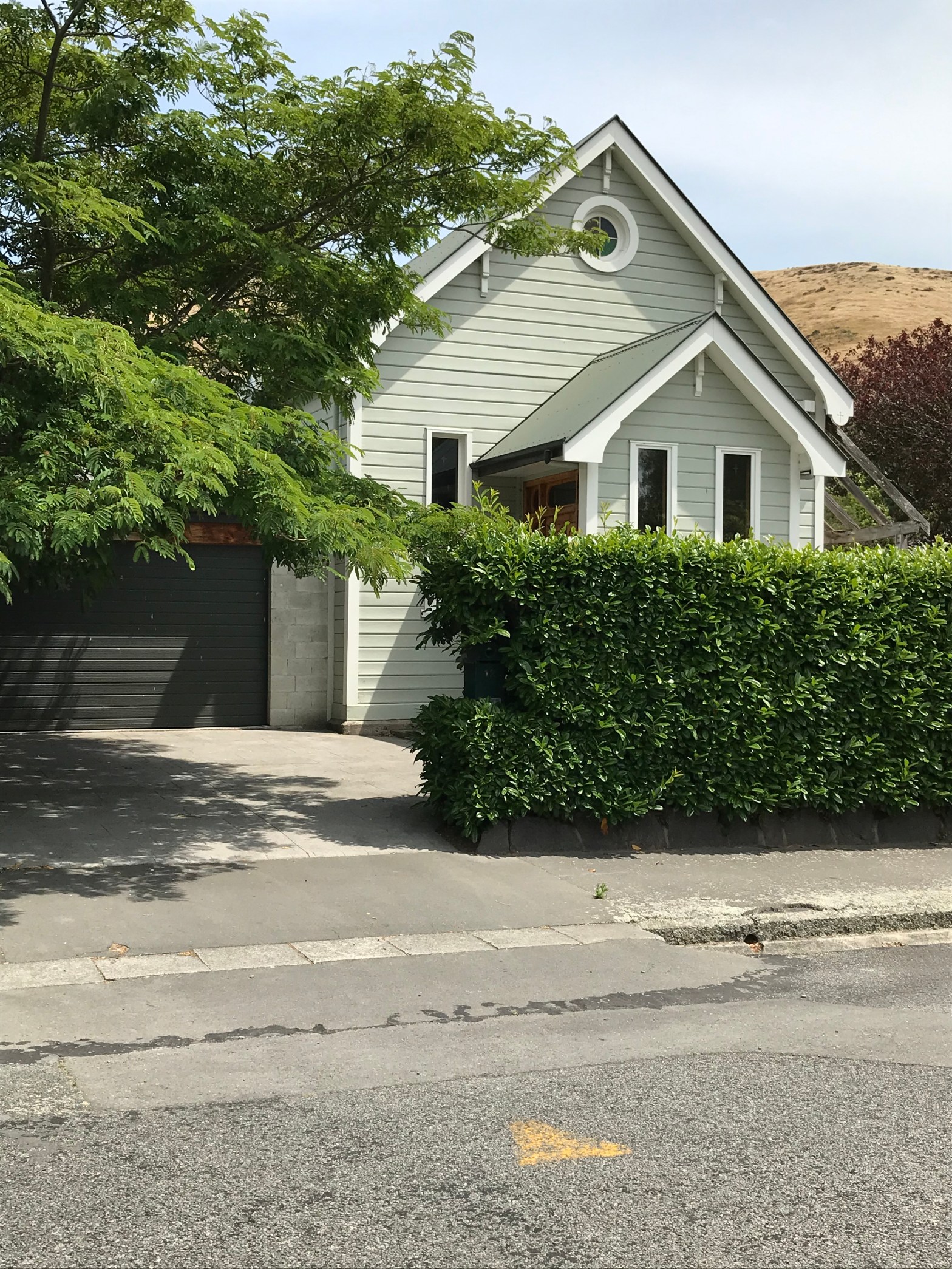
Rollin St – Formerly Smith Street. Named after Alfred Lee Smith (1838- 1917). Re-named Rollin Street. Named after Samuel Rollin Webb (1848-1933). In 1873 Smith developed three streets in the Heathcote Valley, naming them Lee Street, Smith Street and Vogel Street. He operated a malthouse on the site. Smith Street was renamed Rollin Street in 1933 by the Public Utilities Committee of the Heathcote County Council at the request of the Post and Telegraph Department. Webb was mayor of Lyttelton 1883-1884, 1888-1889 and 1904- 1908.
A reasonable of information from the library website. The council information on Papers Past said reason for name change was to avoid duplicate street names. Alfred Smith’s malthouse was called Wincolmlee Malt Kilns. Samuel Webb came to NZ with his parents who were from Canterbury in Kent.
This street had a mixture of new and old houses and Heathcote was hit hard by the earthquakes. There was one house that I was sure used to be an old church but no it wasn’t and it was built in the 1960s. The older houses were mostly a wooden cottage style. One new house was made of stone and was huge.
 Lytteltonwitch's Walking the streets of Christchurch Project