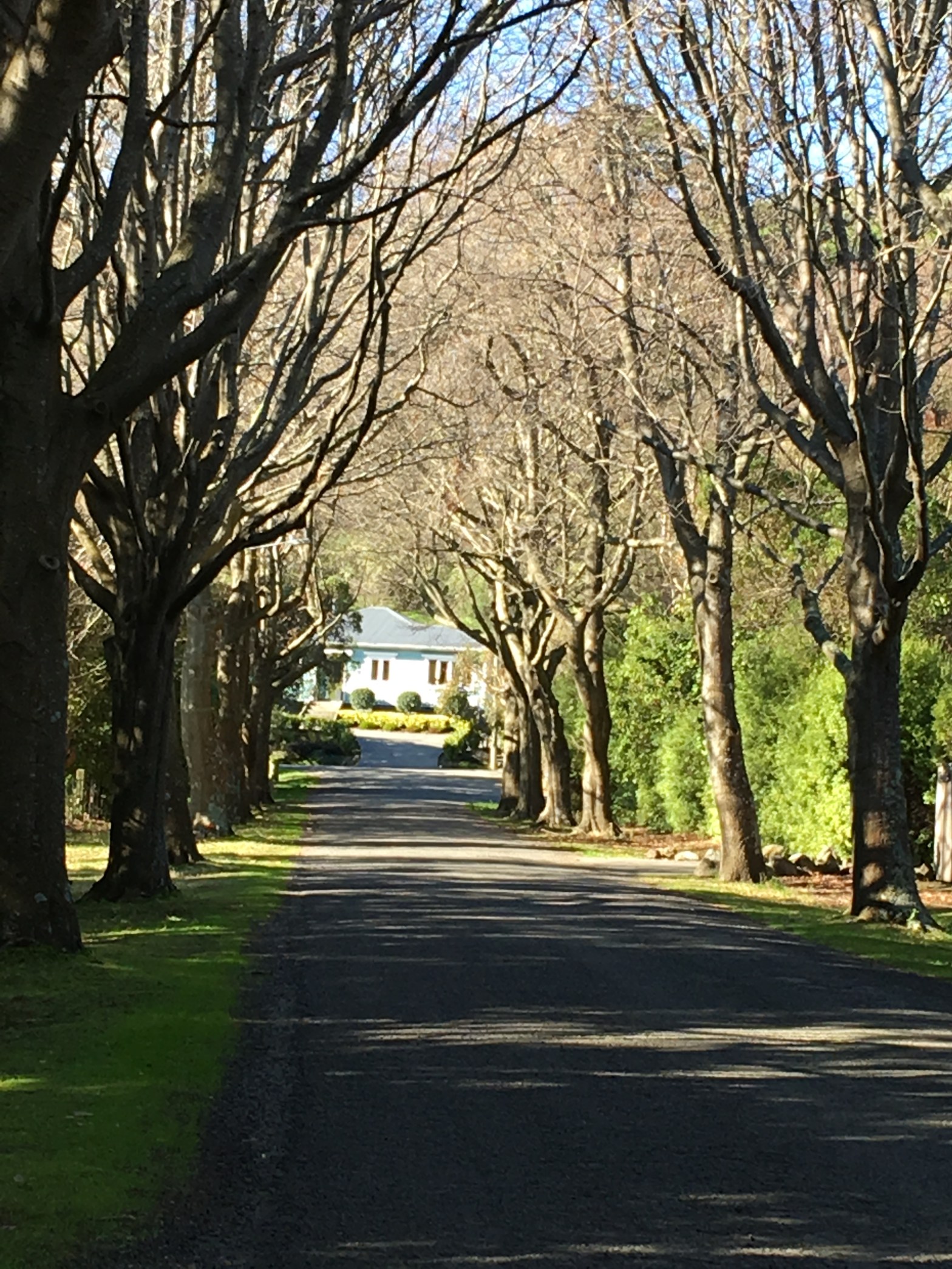
Lucienne Place in the suburb of Hillsborough, Christchurch

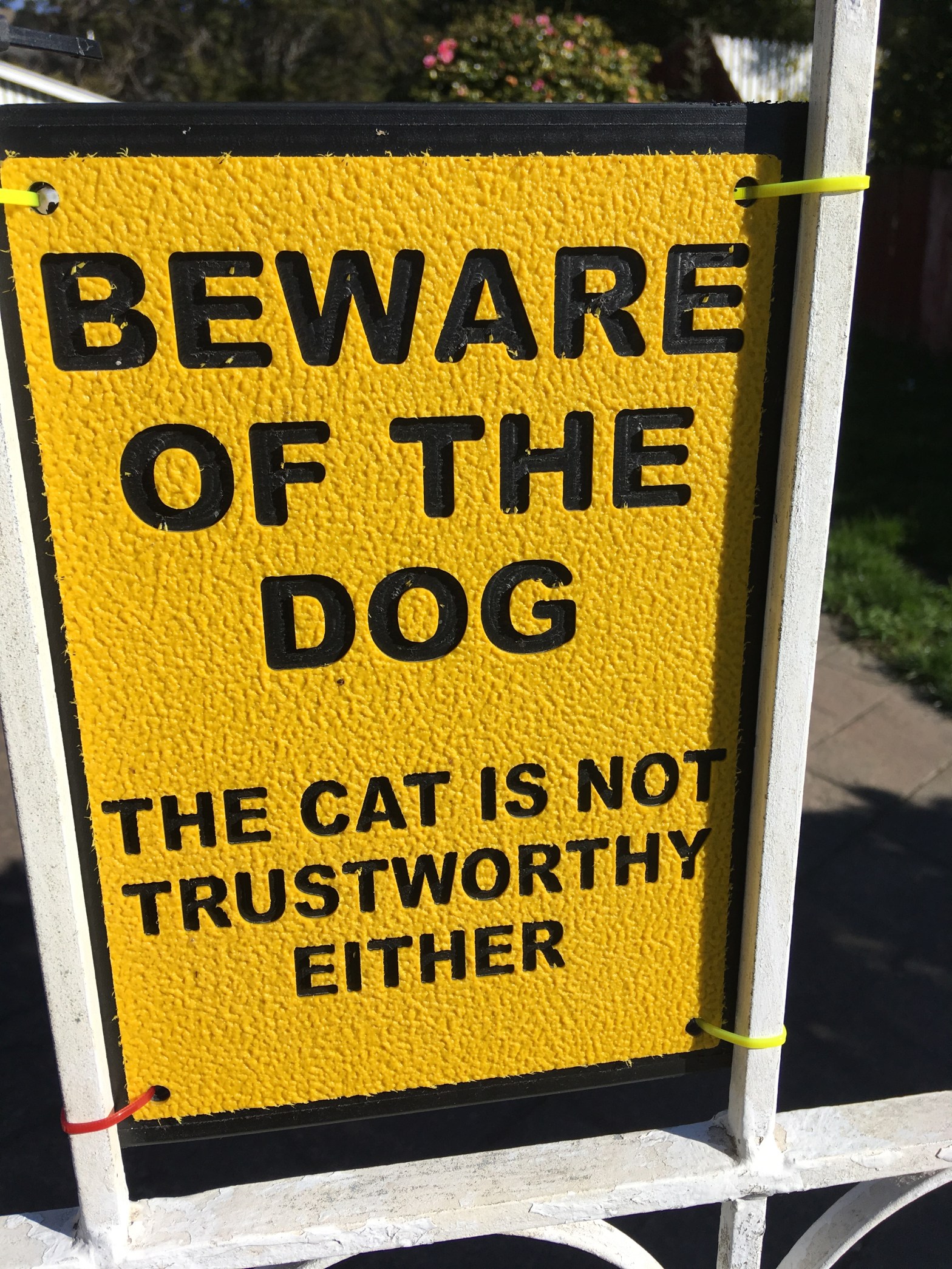
Lucienne Place was another wee street that wasn’t mentioned on the library website. This street ran off Port Hills Rd and it had a mixture of housing styles. A couple of houses even had a look of Housing Corp style of houses. I am talking about older ones from the State Advances days. I did like the Beware of the Dog sign.

I can’t find any reason for the name Lucienne and as it is a female name my best guess is that the name is linked to the developer of this street.

Hilldale Place in the suburb of Hillsborough, Christchurch

Hilldale Place was a cul de sac off Brabourne St and again nothing on the library website about this street. The street was a T- shaped street with brick or summerhill stone houses mostly from the 1960s? It wasn’t even a hill so the name is a bit of a puzzle. The photo that I managed to get was of a couple of houses that looked a bit like pensioner cottages.

The best that I can find is that there is a village in West Lancashire with the same name.

Brabourne Street in the suburb of Hillsborough, Christchurch

Brabourne St in the suburb of Hillsborough was not mentioned on the library website or in Gordon Ogilvie’s book. It was a fairly ordinary street of brick or summerhill stone houses. It would have to be a 1950s to 1960s subdivision as when I worked for Mrs Popes in the 1970s my manager lived on this street.The street didn’t really do a lot for me. Cars blocking the footpath didn’t help as we all know how I feel about that situation.

 I still don’t know how this street got this name but there is a Brabourne in the UK plus there is a Lord Brabourne who was a Governor General in India. In India there is a cricket ground called Brabourne. I suspect that the reason for the street name is Lord Brabourne because of the Indian connection. I am thinking of a possible link to the Cracroft family.

Prisk Place in the suburb of Hillsborough, Christchurch

Prisk Place – Named after the Prisk family, who ran a stone quarry in Hillsborough where this street was developed. Samuel Prisk (1839-1913) was a bricklayer of Hillsborough. First appears in street directories in 1964.
A little bit of information from the library website. Mostly brick or summerhill stone houses and I only managed one photo here. The nice thing about older cul de sac type of streets is that there is a footpath on both sides of the street. The street goes towards Hillsborough Park but there is no entrance to the park from this street. Nothing in Gordon Ogilvie’s book.

I have found out that Samuel Prisk had more that one quarry and he had one at Ferrymead as well. There were a lot of quarries in the Hillsborough area. Samuel’s Hillsborough quarry was probably one of the quarries at Rocky Point. The business was called Samuel Prisk and sons but earlier there was a business called Prisk, Savage and Co and in 1900 a J H Prisk took out an ad to say that he had sold his interests in the business to Samuel Prisk and sons. Sound like a family falling out to you?

The Kilns is in the suburb of Hillsborough, Christchurch

The Kilns – Named because the street was formed on the site of the Glenmore Brick & Tile Co. Ltd. First appears in street directories in 1991.
Nothing much on the library website. I didn’t actually walk this tiny street as it came across as a private lane and it had an entrance that had a vibe of don’t enter. I have just read a little bit in Gordon Ogilvie’s book and it sounds like the original Glenmore House was saved from demolition. I will have to go back and see if I can get a photo of this building as I am not sure if the photo that I did take shows it.

Horotane Valley Road in the Heathcote Valley, Christchurch

Horotane Valley Road – Named because it runs through the Horotane Valley. Named by John Flinders Scott (1876-1941), a pastoral farmer, who subdivided land in this area. First mentioned in The Press in 1933.
Not much information from the library website and Papers Past didn’t have much either. This is a huge market garden area and there were several large glasshouses up this valley. There were also several large flash houses but it was impossible to get photos as you will be able to tell from my photos. I think that it will be obvious that I found a letterbox that I liked and one property had some great garden decorations. A second property had a lovely garden but again difficult to get photos.

Again Gordon Ogilvie’s book has great information and I am so pleased that I purchased this book. Horotane most likely translates as ‘the place of the tumbling man’ and apparently there was also a race horse with this name in the 1920s. The names connected to this valley are George Leslie Lee, Major Hornbrook and R M Morten. Some of the land was sold to John Flinders Scott of Heathcote in 1909 and he subdivided the land into sections for fruit farms and market gardens. There is mention in the book about a secret munitions plant on the property of Ronald Bickerton during 1941.The other thing mentioned was a devastating snow storm of 1945.

Butts Valley Road in the Heathcote Valley, Christchurch

Butts Valley Road – Developed by John Flinders Scott (1876-1941). Butt’s Valley Road is first mentioned in the Sun in 1915.
Not much information from the library website. I looked up Papers Past and it has Mr Scott offering the council to develop the road plus plant a line of trees. Sounds like Mr Scott owned a huge amount of land in Heathcote, Mt Pleasant and Bowenvale. A pleasant wee street and my photos show the trees that were planted. I also liked what was in one garden. There was another house that I would liked to have got a better photo of it but a group of about 6 or 7 people came walking up the road.

I remembered that I had purchased the book Place Names of Banks Peninsula and the Port Hills by Gordon Ogilvie and this book was a big help. The name is from the rifle range that used to be there and the word butt refers to the mound behind the target or the area from which the riflemen shot.The book also says that the whole valley used to be called Butts Valley and previous to that it was called Lee’s Valley after George Leslie Lee.

 I just googled the meaning of the name and it is possibly from a French word meaning target or from a strip of ploughland that was shorter than one furlong. Apparently the name is common to Cornwall and Devon.
Victoria Park Road in the suburb of Cashmere, Christchurch

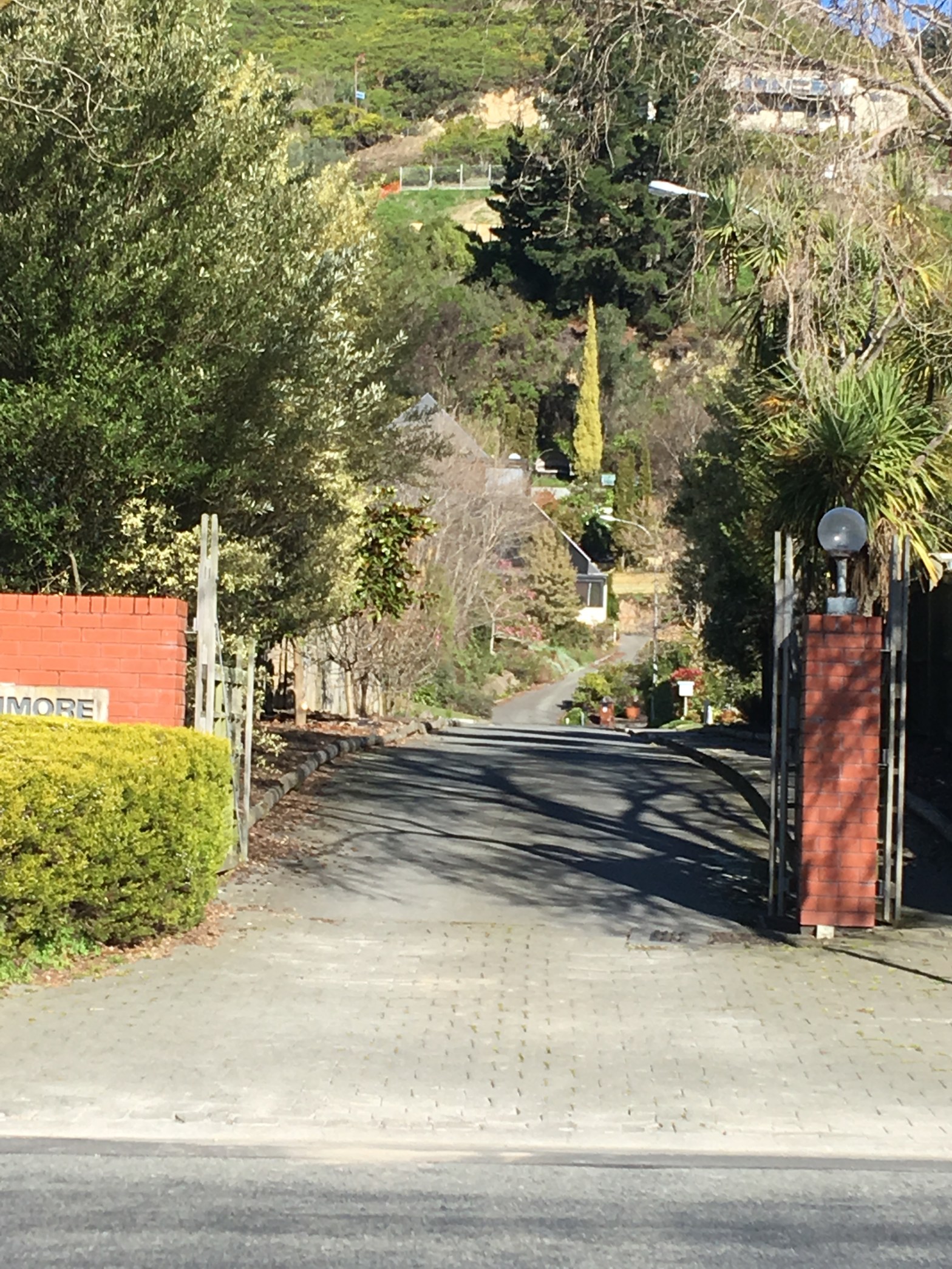
Victoria Park Road is another one that wasn’t on the library website. At the beginning of the road there are a few houses and then it goes through Victoria Park until it reaches Dyers Pass Rd. I managed to get a photo of a very ugly house.

I had a good look through Gordon Ogilvie’s book and Victoria Park was originally called Cashmere Hills Domain and was renamed in 1897 to honour Queen Victoria’s Diamond Jubilee.

Longhurst Terrace in the suburb of Cashmere, Christchurch

Longhurst Tce is in the Cashmere Hills and there was nothing at all on the library website about this street. I tried googling and still couldn’t find anything. There is a new subdivision in Halswell called Longhurst which confuses the issue.
There is a small reserve on Longhurst Tce and also lots of tiny streets that lead off the terrace. There were some amazing houses here and I wish that I could have got more photos. What I did find out is that these houses were well beyond my budget as the prices were in the millions. One house looked just like ones that I saw in Europe.

Fairview Street in the suburb of Somerfield, Christchurch

Fairview Street – Named in 1927 at the suggestion of Thomas Sydney Dacre (1883-1943), a barrister and solicitor.
Small amount of information from the library . I googled this man and as he lived in the Linwood area I am not sure why he ended up naming this street which is in the Spreydon area. I checked Papers Past and found an article in the Press dated 27th September 1927 that confirmed this information. Apart from a couple of blocks of modern brick flats all the houses here were older wooden houses. A nice wee park with a playground was here as well and Shorty who I worked with in the bank lives on this street. We had a great catch up as he was in his driveway when I walked past.