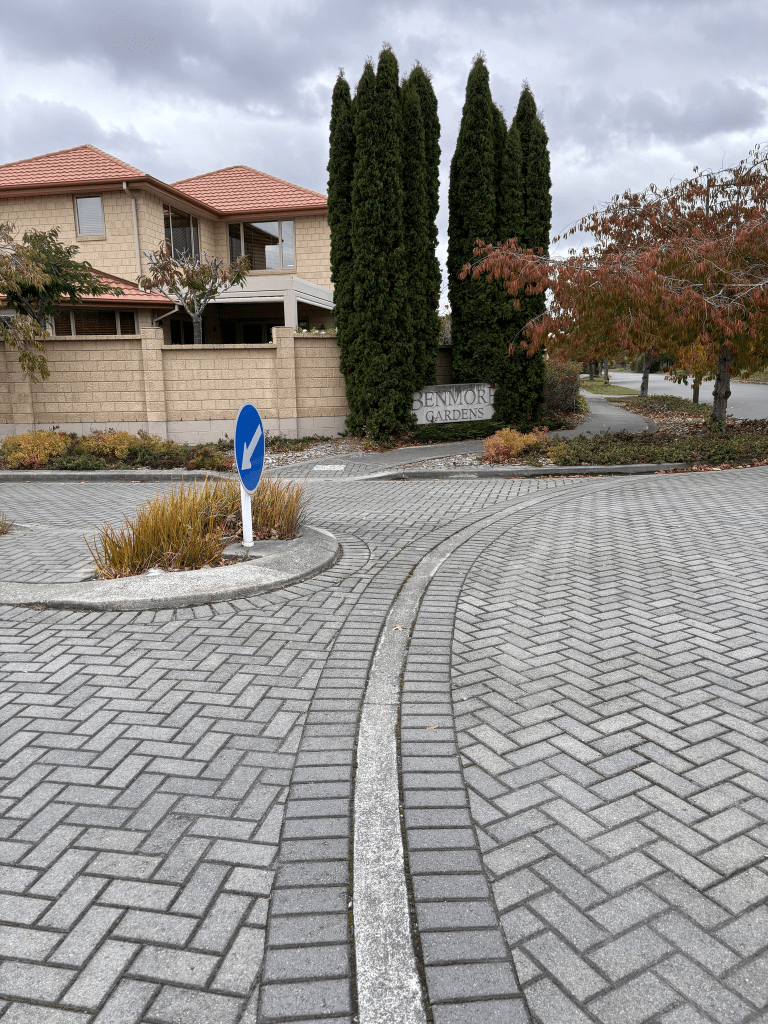
Benmore Gardens in Harewood – Named because it is a family name belonging to Mr and Mrs Macleod. The Macleods are shareholders in Nunweek Estates, developers of this subdivision. Their ancestral home is in the Isle of Skye. Developed off 547 Harewood Road. Named in 1999.
A small amount of information from the library website. Benmore in Scotland is nowhere near Skye.
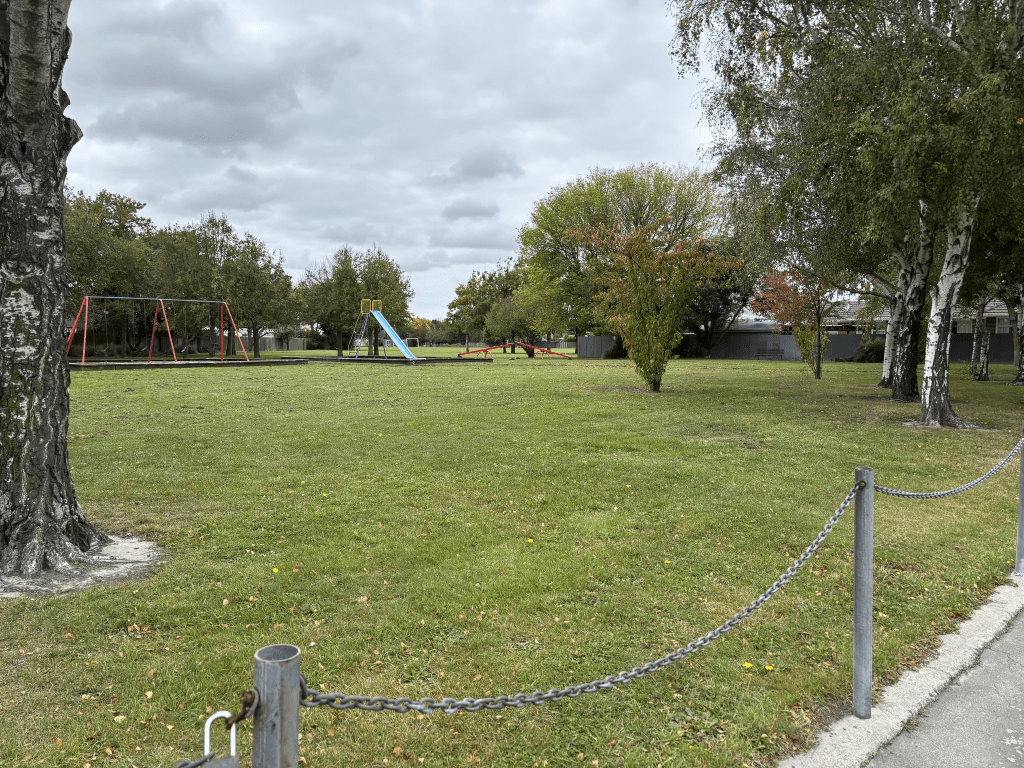
This street is a tree lined street with a footpath on only one side of the street. The houses here were built in 2000s and they are large modern houses. There is an entrance to the Benmore playground / reserve and it is a lovely wee park but I didn’t manage to find the geocache that is supposed to be hidden here.
Applecross Lane in Harewood – Named after a town, river and forest on the Scottish mainland opposite the Isle of Skye. In the Skyedale subdivision. Formed on land once part of the property of Ross Jason Macleod. His ancestral home is on the Isle of Skye and all the streets on his subdivision have their origins there. Named in 2002.
A small amount of information from the library website and nothing that I can add about the name of the street. I googled Applecross in Scotland and I haven’t been there. I checked Ancestry website and his ancestors were from Snizort in Skye.
I didn’t actually walk this street as it is a very narrow private lane with no footpath. The houses here were all built in 2000
Hockey Street in Bishopdale – Named after the Hockey family. The family were early settlers in the Papanui area. Both Arthur and Frederick Hockey farmed on Harewood Road. Frederick William Hockey (1883?-1961), a farmer, sold land for state housing in the Harewood Road, Wairakei Road area in 1955. Named in 1961.
A small amount of information from the library website and nothing that I can add about the name of the street. Nothing on Papers Past for the Hockey family. There were a few ads and a few death notices on Papers Past. In 2019 there was only one state house left on the street.
I parked on this street before going for a walk to find a geocache. This is a tree lined street and all the houses are typical 1960s style. There is a park called Hockey Reserve here which has a playground. There is a walkway here which takes you through to Becmead Drive and what a contrast. You go from 1960s ordinary houses to modern large expensive houses.
Ron Place in Bishopdale – Named after Ronald Hamilton Gee (1913- 1983). Gee was chief health inspector for the Waimairi County County until 1977. For a time it was a policy of the Waimairi County Council to give cul de sacs short names to fit printed maps. Named in 1973.
A small amount of information from the library website and nothing that I add to this information. A few entries on Papers Past for Ronald Gee in connection with his job as a health inspector. Apart from a few death notices most entries on Papers Past for the street were ads for the sale of sections in the 1960s.
I didn’t take any photos here as none of the houses stood out for me. When I walked the street today my first thought was that the houses had to be from the 1960s and I was correct. There is a footpath on both sides of the street which is always great. The houses were typical for the 1960s.
I have now walked all the streets in the suburb of Somerfield so I thought that I would check out the name of the suburb. It is named after Somerfield Farm. Edward Brenchley Bishop who came out to New Zealand on the Charlotte Jane was born at Somerfield House in Maidstone in Kent. He came to New Zealand with his siblings including Frederick Augustus Bishop. They purchased the land in this area and called it Somerfield Farm. Edward Brenchley Bishop was an early mayor of Christchurch. It doesn’t look like Edward ever married and he died in April 1887 aged 75. He is buried at the Barbadoes St cemetery. Edward and his brother Frederick were described as yeoman in census records. Edward was living with his brother Frederick in Cranmer Square before he died. Sounds like they both owned the property here. Frederick was described as a storekeeper or wine merchant in his later years. The brothers owned several plots of land. Yes there is a connection to Brenchley Rd in Lyttelton and the library website says that Brenchley Rd is named after Susannah Alport’s mother. Susannah’s maiden name was Bishop and she is Edward and Frederick’s sister. Their mother was Mary Ann Bishop nee Brenchley.
Ashgrove Tce – formerly River Road and Ashgrove Road. River Road was renamed Ashgrove Road by the Spreydon Road Board in 1911. First appears in street directories in 1913. Becomes Ashgrove Terrace by 1917.
A small amount of information from the library website. Ash trees were mentioned a few times in Papers Past in connection with this area. There was possibly a property with the name Ashgrove but I couldn’t find one in this area. I checked old maps and River Rd ran from where modern day Ashbrook Lane is to Barrington St. Ashgrove Rd ran from Barrington St to Colombo St. Both streets going by a map dated 1929 were Ashgrove Terrace.
River Rd was a very common name in Christchurch and I mostly just found entries about a pumping station in Cashmere. Ashgrove Rd was mostly just ads about heifers and cows for a Mr J Bird who owned a farm near Colombo St.
In 1918 a footpath was to be constructed. In the 1920s there were complaints about the condition of the road because of the heavily loaded vehicles from the shingle pit. The residents requested a bridge across the river including a foot bridge. Wilderness Drain is mentioned. A subdivison is approved subject to accepting responsibility for the reserve.
Note the library website says that street is in the suburb of Somerfield but it probably is in more than one suburb.
In the 1930s Alfred Thomas Smart died and his land was subdivided. His garden became AShgrove Reserve. In 1939 an unidentified newborn male baby’s body was found in the river. The street was flooded in 1936. There was flooding again in 1941. There was discussion about a new hospital to be built nearby. This was obviously built on Cashmere Rd. In 1951 a new secondary school is proposed. Land was purchased in1954 and in the same year residents in the area objected to a school being built.
In 1960 there were complaints about city council workers using the native bush in front of a house as a toilet. In 1967 there were sections available. More sections available in the 1970s. There were obviously many death notices over the years.
I actually walked this street in February 2024 and I did the research then so I don’t know why I didn’t write it up. I parked up near Ashgrove Reserve so that I could hid a geocache in the reserve. The plaque at this reserve has been stolen which is very annoying. I walked to Colombo St and then back to where I had parked my car which is why my photos are a bit out of order. I doublechecked google maps to refresh my memory and there is a sign for She Chocolaterie at the Colombo St end and I don’t recall this being there when I actually walked the street. There is a house at this end dating from 1910 but it is hidden behind lots of trees. The houses on this street date from every decade and many are lovely. Thankfully there isn’t many modern ugly toilet block style on this street. I managed to get a photo of a gorgeous house from the 1920s plus a photo of an Art Deco house. There is a walkway to Cashmere High School from this street and a huge number of badly parked cars at the entrance to the walkway. There is also an entrance to Cashmere Retirement Home from this street. There is a church for the Latter Day Saints here and it looks like a fairly modern building and nothing on Papers Past about it. The buildings are obviously on only one side of the street as the other side is the Heathcote River. The river is the reason for the street occasionally flooding but many of the houses seem to be built on a slight rise and possibly safe from being flooded.
Taylors Avenue in Bryndwr – formerly Taylor’s Road. Named after Joseph Taylor (1836-1918). Taylor came to New Zealand in 1863 on the ship Captain Cook. He became involved with contracting, importing carts and harnesses from England, and worked on forming roads for the Riccarton and other Road Boards. In 1866 he bought 116 acres, land now bordered by Jeffreys Road and Greers Roads. He named his property Wairarapa Farm and ran a small flock of English Leicester sheep there. His home was at what became 143 Wairarapa Road (later 167 Wairakei Road). It was demolished in the early 1930s. The land was gradually subdivided, and in 1958 the last remaining 1½ acres was sold by one of his daughters. Taylor’s Road first appears in street directories in 1914. Becomes Taylors Avenue in 1960.
A reasonable amount of information from the library website and nothing that I can add to it about Joseph Taylor. His obituary had almost the exact same information. Not much on Papers Past either. There was a subdivision on the farmland in 1920 but then nothing until the 1950s. A few engagement notices plus a woman was attacked in her sister’s home in 1957. Most mentions of the street were ads.
There are houses here from every decade from 1910 to 2024 with most houses being built between 1980 and 2000. There is a variety of architectural styles with a few ugly toilet block style but some of the modern looking houses were built in 2000. I was a bit surprised as I was expecting them to have been built in the last couple of years. It seemed to be a pleasant street when I walked it this morning. Many of the older houses have been demolished but a few are still standing. I wish that I could remember the website where I found a really decent map of streams in Christchurch as my gut tells me that there is a stream running under the houses on one side of the street. I should also pick a day that isn’t bin collection day for walking streets. I had been at Fendalton Library and decided to walk a couple of streets.
Candys Road in Halswell – formerly Candy’s Road. Named after Charles Benjamin Candy (1825- 1905). Candy ran a dairying and cheesemaking business in Halswell 1875-1902. He took up the land where Candys Road was later developed. A tender was accepted by the Spreydon Road Board for the gravelling of Candy’s Road in 1875. First appears in street directories in 1908.
A small amount of information from the library website. Charles Benjamin Candy’s obituary said that he sold his property in 1898 and moved to Moorhouse Ave to live. He apparently won prizes for his cheeses.
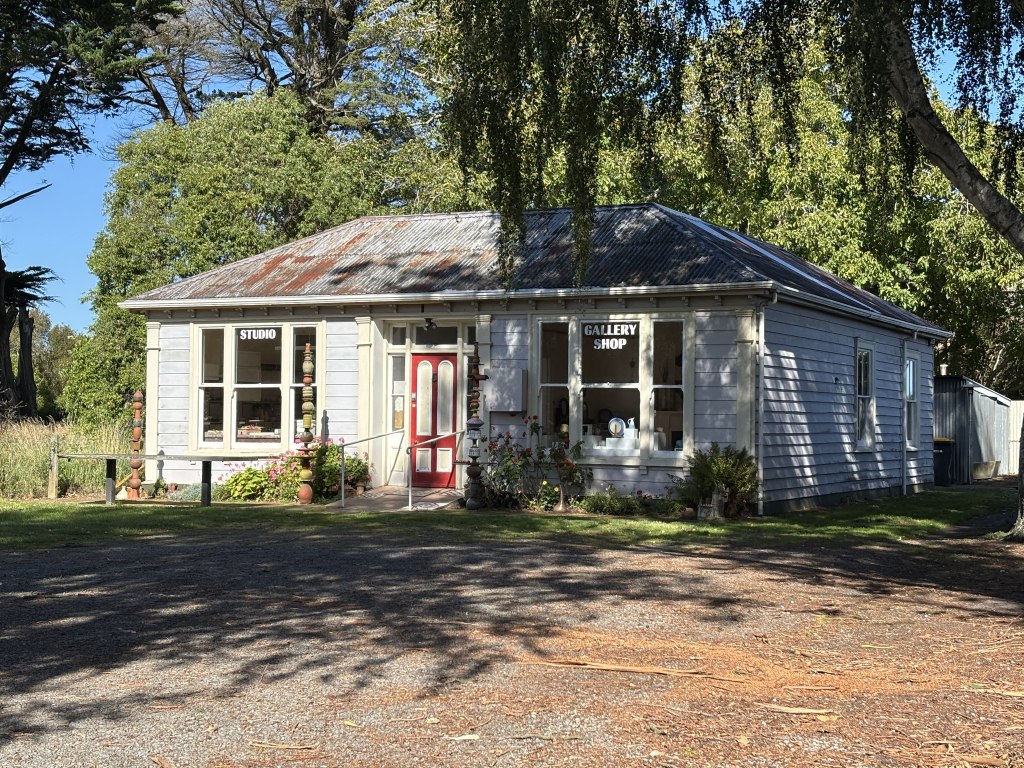
For an older street there wasn’t much information on Papers Past. In 1879 tenders were invited for shingling of the road. In 1936 the Canterbury Central Co-Op Dairy Company was selling their property here. There was a couple of death notices in the 1940s. In the 1950s and 1960s Mr Gardiner allowed his farm to be used for bike racing. In 1975 and 1984 there were articles about the Halswell Pottery group. The group started in 1971 in an old farmhouse that was owned by Ron and Joan Gardiner. Several entries on Papers Past about the pottery group mostly about when they were open to the public.
There is only 7 houses on this road most are at Halswell Rd end and were built between 1950 and 1990. I managed to get a photo of the house that was built in 1910 but hard to see through the trees. The house built in 2016 is at the Sabys Rd end of the road. I couldn’t get an age for the old farmhouse that houses the Halswell pottery group as it wasn’t on the valuation website that I use but it possibly dates from 1910 as well.
As it is a country road there isn’t a footpath and at the Halswell Rd end as well as most of the houses being here there is also Moffatts Flower Company. There is roadworks on part of the road at the Sabys Rd end of the road. There was a nice wide grass verge to walk on and the road was shorter than I was expecting.
Hindess Street in Halswell – Named after John Henry “Jack” Hindess (1937- 2010). Hindess was a survey cadet with Osborn & Co., the survey firm carrying out the subdivision where the street was developed. Developed in 1961 by Andrew James Cunningham, a farmer of 250 Halswell Road. First appears in street directories in 1964. Information supplied in 2014 by Bob Pritchard, subdivisions officer, Christchurch City Council.
A small amount of information from the library website. The Hindess family came to New Zealand in April 1951 and lived in Riccarton. By 1963 John Henry Hindess was living in Hamilton but then moved to Taupo. The parents had moved to the North Island by 1972. The family were naturalised in July 1977.
Not a lot of information on Papers Past. There were sections available in 1963 but some must have sold earlier than this as in 1962 there was a ban on septic tanks. The owners of the properties weren’t happy as there was agreement when they purchased the sections that septic tanks would be allowed. There were a few death notices and a few ads.
Most of the houses were built in the 1960s with a few built in 1970s and 1990s. None of the houses stood out for me and were typical 1960s houses. I walked to this street through a reserve from Lancewood Drive and was on my way to my car which I had parked on Ensign St.
Ensign Street in Halswell – Named after the Mataura Ensign, a newspaper first published in Gore, Southland. Named by the developer, Karl Scott (1910-1997). A journalist, he was employed by the Mataura Ensign in his first job. This newspaper was named after the Scottish newspaper the Northern Ensign and was first published on 10 May 1878. First appears in street directories in 1958. Information supplied in 2008 by Bede Cosgriff (d. 2011) in an interview with Margaret Harper.
A small amount of information from the library website and nothing that I can add about the name. I researched Karl Scott and I then realised that I had already researched him in 2020 when I had walked some nearby streets. The electoral rolls have him living in Riccarton after moving to Christchurch from Gore. He purchased a property called Oaklands which used to be called Halswell House. He probably kept horses on this property and he wrote at least one book about horse racing.
A reasonable amount of information on Papers Past and there were sections for sale as early as 1955. These sections were between Nottingham Ave and Checketts Ave. There were several sections for sale in the 1960s. There was possibly a garden nursery in the street in the 1960s as there were lots of ads for the sale of plants especially flowers. In 1961 the road was sealed and footpaths formed in 1964. In 1960 there was negotiations to purchase land for a school on this street but the school is actually a good block away from Ensign St. In 1969 Ensign St between Lillian St and Nottingham Ave had a name change to Wales St. Also in 1969 the residents were against 13 shops and a supermarket being built here. In 1973 the new Ensign Street Shopping Centre opened. It was opposite the medical centre. The medical centre was probably fairly new as Dr N C McGill sought permission in 1972 to establish a medical centre on the street. In 1976 residents wanted the pointed pieces of Halswell stone to be removed claiming that they were like sharks teeth and dangerous. There were a few death notices and in the 1980s there were several ads for the supermarket Keystores. The 1983 storm is mentioned as several houses in Halswell lost their roofs. The wind and hail is also mentioned. I remember this storm as I was living in Hoon Hay and we had a broken window as a result of the storm. Thankfully I had moved my son’s cot into the hallway.
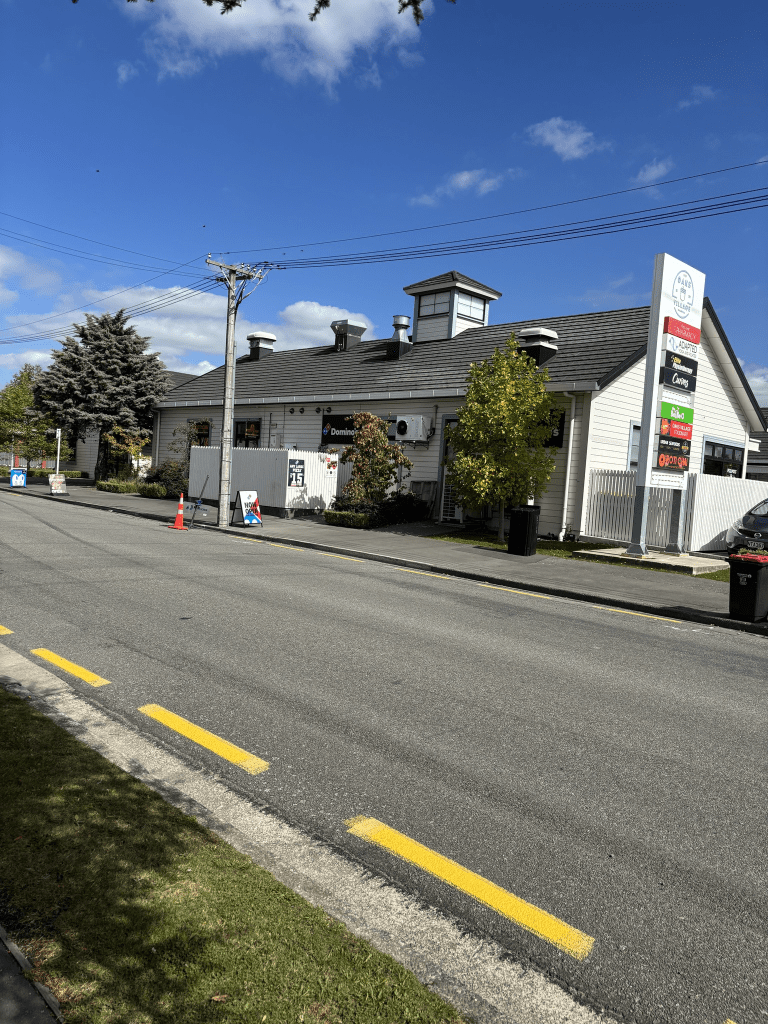
I walked this street yesterday as I was doing a geocaching lab adventure which started on this street. There are two painted powerboxes on the street. Most of the houses on this street were built in the 1960s with a few built in 1950 and 1970. There were a group of houses that I thought looked possibly like modern social housing but going by the valuation website they are just three flats. There is a variety of house styles but none stood out for me. There is still a medical centre on the street plus a shopping centre. I didn’t recognise the shopping centre as it looks like it has been rebuilt. It is several decades since I used to come here to get my hair cut. Lots of roadworks on the street at the moment.


 Lytteltonwitch's Walking the streets of Christchurch Project