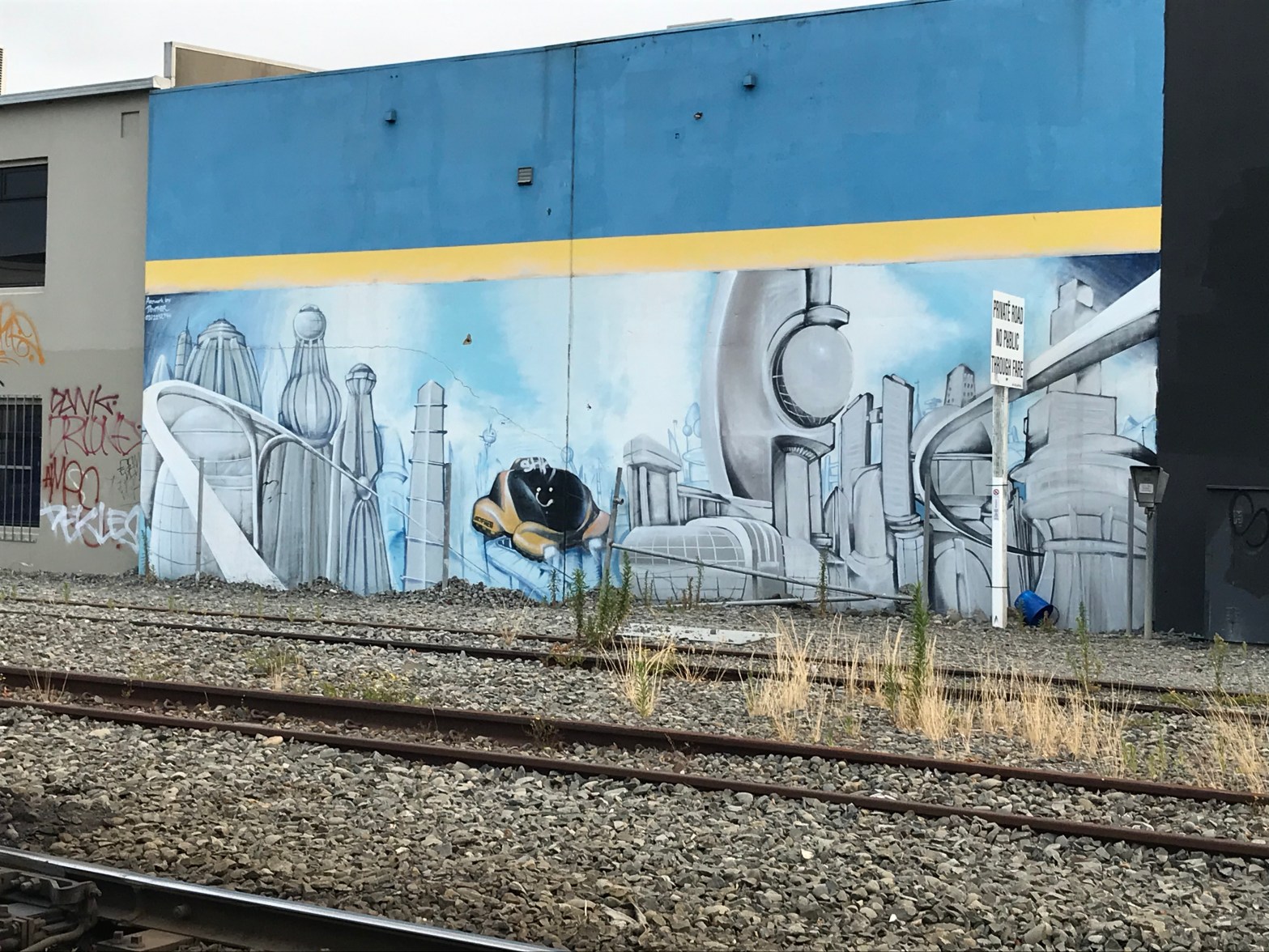
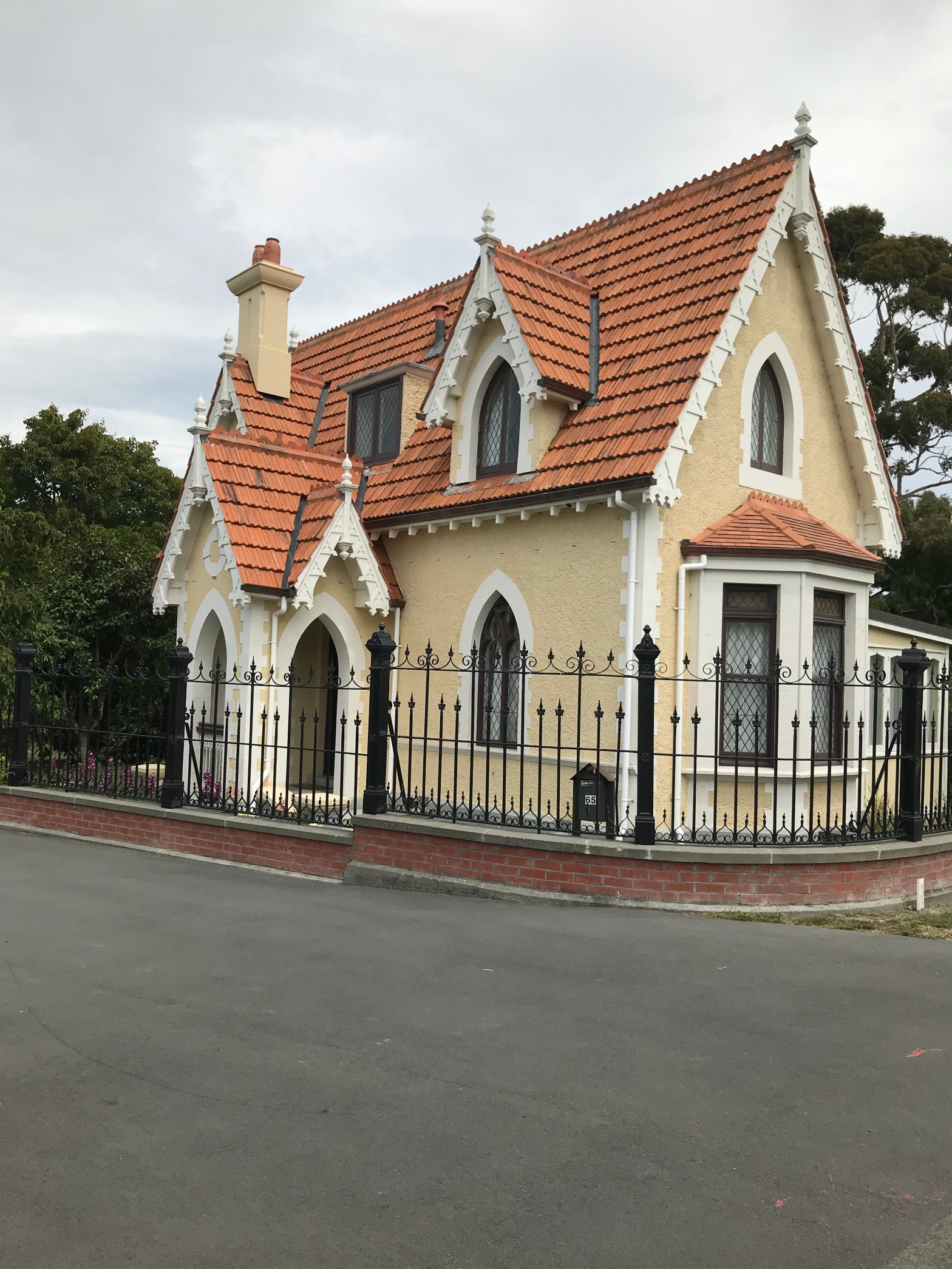
Moore Street in the suburb of Sydenham, Christchurch

Moore St – Named after Thomas Moore (1779-1852). Nelson Street first appears in street directories in 1892. Re-named Moore Street in 1909. Moore was an Irish poet. Probably named to continue the theme of “poets and writers” streets of Sydenham, Addington and Waltham named by a committee of the Sydenham Borough Council in January 1880.

A small amount of information from the library website. A short street that runs from Strickland St to Browning St. At Browning St it curves and looks like just one street but the street name changes. Not many house but one cottage looked like an original workers cottage.

I did look at Papers Past but there were too many streets with the same name in several towns. I suspect that the reason for the name change from Nelson St to Moore St is that there were already two streets with that name in Christchurch, One in New Brighton and one in Riccarton.

Brisbane Street in the suburb of Sydenham, Christchurch

Brisbane Street formerly an extension of Barbadoes Street. Probably named after Sir Thomas Brisbane (1773- 1860). Formerly an extension of Barbadoes Street but when crossed by the railway in 1948 it became a separate road. Became Brisbane Street on 1 September 1948 when 120 streets were renamed. Brisbane was a soldier and statesman after whom the Australian city is named.

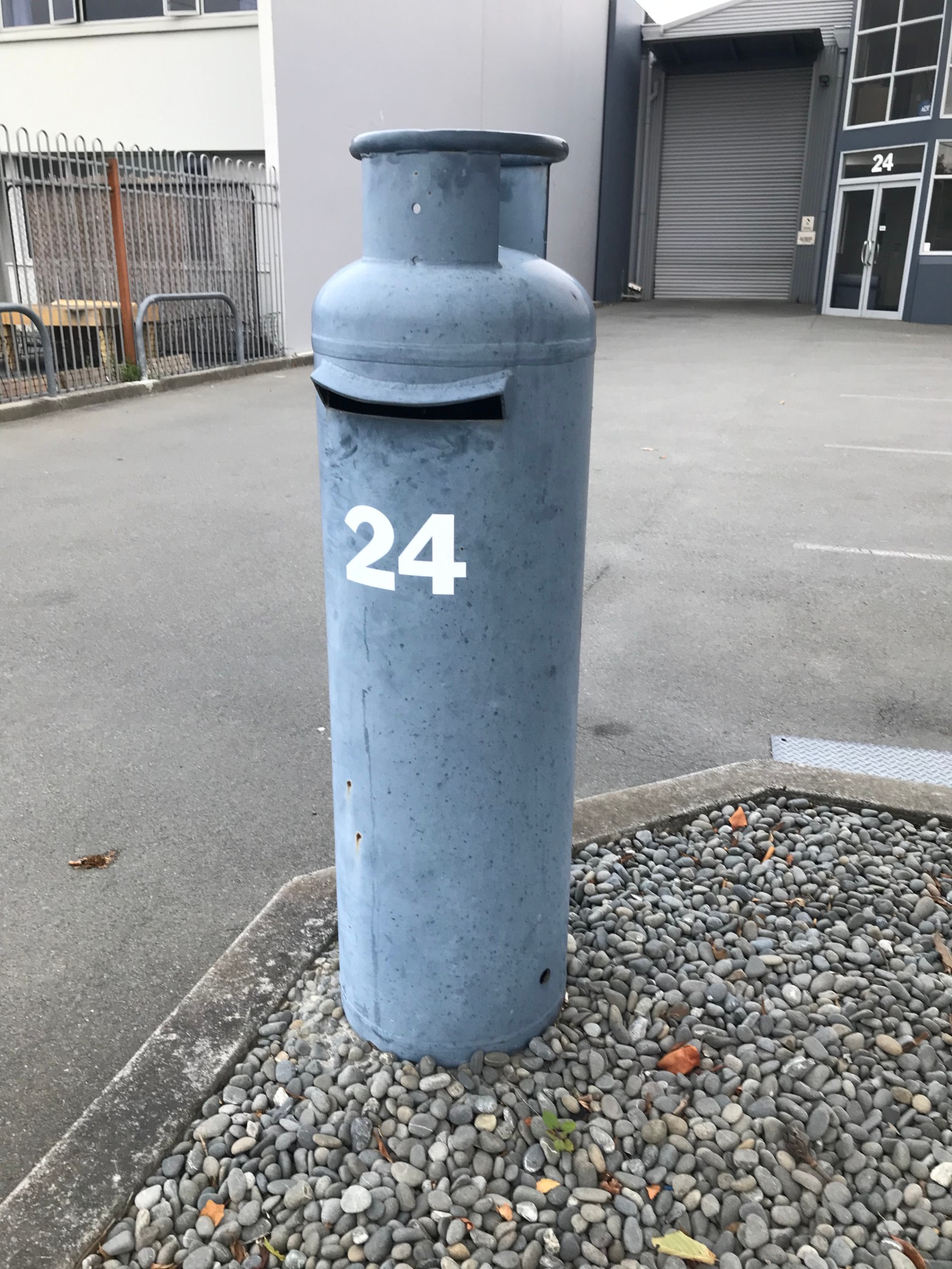
A small amount of information from the library website. After checking Papers Past there is nothing that I can add. In the past this was a residential area but now only has businesses here. As with the rest of the area there are a lot of businesses connected to the car industry. There was a funeral business here and it was promoting the fact that it is run entirely by women.There was an interesting letterbox outside a gas business and the letterbox is made from a gas cylinder. I also liked the entrance to a business as they had used greywacke stones. Another had a small curb with rocks and other businesses in nearby streets had similar curbs. A mixture of new and old buildings.

Coleridge Street in the suburb of Sydenham, Christchurch

Coleridge Street – Formerly part of Fifth Street. The streets south of, and parallel to, Moorhouse Avenue were named in numerical order. Re-named Coleridge Street. Named after Samuel Coleridge (1772-1834). Rooms to let in “Fifth Street, short distance from Gas Works” are advertised in the Star in 1874. Fifth Street appears in street directories in 1878 and on an 1879 map. The section of Fifth Street west of Gasworks Road (later Waltham Road) first appears in street directories as Coleridge Street in 1887. Coleridge was an English lyrical poet, critic, and philosopher. One of the “poets and writers” streets of Sydenham, Addington and Waltham named by a committee of the Sydenham Borough Council on 19 January 1880.

A reasonable amount of information from the library website. I checked Papers Past and nothing that I can add. Another street in Sydenham that used to be residential but now a business area. As with the rest of Sydenham a lot of businesses connected to the car industry. There was a funeral business here and there were at least three or four funeral businesses that I walked past last night. Another mixture of new and old buildings. Too many different types of businesses for me to remember them all. There was street art here and it is slowly being covered up by a new building. I liked the art work at a business especially the one of a man abseiling. A couple of the buildings looked like they were originally older houses from the residential days of this street.

Gasson Street in the suburb of Sydenham, Christchurch

Gasson Street – Part of Madras Street, the section of the street south of Moorhouse Avenue. Named after the Gasson family. The Gasson family were early settlers in this area. Charles Gasson (1846?- 1905), a carpenter, lived with his wife, Harriet, at Sixth Street (later Stanley Street). Named Gasson Street on 1 September 1948 when 120 streets were re-named.
A small amount of information from the library website. I am sure that I have a photo of this family’s grave somewhere. I remember thinking to myself when I took the photo that there had to be a connection to this street. As with the rest of Sydenham it used to be a residential area that it now a street full of businesses. A mixture of new and old buildings. I got the feeling when walking in this area that every type of business connected to cars is in this area. There are other businesses but cars do dominate. This street runs from Brougham St to Moorhouse Ave and there is street art by the railway line. Lots of horrible graffiti as well on the buildings near the railway lines. There were a couple of cafes on this street that actually looked OKish.

Hawdon Street in the suburb of Sydenham, Christchurch

Hawdon Street -Named after the Honourable Joseph Hawdon (1813-1871) and his son, Arthur Joseph Hawdon (1844-1920). Hawdon was an explorer in Australia and a runholder in Australia and New Zealand. He lived in New Zealand from 1863 and was appointed a member of the Legislative Council by the Stafford ministry of 1866. He died in Christchurch. Arthur Hawdon, his eldest son, was the first elected councillor for Selwyn County. Hawdon’s Railway Paddock, 20 acres of land belonging to Arthur Hawdon, “adjoining the Christchurch Railway Station”, is advertised for sale in the Star in 1875. That this land was part of Joseph Hawdon’s estate is mentioned in the Star in a report of a meeting of the Sydenham Borough Council held in 1878. The street appears on an 1879 map.

A reasonable amount of information from the library website. Nothing that I can really add to this but note I haven’t looked up Joseph Hawdon yet as I was too tired last night. Yet another street in Sydenham that used to be residential but is now all businesses. The usual businesses connected to cars along with other businesses. A mixture of new and old buildings. I like it when a business has interesting street art style of artwork on their building. This street also had a cafe that looked OKish. What I mean by this is that it looks better than what is often aimed at local workmen. No individual business stood out for me but note I do like interesting shaped buildings, artwork or old historic looking buildings.

I found a huge amount of information about Joseph Hawdon and his family on Papers Past. Joseph was born in Walkerfield, County Durham and came to NZ via Australia. His children were born in Melbourne and it is said that Joseph pioneered the overland stock route from Sydney to Melbourne. It is said that the reason he moved to Canterbury was because of drought in Australia. He was one of the first Australian Colonists to move to NZ. Joseph died 12/04/1871 of dropsy caused by excessive debility and he is buried at St Peter’s at Upper Riccarton. At some stage his widow Mary must have moved back to England as she died in London in 1905 and in 1895 when her daughter got married she was living at Albert Hall Mansions, Hyde Park.

Joseph’s son Arthur took over Joseph’s property in NZ but he eventually moved to Peel Forest area where he died in 1920. Another one of Joseph’s sons Cyril died in Hove, UK in 1917.

Joseph had a grandson Captain Kynard Hawdon who died of cholera in Sprangagar, Kashmir. His obit mentions that he was the hero of Quetta Journey of April 1905.

In 1880 I found an article about a stained glass memorial window for Joseph Hawdon being installed at the Cathedral. An article dated 05/02/1934 gives good information about the Cathedral.
Kingsley Street in the suburb of Sydenham, Christchurch

Kingsley Street – Formerly part of Third Street. The streets south of, and parallel to, Moorhouse Avenue were named in numerical order. Re-named Kingsley Street. Named after Charles Kingsley (1819-1875). Third Street is first mentioned in the Star in 1873. Does not appear in street directories, only maps. On a 1879 map it is shown running from Harper Street (later Orbell Street) to Gasworks Road (later Waltham Road). From Hawford Street to Gasworks Road was renamed Kingsley Street. One of the “poets and writers” streets of Sydenham, Addington and Waltham named by a committee of the Sydenham Borough Council on 19 January 1880. Kingsley was the author of The Water Babies, Westward Ho etc. Kingsley Street first appears in street directories in 1887.

A reasonable amount of information from the library website. I checked Papers Past but didn’t find anything extra.Another street in Sydenham that used to be residential but is now a street full of businesses.The usual mixture of new and old buildings.
There was one business that had appeared on a TV show called Renters. The business called Escape appealed to me but then we know how much I like travelling.. I couldn’t see the vans properly but they were painted in bright colours. I actually wouldn’t like to hire these vans as it makes it too obvious that you are a tourist and you are then targeted by the wrong people.
Can I just say that I have stayed in Westward Ho.

Maldon Street in the suburb of Sydenham, Christchurch

Maldon Street – formerly Matson Street Probably named after Maldon in Essex. Matson Street first appears in the Star in 1876 in an inquest report. First appears in street directories in 1887. Re-named Maldon Street on 24 May 1926 when 21 streets were renamed.
A small amount of information from the library website. A small street and every business here was related to the car industry except for a cleaning business. No photos and nothing stood out for me here.

I have now checked Papers Past and this street had more interesting information than the other Sydenham streets that I looked up. The reason that the street name was changed from Matson St to Maldron St was because there was another street called Matson St in Papanui. No reason given for why Maldon was chosen.There was excitement on this street in 1932 when someone tried blowing up a dairy with gelignite.This wasn’t a corner shop but a milk company called Milk Coupon Company This was an act of sabotage possibly by a rival company. There was a milk price war and the Milk Coupon Company was selling their milk cheaper than other companies. In the 1930s there seemed to be a mixture of houses and businesses. By the 1940s there were car businesses on this street.

Washington Way in the suburb of Sydenham, Christchurch

Washington Way — Named after the Washington, the first train to travel from Christchurch to Dunedin. Named because the street was developed near the site of the Moorhouse Avenue Railway Station subdivision. First appears in street directories in 1995.
A small amount of information from the library website. That information was more interesting than I was expecting. The buildings here are all fairly new and they look good from this street but the railway side of the buildings are covered with horrible graffiti. The back entrance to McDonalds was here and they were busy. The skateboard park was fairly busy and I didn’t take photos here even though there is some good street art here. I took photos here a couple of years ago of the street art. This street had a mixture of businesses and not a car related business in sight. A few organisations are based here.

Found a Wikipedia page this included information about this train engine. There were two American built locomotives were ordered and they were known as NZR K class 1877. Up to that date only UK built engines were being used. The first two locomotives were called Washington and Lincoln. Look up the Wikipedia page as they are gorgeous looking. Washington As in the library website information the Washington was the first train to go from Christchurch to Dunedin on the newly completed Man South Line. Eventually these engines became obsolete and were dumped. Washington was exhumed from it’s river grave by the Southland Vintage Car Club in 1974 and it is now at The Plains Vintage Railway and Historical Museum. Guess where I now want to visit.

Willowbrook Place in the suburb of Fendalton, Christchurch

Willowbrook Place –Named after Willowbrook, the town house in Fendalton Road belonging to, and named by, John Barton Arundel Acland (1823- 1904). He named his property after the childhood home of his wife. William Widdowson (1833-1915) originally bought the land, part of Rural Section 60, from William Guise Brittan in 1865 and built a 12-room house. He advertised the property for sale in 1868, as it was too far for his sons to travel to Christ’s College every day. Acland bought the property on 5 March 1874 and by the time Widdowson advertised an auction of his stock and chattels later that month the property had been named Willowbrook. Acland was a barrister, sheep farmer, and politician. He married Emily Weddell Harper (1830-1905), daughter of Bishop Harper. Her sister Ellen Shephard Tripp (1834-1916) married Acland’s business partner Charles George Tripp (1826-1897). She describes in her book their early life at Willowbrook, a house standing on the border of Slough and Eton, in England. The Christchurch Willowbrook was demolished about 1956 when the land was subdivided. By 1958 five homes had been built there and half of the total subdivision had been sold. A Home of the Year had been built there by Maurice R. Carter Ltd. First appears in street directories 1960.

A reasonable of information from the library website and I can’t see that I can add anything here. These are all well-known early settlers and if you google them there will be lots of information out there.
A small street that runs off Fendalton Rd and I didn’t take any photos here. Mostly brick houses with just a couple of newer houses. I remember thinking that this was a very ordinary looking street considering it’s location.

Fendalton Road in the suburb of Fendalton, Christchurch

Fendalton Rd – formerly Fendall Town Road. Princess/Princ es Street was incorporated into Fendalton Road. Named after Walpole Cheshire Fendall (1830– 1913) Fendall Town Road was cut through Rural Section 18, 50 acres in Fendall Town purchased by W. C. Fendall. Fendall Town Road is first mentioned in The Lyttelton Times in 1857. Fendalton Road first appears in street directories in 1894. At that time Fendalton Road extended into what became Burnside Road (later Memorial Avenue). A section of Fendalton Road near Holmwood ). Road was formerly named Princess or Princes Street. First mentioned in The Press in 1880 when “53 beautiful villa sites adjoining Mr Wilkin’s residence at Holmwood” are advertised for sale in The Press.

A reasonable amount of information from the library website. Nothing that I can add here as Walpole Fendall is one of our more well-known early settlers. If you google him I am sure that you will find a huge amount of information.

I walked this street yesterday after being at the University. A quick coffee at a cafe at the Clyde Rd corner before walking home via this street. A fairly long street and sadly many of the wonderful old houses have been demolished. Some still remain but many are hidden behind tall fences and security gates. The rebuilt houses are a mixture of styles. Some have been rebuilt to look similar to the original houses but others are modern looking houses. Some ugly toilet block style here. Also along this street is Fendalton Park, Mona Vale gatehouse and entrance to Mona Vale and Latter Days Saints church. I stopped at St Barnabas as it was open. I realised that I had never been inside this church before so I was pleased to be able to have a good look at it.
I took so many photos.