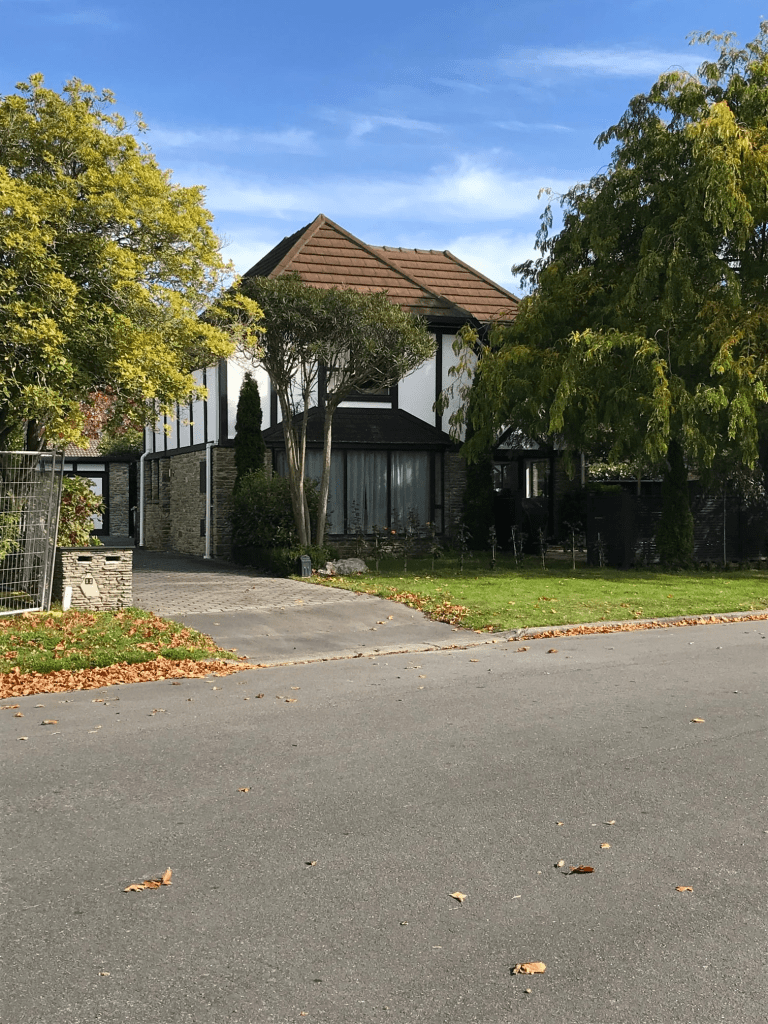
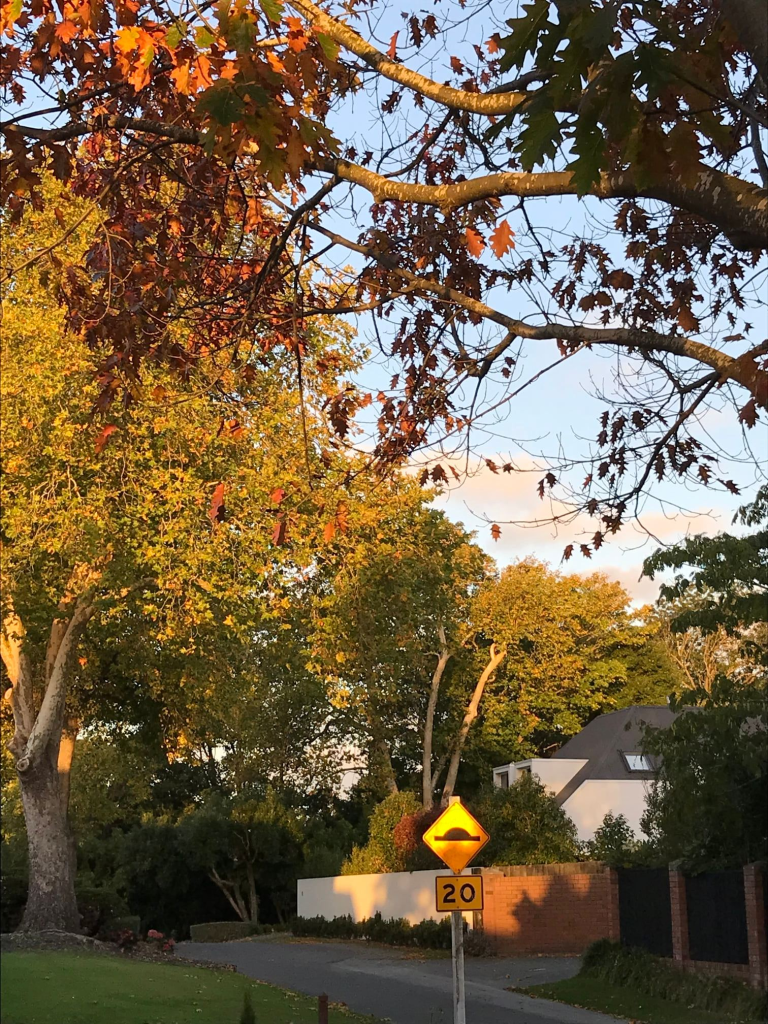
Thurlestone Place in Burnside and nothing on library website. The houses here were built in the 1980s so I am surprised that there is no mention on the library website. There is one house built in 1950s and my best guess is that the land attached to this house was developed. I couldn’t see the older house as it was down a long curved driveway. The street was developed between 107 and 117 Grahams Rd. There is a tiny reserve at the end of the street next to the driveway for the older house. My usual complaint about only half the street having a footpath. Some nice houses here but beyond my budget. I am always amused when I see mock Tudor houses. Thurlestone is a place in Devon in the UK.
Witbrock Crescent in Burnside – Named after Annie Elizabeth Witbrock, née Ell, (1868-1947).Annie Witbrock is listed in street directories from 1939 living at 184 Burnside Road (later
Memorial Avenue). This was near Grahams Road. [Her daughter, Mabel Winifred Witbrock (1893-1991), sold the 22 hectare property for $1.2 million to City Realties Ltd in 1989. It was one of the last original family properties left in the area and was particularly noteworthy because a raised section running across the land was an old bank of the Waimakariri River.] Witbrock Crescent first appears in street directories in 1977. Information supplied in 2010 by Ngaire Anne Kelly, granddaughter of Annie Witbrock and niece of Mabel Winifred Witbrock, in an interview with Margaret Harper
A reasonable amount of information from the library website and I personally don’t think that this street was included in the block of land sold in 1889 as most houses were built in the 1970s. My gut feeling is that Grangewood Lane and the area around that street is where the land that was sold in 1989 was situated as the houses there were built in the 1990s.
Only 29 properties here and they all have a different design. A couple really stood out for me but not sure that I actually liked them. Nothing on Papers Past for this street. It is a pleasant tree lined street but I suggest that you watch very carefully where you walk as the tree roots have badly damaged the footpath in places. When walking along Arlington St becomes Witbrock Crescent and the road is very narrow at this part. There is a wee reserve here and I went back today to check it out as I totally missed it yesterday. It is a tiny reserve and not obvious and I noticed it when checking google maps.
Grangewood Lane in Burnside – Formed on the driveway once leading to the homestead owned by Mabel Winifred Witbrock (1893-1991). This house was moved to Old Tai Tapu Road.
Developed about 1990. Information supplied in 2010 by Ngaire Anne Kelly, granddaughter of Annie Witbrock, in an interview with Margaret Harper.
A small amount of information from the library website. I couldn’t find out online anything about the original house and would love to know if it was called Grangewood and where in Tai Tapu the house is. Apart from one house built in 2017 the rest were built in 1990s. No footpath but the houses are lovely. One house I really liked but well beyond my budget.
Pulford Place in Ilam – Named after Douglas Alan Pulford (1918- 1990). Pulford was a stock agent. One of the streets developed in the 1960s by Maurice R. Carter Ltd., a company which built 138 houses in a block of land off Grahams Road bought from the Pyne, Gould, Guinness Ltd. superannuation fund. First appears in street directories in 1968. [This was developed later than other streets in the PGG subdivision.]Information supplied in 2008 by Maurice Carter (d. 2011) in an interview with Margaret Harper.
A small amount of information from the library website. All houses were built in 1960s and they were either typical Maurice Carter style or had a double garage in front with the house on top. This tree lined street runs off Powell Crescent and nothing stood out for me. Looked like a pleasant street.
Powell Cresent in Ilam – Named after Robert Frederick James Powell (1902- 1976). Powell was head auctioneer, then inspector, for Pyne, Gould, Guinness Ltd. One of the streets developed in the 1960s by Maurice R. Carter Ltd., a company which built 138 houses in a block of land off Grahams Road bought from the PGG superannuation fund. Named Wavell Street in 1961 by the Waimairi County Council but this name was never used. Powell Crescent first appears in street directories in 1966.
A reasonable amount of information from the library website and nothing that I can add about the name of the street. Papers Past mostly only had ads for sections and houses for sale. Most houses were built in the 1960s and are made of brick. Some were made from something called Roman brick. I had to google it and the modern Roman brick is longer than the normal brick. Many of the houses had a double garage in front with the house on top. The subdivision was called Glenburn subdivision. A pleasant tree lined street and one house stood out because of the shape. I can’t think of a way to describe it.
Bullock Place in Ilam – One of the streets developed in the 1960s by Maurice R. Carter Ltd., a company which built 138 houses in a block of land off Grahams Road bought from the PGG superannuation fund. First appears in street directories in 1966. Information supplied in 2008 by Maurice Carter (d. 2011) in an interview with Margaret Harper. CH357/50 Waimairi County Council minutes book, 1961, p 403, held at Christchurch City Council archives.
A small amount of information from the library and I would seriously love a look at the council archives. Only 8 properties on this tiny street and most built in 1960s. I was actually surprised there was that many houses but then realised that at least three of them are on back sections. Only two entries on Papers Past and one was a death notice and the other was an engagement notice. I was actually walking Grahams Rd and was walking past Bullock Reserve and took a short detour to walk this tiny street. One of the houses has a craft and gift shop but I didn’t visit. Another tree lined street with houses built built by Maurice Carter. He was a busy man. The street is probably named after someone and I have narrowed down to two men. Either Garnet Bullock who died suddenly in 1962 or Thomas Arthur Bullock who died in 1972. One was an accountant and the other was a salesman.
Hartford Street in Burnside and nothing on library website. Another street from this area that isn’t mentioned on the library website. The houses date from 1960s and 1970s and this street was part of the Sunnyridge subdivision. The company Sunnyridge Ltd gave clients a variety of plans to choose from so there is a bit of variety with house styles. I couldn’t find out who was the owner of the company and I searched Papers Past and the Companies Office. The Sunnyridge subdivision covered a huge chunk of land in this area and almost overlapped Memorial Ave subdivision.
Not a lot on Papers Past apart from lots of ads for the selling of sections. Most the ads gave Fendalton as the suburb. In 1967 the ads were mostly for ownership flats which were a big thing in 1960s and 1970s. The street runs from Arlington St to Kendal Ave and is a pleasant tree lined street. There was at least one plum tree among these trees. The street will be named after a place in the UK and there were two to choose from.
Ilfracombe Place in Burnside- Named after Ilfracombe in Devon, England. In a subdivision by Maurice F. Carter Ltd. First appears in street directories in 1966. Information supplied in 2008 by Maurice Carter (d. 2011) in an interview with Margaret Harper.
A small amount of information from the library website. The houses date from 1960s and have the typical Maurice Carter look about them even the ones that have been modernised. A pleasant tree lined street with nice gardens. There was one unkempt looking garden and it was a property that was for sale. I really shouldn’t mock unkempt gardens as my garden isn’t the tidiest. This street runs off Arlington St and Ilfracombe in the UK isn’t that far away from Arlington in the UK. There was practically no information on Papers Past apart from a couple of ads for selling a house in 1968. It was possibly part of the Maurice Carter Memorial Ave subdivision but no mention in Papers Past.
Arlington Street in Burnside – In a subdivision by Maurice F. Carter Ltd. First appears in street directories in 1962. Information supplied in 2008 by Maurice Carter (d. 2011) in an interview with Margaret Harper.
A small amount of information from the library website and the forming of this street wasn’t as simple as this. There was at least three if not four separate subdivisions that created this street. All the subdivisions seemed to be properties on Memorial Ave and Arlington St was created in the middle of the properties. There was at least four properties on Memorial Ave between Grahams Rd and Woodridge Rd ( Roydvale Ave) that were sold off and subdivided. The ads have properties for sale on both Memorial Ave and Arlington St. There was the Memorial Ave subdivision ( Maurice Carter), Parkvue subdivision, Sunnyridge subdivision and there were also subdivisions for the other side of the street. Many ads on Papers Past and some have maps of the sections. Because of these subdivisions I suspect that houses on Memorial Ave would have been renumbered at this stage. This was a very busy place in the 1960s and 1970s with all the houses being built. The older houses are at the Kendal Ave end of the street and most built in 1960s. In 1966 and 1967 there was talk about extending the street to Grahams Rd but that obviously didn’t happen. The street runs from Kendal Ave to Witbrock Crescent. The street possibly ended at Ashbourne St until 1990s. At the Witbrock Crescent and Ashbourne St end of Arlington St the houses all date from 1990s plus a couple of more recent houses. There is a house here from 1940 and it is highly likely that the land from this property was subdivided in the 1990s. In 1971 there was much discussion about the number of accidents at the intersection of Burnside Crescent, Kendal Ave and Arlington St mostly caused by cars turning right. There is also a shopping centre on that corner.
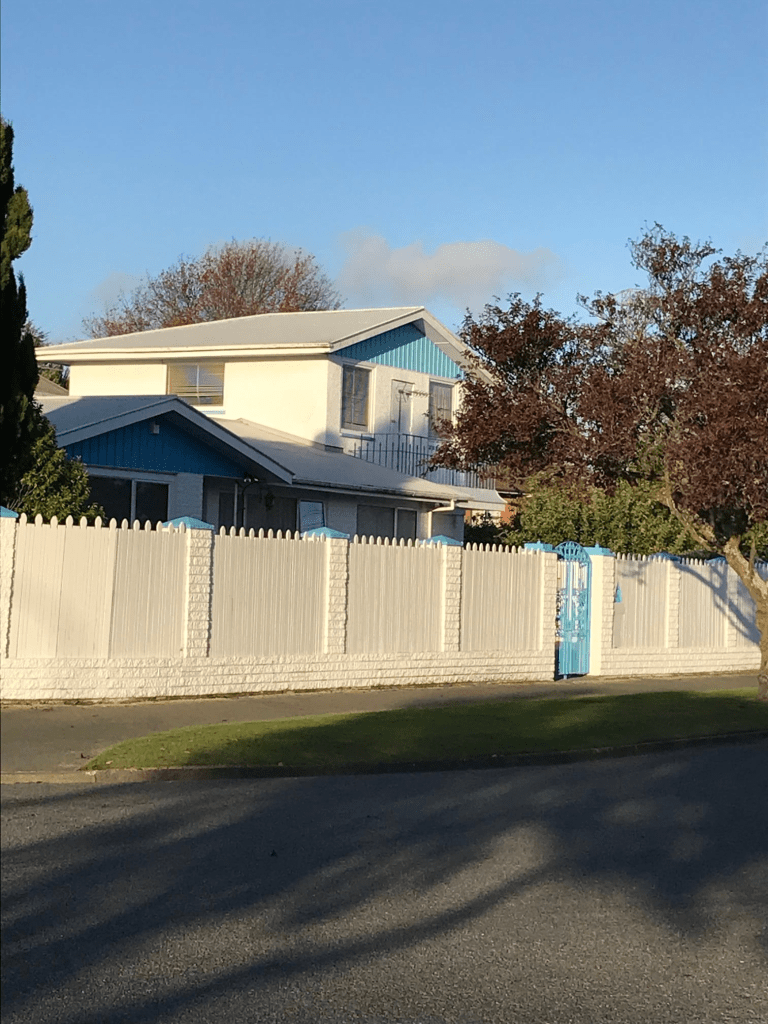
My first thought was that this street was named after a place in the US but it is named after Arlington in Devon. There are so many different styles of houses here and even what I am now calling Maurice Carter style weren’t obvious. Many of the older houses have been updated. There was one I liked and it would have been a Maurice Carter design but had been painted white with bright blue windowsills plus the gates were the same bright blue. The 1940s house had a well established garden with tall trees so I couldn’t gawk at it as much as I would have liked. There is a walkway through to Memorial Ave next to this house. I did wonder if this was the original house owned by Mabel Witbrock and the date of the subdivision would fit in with her selling a property.
Annell Place in Burnside – Named after Annie Elizabeth Witbrock, née Ell, (1868-1947).Named by her daughter, Mabel Mabel Winifred Witbrock (1893-1991). Annie Witbrock was the daughter of Charles and Mary Ell and a cousin of Henry George “Harry” Ell (1862- 1934). She is listed in street directories from 1939 living at 184 Burnside Road (later Memorial Avenue)Information supplied in 2010 by Ngaire Anne Kelly, granddaughter of Annie Witbrock, in
an interview with Margaret Harper.
A reasonable of information from the library website. This street would have been part of the Witbrock Park subdivision and runs off Witbrock Crescent. Only 9 properties here and 6 were built in 1970s and 3 in 1980s. Looked like a pleasant street but only had a footpath on one side of the street and we all know how much this annoys me. The houses built in 1970s had a footpath but the side with no footpath had the 1980s houses.