Waverley Street in the suburb of Sydenham, Christchurch

Waverley Street – formerly Templer Street Named after Waverley, a town in Surrey, England. Templer Street is first mentioned in the Star in 1888 in a report of a meeting of the Sydenham Borough Council. First appears in street directories in 1894. Re-named Waverley Street in 1904. Among a number of streets re-named in 1904 and given the names of place-names in the United Kingdom.

A wee bit of information from the library website. There was an mention on Papers Past dated 1890 about closing off part of the street to form swimming baths. There was also a Templer St in Avonside which is a possible reason for changing the name.There was no reason given for the name change. There were several ads for selling sections in 1909 and they all mentioned Sydenham School being on the boundary. In 1921 there was a decision to make part of the street a footpath only as it was narrow and cars driving down the street were endangering the school children.

I hadn’t realised that this was a street and it goes from Colombo St to Buchan St. It is narrow and only suitable for walking and not for cars. One side of the street has the side walls of businesses plus a car park. The other side has brand new apartments and is part of the complex that faces onto Brougham St and I would hate to live in one of these apartments. I watched them being built and I wouldn’t feel safe living in them.
Stanley Street in the suburb of Sydenham, Christchurch

Stanley Street – Formerly Sixth Street. The streets south of, and parallel to, Moorhouse Avenue were named in numeric order. Re-named Stanley Street. Named after Henry Morton Stanley (1841- 1904). Sixth Street does not appear in street directories, only maps. On a 1879 map it is shown running from Durham Street to Colombo Road only. First appears in The Press in 1878 in a death notice. Stanley was a writer and explorer. One of the “poets and writers” streets of Sydenham, Addington and Waltham named by a committee of the Sydenham Borough Council on 19 January 1880. Stanley Street first appears in the Star in 1883 when a house there is advertised for sale. First appears in street directories in 1887

A reasonable amount of information from the library website. Papers Past had several entries for Sixth Street up to 1882. Not a lot that I can add to this. The Colombo is on one side of the street and various businesses on the other side. Many of the buildings were older and a couple were a bit rundown.The street runs from Colombo St to Durham St. I vaguely recall that there used to be a police station here many years ago.

Moorhouse Ave in the suburbs of Addington, Sydenham and Waltham in Christchurch

Moorhouse Ave – South Belt and South Town Belt. Junction Road and Junction Street were incorporated into Moorhouse Avenue. Formerly South Belt or South Town Belt. Named by the Canterbury Association surveyors who laid out the boundaries of the original city within roadways called ‘belts’ or ‘town belts’. Re-named Moorhouse Avenue. Named after William Sefton Moorhouse (1825?-1881). Re-named Moorhouse Avenue on 11 January 1904 after the merging of several boroughs into the City of Christchurch in 1903. Moorhouse was the second superintendent of Canterbury 1857-1863 and 1866-1868. It was thought appropriate that the street was named after him because of his connection with the Christchurch-Lyttelton Railway and the Lyttelton tunnel. Junction Street is first mentioned in the Star in 1880 in a report of a meeting of the Sydenham Borough Council. First appears in street directories in 1887 as a continuation of the South Belt. It was the section between Fitzgerald Avenue and Ferry Road. Mrs F. J. Lumb of “Junction Street, Lancaster Park” gave birth to a daughter in 1895. Incorporated into Moorhouse Avenue in 1909

A reasonable amount of information on the library website.Lots of entries on Papers Past but mostly a lot of ads. Found a council report dated December 1903 that had details about the renaming of this street.
I walked this street a couple of weeks ago. At one end is South Hagley Park and as you walk along there are lots of car yards along this street and there has always been lots of car yards here. Map World has been here since the earthquakes and all geocachers comment about a grumpy woman who works here.There are three supermarkets and the new Spotlight shop. The Christchurch Railway Station used to be here and when it closed it became Science Alive. Sadly this building was demolished because of earthquake damage. As you get towards Ferry Rd there is the Polytec which is now called Ara Institute. Also a school Marian College. There is also the bus depot where buses are parked up when not in use. Still lots of car yards. There were also a few houses this end. This is a long street which is normally very busy with traffic but in lockdown I was able to stand in the middle of it to take photos. Lots of other businesses and impossible for me to remembering all of them.

Carlyle Street in the suburb of Sydenham, Christchurch

Carlyle Street – First Street. Stirling Street was incorporated into Carlyle Street. Formerly First Street. The streets south of, and parallel to, Moorhouse Avenue were named in numerical order. Re-named Carlyle Street. Named after Thomas Carlyle (1795- 1881). First Street is first mentioned in the Star in 1876. On a 1879 map it is shown running from Harper Street (later Orbell Street) to Gasworks Road (later Waltham Road). It does not appear in street directories. Carlyle Street is first mentioned in the Star in 1881 and first appears in street directories in 1887. Carlyle was a philosopher, writer, historian and critic. One of the “poets and writers” streets of Sydenham, Addington and Waltham named by a committee of the Sydenham Borough Council on 19 January 1880. Stirling Street appears in street directories as early as 1878 running from Colombo Road to Harper Street. It was incorporated into Carlyle Street on 27 September 1915.

A reasonable of information from the library website. I had a quick look on Papers Past and there was originally residential houses here. Lots of complaints about the state of the railway crossing. Mention of the road being closed while building new railway station.
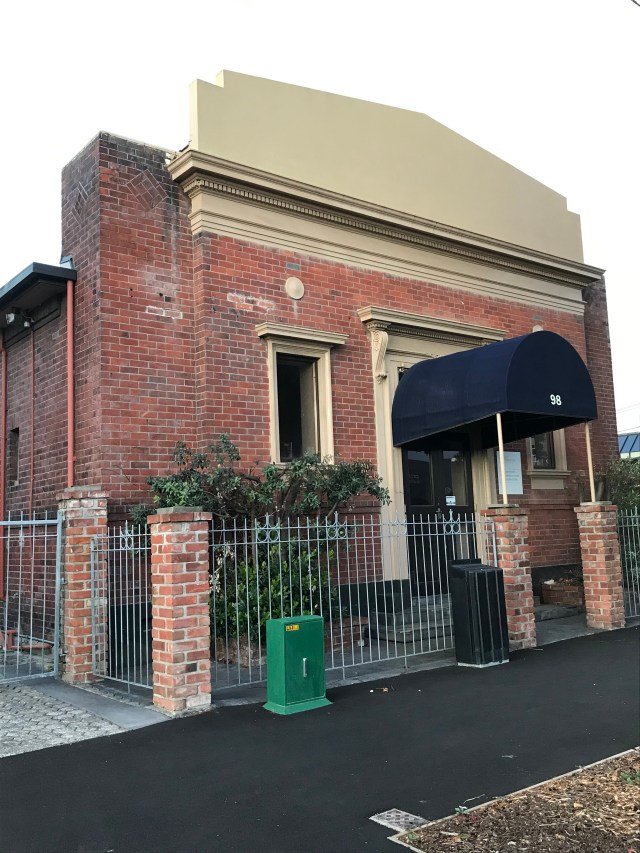
I walked this street last week and it is an industrial area these days. I tried to walk this street one evening a few months ago but didn’t feel safe as I was followed by a man in a car.There was a mixture of what looked like new buildings and older ones. There was one old looking brick building that looked interesting but couldn’t find out any information about it.

Leslie Hills Drive in the suburb of Riccarton, Christchurch

Leslie Hills Drive – Named after Leslie Hills, the historic Rutherford family homestead in the Culverden/Hanmer area. The Rutherford family was involved in the Amuri Corporation which developed the Amuri Business Park. First appears in street directories in 1991.

A small amount of information from the library website. This street only has businesses on it. I searched Papers Past and Ancestry to see if I could find out why the property in North Canterbury was named Leslie Hills but couldn’t find anything. More than one person in the Rutherford family had Leslie as a middle name so I suspect that it is a family name. My research wasn’t helped by family trees on Ancestry website having incorrect information. I do wish that people researching their family trees would check their information before linking. The original owner of Leslie Hills was George Rutherford and he was born in Jedburgh.

Mandeville Street in the suburb of Riccarton, Christchurch

Mandeville St – Formerly Chinamen’s Lane. Named because of the Chinese market gardeners working on 30 acres where this street was formed. Re-named Mandeville Street. Named after William Drogo Montagu, Viscount Mandeville, later 7th Duke of Manchester (1823-1890). Chinamen’s Lane was an early informal name that never appears in street directories. Re-named Mandeville Road. The Duke of Mandeville was a member of the Canterbury Association from 1848. He took up Rural Section 145, an area of 350 acres on Riccarton Road. This was known as Lord Mandeville’s Swamp. Mandeville Road is first mentioned in The Lyttelton Times in 1859. It was dedicated in 1887 but does not appear in street directories until 1906. Becomes Mandeville Street in 1917.
A reasonable amount of information from the library website. Papers Past have both Mandeville Street and Mandeville Road names being used. Looks like this street has always been a mixture of industrial and residential. There are ads for the sale of houses plus birth notices at the same times there were ads for businesses. Two of the main businesses in the 1920s and 1930s were Butler’s Timber yard and Dominion Industries which produced linseed oil. Chinaman’s Lane is only mentioned in 1888 and it was someone complaining about state of the road.
There are houses at the Riccarton Rd end and businesses at Blenheim Rd end of this street. Most of the businesses seem to relate to housing ranging from furniture to new kitchens. Many of the houses date back to the 1910s and 1920s. There were also high density flats but only a couple seemed to be brand new. One business had what looked like a Llew Summers artwork in their grounds.

Kyle Street and Seton Street in the suburb of Riccarton, Christchurch

Kyle St – Named after Herbert Seton Stewart Kyle (1873-1955) Kyle was a veterinarian and mayor of Riccarton 1925-1927 and 1955- 1968 and Reform Party member of parliament for Riccarton 1925-1943. Named in 1938. First appears in street directories in 1946.
Seton St – Named after Seton Stewart Kyle (1906- 1923). Seton was the son of Herbert Seton Stewart Kyle (1873-1955). He died in an accident while playing cricket at St Andrews College. He was 17 years old. The family lived at 41 Riccarton Road. First appears in street directories in 1946.

A reasonable amount of information from the library for these streets. It should be obvious why I put these two streets together. Nothing in Papers Past about the naming of the streets but there were ads for both streets in 1945. Most of the houses in both streets were wooden houses built in the 1940s. Seton Street had one slightly more modern house while Kyle Street had a few more modern houses that were mostly dated from 1990s. Kyle St did have NIWA at the end of the street. Both were small streets which normally would be called place rather that street. Seton St runs off Kyle St.

The inquest for Seton Kyle has him dying from a ruptured liver after colliding with another boy. In Papers Past there was mention of Seton Kyle Memorial Cup for A & P Show. There was also a Memorial Cup in his name at St Andrews College.

Kipax Place in the suburb of Riccarton, Christchurch

Kipax Place in Riccarton and it isn’t on the library website. I couldn’t find any information about this street. Nothing on Papers Past and no one with that name on Ancestry website. Most the houses seem to be from the 1960s so it is an older street. The footpath is on both sides on this small street which would make 1960s about right. More recent streets like this one would only have a footpath on one side and I hate this. There is a place called Kippax near Leeds in the UK so that is a possibility. No photos and nothing stood out for me on this street. Mostly brick houses.

Bartlett Street in the suburb of Riccarton, Christchurch

Bartlett St formerly Manning Street. Named after Kenneth Hardwicke Bartlett (1904- 1974). Manning Street is first mentioned in The Press in 1892. First appears in street directories in 1896. Re-named Bartlett Street on 27 September 1948. Bartlett was a jeweller and a member of the Riccarton Borough Council.

A small amount of information from the library website and I didn’t find out anything more. The earliest mention on Papers Past that I could find was in 1909. Manning St was possibly named after a Joseph Manning but couldn’t find proof of this. I also didn’t find any information about Kenneth Bartlett but I did find a Mrs Ken Bartlett living on Manning St. Nothing on Papers Past for the renaming in 1948.

I walked this street a couple of days ago when I went to take a photo of the deserted Riccarton Rd. Bartlett is a short street that runs from Riccarton Rd to Deans Ave. Restaurants at the Riccarton Rd end and hotels/motels at the Deans Ave end. A mixture of older wooden villas and new modern houses on this street. Margaret Stoddart Retirement Home is on this street.