Kumai Place in Sockburn- Named after a galloper, Kumai. Formed on a subdivision of the Riccarton Racecourse. First appears in street directories in 1993.
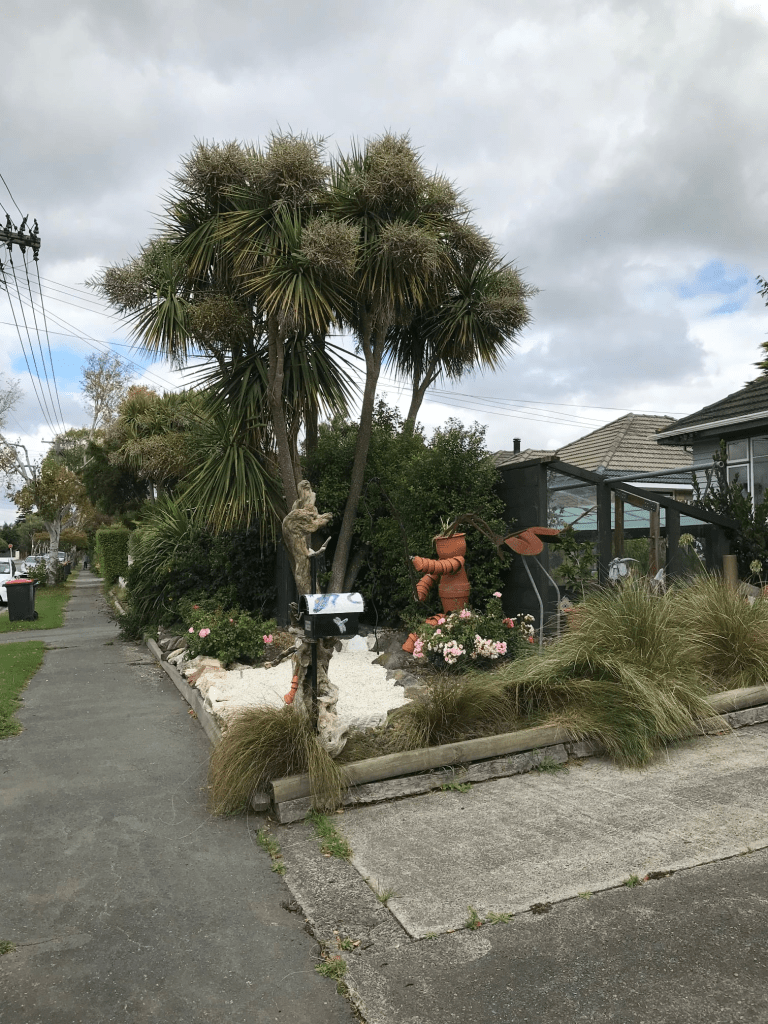
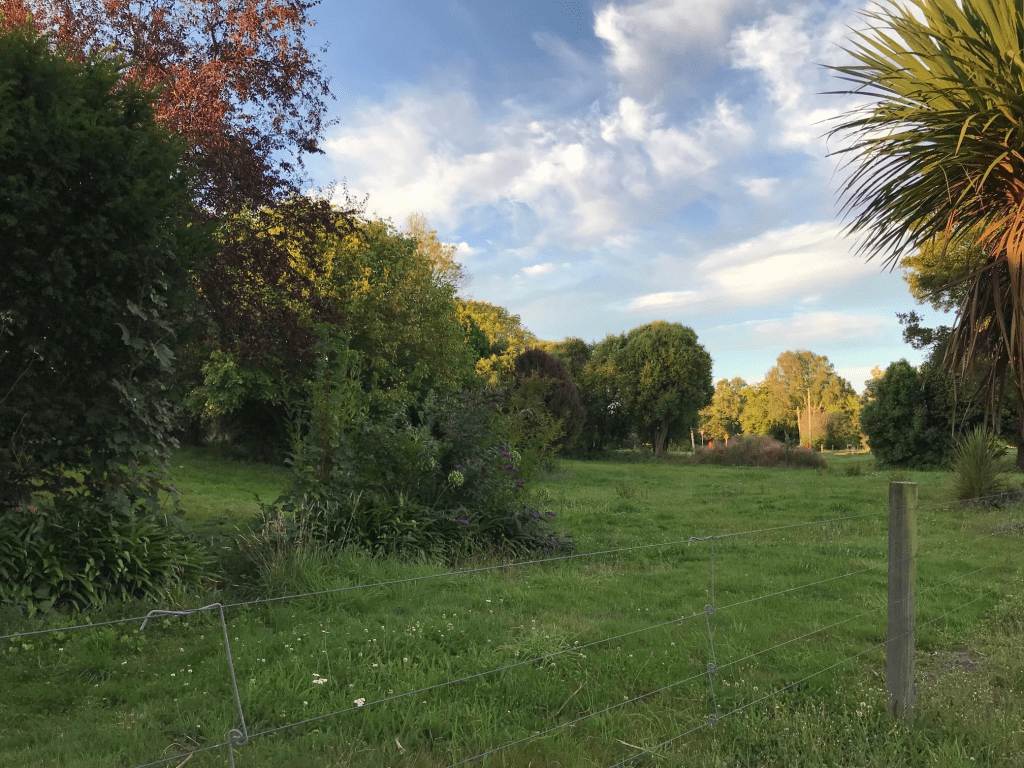
A small amount of information from the library website and nothing that I can add about the name. There are 9 houses here all built in the 1990s but none of them stood out for me. Houses are only on one side of the street and there is a grassy green space on the other side. At the end of the street there is a walkway through to a small park and playground.
Thornhill Place in Sockburn – First appears in street directories in 1991.
A tiny amount of information from the library website. I assume that because this street runs off Racecourse Rd that there is a horse racing reason for the name but couldn’t find any information to confirm this. There was a horse called Thornhill but it wasn’t born until 2002. There is Thornhill Stables in the UK and there was a Thomas Thornhill who was possibly connected to horse racing. Most the houses here were built in 1990s with a couple built in 1980s. Mostly brick houses that were nice and tidy but nothing stood out for me
Murfitt Place in Sockburn- Named after the Murfitt family. The Murfitts are a prominent horseracing family. John Murfitt (1918?-1939), a jockey, died from injuries when a horse rolled on him at Riccarton. Formed on a subdivision of part of the Riccarton Racecourse. First appears in street directories in 1993.
A small amount of information from the library website. Papers Past had several entries about the accident. The inquest said that three horses collided and the horse Kaipear which John Murfitt was riding fell and rolled on it’s rider. The funeral details said that there was a large turn out and the pall bearers were G Murfitt, F Murfitt, Jack Murfitt, G Barr, A Stock and K Brown. Ancestry website has him born in October 1917 in Rangiora and he died in May 1939. His grave has the words husband of Victoria but I couldn’t find a marriage for him. There were also the words A brilliant and fearless horseman.
This street runs off Showgate Avenue and all the houses were built in 1990s. A tidy and pleasant street of mostly brick houses and the architect seemed to have an obsession with the triangle shape. I was walking back to my car from an unsuccessful attempt to find a geocache.
Lowther Street in Sockburn and there wasn’t any information on the library website for this street. Searched Papers Past and there was only three entries and two involved name change of the street. In 1969 Racecourse Rd deviation was renamed Lowther St and in 1971 there was an accident on the street. I searched Ancestry website and no one with that surname lived in this area. The most likely reason for the name is horse racing related as there is a race in Great Britain called Lowther Stakes.
I actually walked this street by accident as I thought that I was still on Racecourse Rd. It is confusing as Racecourse Rd becomes Lowther St without any break in the road whereas you have to turn a corner to continue on Racecourse Rd. Only businesses here and most are car sales.
Woodchester Ave in Richmond – Named after Woodchester, the house belonging to Henry Dent Gardiner (1828- 1909). Gardiner retired to this house after leaving Purau in 1886. The land around the property was subdivided after his death in 1909. Two “beautifully-situated sections in the Woodchester subdivision, Gardiner’s estate, Richmond” are advertised for sale in the Star in 1909. The Presbyterian Social Service Association converted the house into a home for elderly women in 1952. Named on 16 September 1926. First appears in street directories in 1928.
A reasonable amount of information from the library website. Papers Past mostly had information about the various subdivisons starting in 1910 after Henry Dent Gardiner’s death. The main subdivision was in the 1920s when the street was formed. The other mentions on Papers Past were births, deaths and engagement notices.
Henry Dent Gardiner was an active person who was born in 1827 and then went to Adelaide in 1851. Eventually went to Bendigo where he married his wife Mary Ann. He purchased the brig Colchester and came to New Zealand. Purchased land in Styx now known as Gardiners Rd. Next he was farming in Irwell before purchasing Rhodes property in Purau. After a trip back to Great Britain in 1886 he purchased Woodchester on his return to New Zealand. I don’t know if the property was already called Woodchester when he purchased it as there doesn’t seem to be a family connection to Woodchester in England.
There are only 11 houses here mostly built in 1920s and 1930s and on one side of the street. The other side did have houses before the earthquakes but is now a big green space. The street runs from Medway Street to Richmond Park and it looks like a pleasant street to live on.
Tilia Lane in Richmond- nothing on library website.
This street doesn’t exist any longer and it was probably a private lane. It ran off Woodchester Ave and bordered by a building for the Shirley Tennis Club with houses on the other side. The Shirley Tennis Club building and the houses no longer exist. It was probably named after a tree called Tilia
Pamir Street in Mairehau – First appears in street directories in 1953.
A tiny amount of information from the library website. Papers Past didn’t have must information either. A few death notices and a couple of engagement notices. In 1948 under naming of new streets it was described as a blind street of Kelly’ Rd extension in Paramount Building Company subdivision. A couple of ads for selling properties on the street. There were more entries on Papers Past for the Paramount Building Company and they weren’t always favourable towards the company.
The street runs off Ranger St and there are only 6 houses here and they are wooden houses of the exact same design. They were all built in the 1940s. I was going to attempt to find a geocache at the end of this street when I walked it the other night but there were too many people around.
I suspect that the street was named after the ship Pamir and this ship was seized by the New Zealand Government during World War Two.
Mathers Road in Hoon Hay -Named after John Mather (1843- 1921). Mather was a draughtsman and, at one time, a captain with the 14th King’s Hussars, a cavalry regiment in the British Army. He used an inheritance received in the 1880s to buy land in Hoon Hay. He and his family were living at Tankerville, in Lincoln Road, in 1901. Mathers Road is first mentioned in The Press in 1907. First appears in street directories in 1912. Information supplied in 2007 by William Mather in an interview with Margaret Harper.
A reasonable amount of information from the library website. This street seems to be have been in several suburbs over the years including Halswell and Spreydon. In early 1900s there were many birth notices. In 1907 there were a couple of properties for sale. In the 1920s through to 1940s Digby Neave and Mrs Neave were mentioned frequently. Mrs Neave had several ads looking for servants. They also held fundraising garden fetes on their grounds. In 1943 their property including farm equipment was for sale. I was surprised to find this couple living on this street as there is a Neave Place in Hillmorton which is named after a Digby Neave who lived in Ilam but suspect that the Digby Neave living on Mathers Rd is the son of the Neave Place Digby Neave.
In 1944 the property at 57 Mathers Rd sold and this included house and 12 acres. The owner Mr Yeatman was giving up farming due to ill health.
In 1952 and 1954 there was a big subdivision which looked like it was at the Hoon Hay Road end going by the information in the ads. The first mention of the new Domain was in 1955 and this Domain covers a large section of land. There were drainage issues in 1950s and 1960s.
John Mather lived at a property called Finch House in an area called Tankerville. He was also a member of the Halswell Road Board. This man had an interesting past and I recommend reading an article about him in Papers Past dated 15th March 1882.
Most houses on this street were built between 1950s to 1970s with a few older houses and one dated from 1910. This street runs from Hoon Hay Road to McCarthy St. Not far from the Hoon Hay Road end there is an entrance to Spreydon School. This school has only been here since 2018 and they moved to where Manning Intermediate School used to be. The only buildings left from Manning Intermediate are the school hall and the office block. I assume that Spreydon School now goes to Standard 6 which is possibly now called Year 6. I am showing my age here. Hoon Hay Park which is now the name of the Domain takes up several blocks of the street. In this same block there is a church that is called The Church in Christchurch and I am positive that it had a different name when I was living in Hoon Hay. Then there is a kindergarten and next to this is a preschool. I don’t remember this preschool and was so sure that the Plunket rooms used to be in this building. I did look at sending my sons to the kindergarten on this street but they had fences that were too low for my liking. My older son was a climber and it would have been too easy for him to escape. I could bore you for hours with all the stories of his escapades. The houses near McCarthy St end have a State House look about them. There is a house on this street that has free books and I had a good look through the books but managed to resist taking any. A pleasant street but I imagine that in the weekends it would get busy with sports being played in the park.
Haslam Crescent in Hoon Hay- Named after Alec Leslie Haslam (1904-1997). Haslam was a lawyer and judge. He graduated from Canterbury University in 1926. In a 145-acre housing subdivision planned by the housing division of the Ministry of Works. The land was purchased from the Church Property Trustees and the Loughnan estate. In 1968 the street names sub- committee of the council felt that as Halswell was named after a prominent English Queen’s Counsel it would be appropriate to record the names of judges in street names there. Many of them had been QCs or KCs before appointment to the Bench.
A reasonable amount of information from the library website. All the houses here date from 1970s and are built in the typical style for 1970s state houses. A few houses were looking slightly run down but the street actually looked better than I expected. The street runs off McCarthy Street and there is also a walkway through to Rowley Ave. There were a few nice gardens. I was slightly nervous walking this street because of a bad experience from many years ago but I thought that the street was looking OK. It would have been about 40 years ago when I had to visit a family on this street to retrieve items stolen from a local kindergarten.
Alpers Place in Hoon Hay – Named after Oscar Thorwald Johan Alpers (1867-1927).Alpers was a teacher, journalist, writer, poet, lawyer and judge of the Supreme Court of New Zealand. In a 145-acre housing subdivision planned by the housing division of the Ministry of Works. The land was purchased from the Church Property Trustees and the Loughnan estate. In 1968 the street names sub-committee of the council felt that as Halswell was named after a prominent English Queen’s Counsel, it would be appropriate to record the names of judges in street names there. Many of them had been QCs or KCs before appointment to the
Bench.
A reasonable amount of information from the library website. There are only 13 houses here and they were all built in 1970s. One house has been demolished and it was next to the walkway that takes you through to Rowley Ave. The street runs from Haslam Crescent and it has a footpath on both sides of the street. A couple of the houses had nice gardens and the houses are typical style for 1970s state houses. Nothing really stood for me on this street.