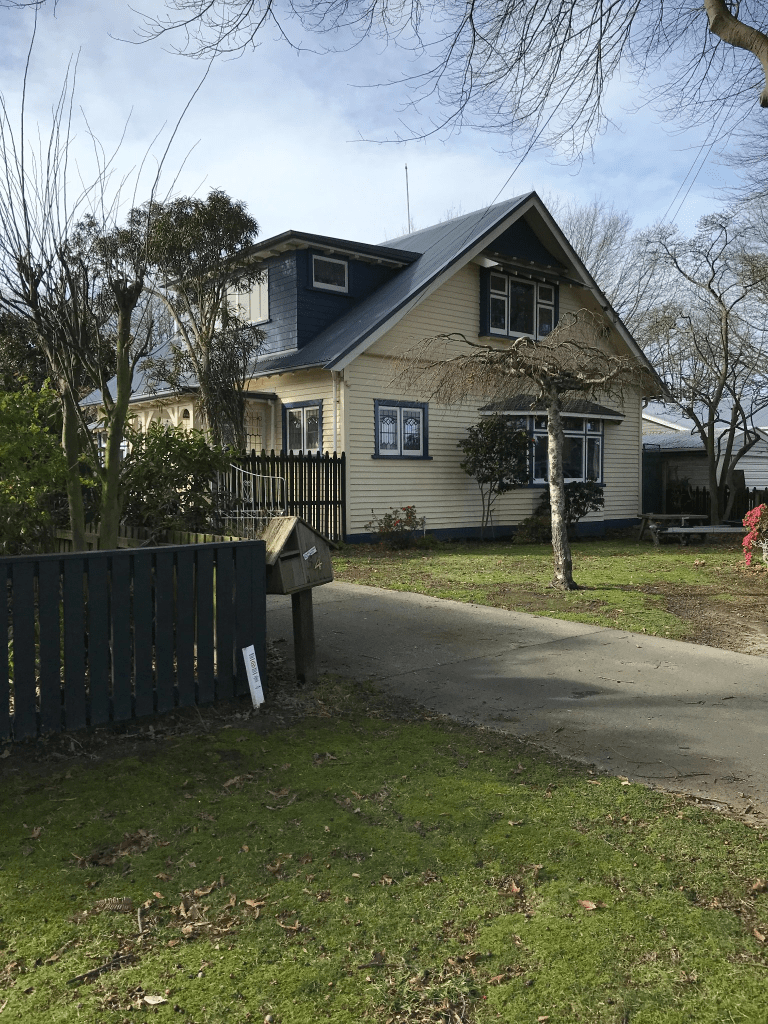
Bella Rosa Drive in Hei Hei and there wasn’t any information on the library website. Most houses were built in 1990s plus a few in 2000. I couldn’t find a reason for the name apart from it possibly could have been named after a racehorse. The street runs off Carmen Road and there is an entrance to Carmen Reserve from the end of this street. Looked like a pleasant street with neat and tidy gardens. I wouldn’t fit in as I am hopeless at gardening. Too new to be mentioned on Papers Past and I checked older maps and this area was a large green space. I walked this on Monday and I didn’t manage to find the nearby geocache.
Cataluna Place in the suburb of Hei Hei, Christchurch
Cataluna Place in Hei Hei and no information on the library website. The houses were all built in the 1990s and most are built from brick. Street is too new to be on Papers Past and nothing online. There seems to be a Spanish theme in this area and Cataluna seems to be the Spanish word for Catalonia. A pleasant tree lined street with an entrance to Carmen Reserve. I didn’t manage to find the nearby geocache when I was here on Monday.
Jerez Place in the suburb of Hei Hei, Christchurch
Jerez Place in Hei Hei and there wasn’t any information on the library website. The houses here were all built in the 1990s so I would have expected it to be on the library website.
Probably named after a place in Spain famous for making sherry and my reasoning for this is that there are streets nearby named after various drinks. I don’t know if the area where this street was formed was part of the property of F W Delamain and couldn’t find any information online and street too new to be on Papers Past. F W Delamain had a connection to a cognac business plus racehorses. The street runs off Bella Rosa Drive and it looked like a pleasant street but none of the houses stood out for me.
Proctor Street in the suburb of Papanui, Christchurch
Proctor Street in Papanui – Named after Mary Horner, née Proctor, (1836?-1919). Mary Horner was the wife of William Horner, a blacksmith. She died at her home at 6 Horner Street. John Proctor Horner (b. 1869) was one of her sons. First appears in street directories in 1887.
A small amount of information from the library website. Not a lot of information on Papers Pasts apart from birth and death notices. Several ads for the sale of sections in 1887. In 1904 and 1905 the drainage ditch in the street was mentioned frequently. Issues with stagnant water and foul smells plus waste from a pigsty drains into the drain. The residents requested a bridge to be erected over the drain. In 1940 there was a new drain for the street so it took a few years. In both 1922 and 1971 there were complaints about the state of the street.
The houses cover every decade from 1905 with most houses built in 1940s, 1990s and 2000. The house from 1905 looks rather sad but the house from 1910 looks lovely. The street is narrow where it cross a wee creek which was possibly the ditch mentioned in Papers Past. A wee walkway starts here but I didn’t have time to walk this yesterday. The weather was changing rapidly yesterday. Probably a pleasant street but it was full of road cones yesterday.
Mary Street in the suburb of Papanui, Christchurch
Mary Street in Papanui – Named after Mary Horner (1836?- 1919). Mary Horner was the wife of William Horner (1833-1905), a blacksmith. She died at her home in Horner Street. First appears in street directories in 1890.
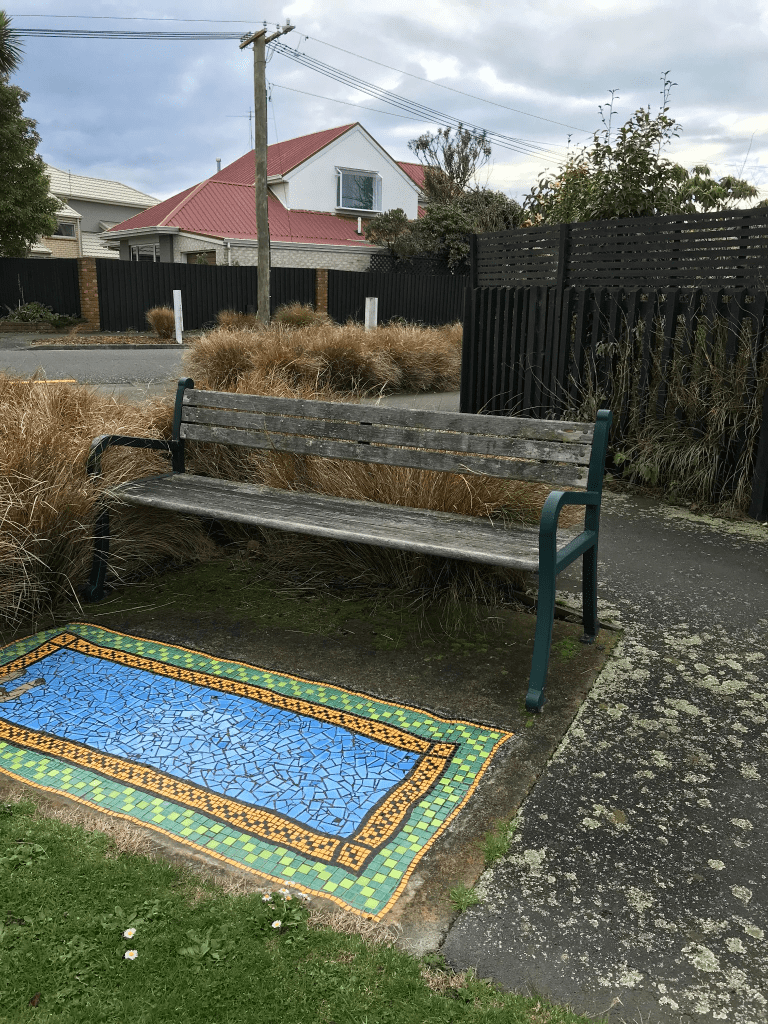
A small amount of information on the library website. There was very little information on Papers Past and mostly just death notices. Houses cover all decades with the oldest one dating from 1905. At the Main North Road end there is the Police Station plus a couple o businesses. None of the houses stood out or me but it looked like a pleasant street to live on especially at the end furthest away from the main road. A lovely seat and mosaics on one of the corners. On the corner by the Police Station there is a noticeboard with information about Mary Horner and there was an interesting fact about her cooking sparrow pies. This is what the council call a living street.

Loftus Street in the suburb of Papanui, Christchurch
Loftus Street in Papanui – Formerly Lofthouse Street. Named after Lofthouse, a village in West Yorkshire. Re-named Loftus Street. The Horner family once lived in Lofthouse. Lofthouse Street first appears in street directories in 1887. Loftus Street is first mentioned in The Press in 1898.
A small amount of information from the library website. Many birth, death and engagement notices on Papers Past. Also several notices about garden competitions. The earliest mention of Loftus St was in 1898. There was an overlap of using Lofthouse and Loftus names but nothing to say that the name officially changed. Lofthouse is a village not too far from Leeds. In 1920s several complaints about the state of the street plus in 1922 a letter to the editor said that the street had the worst footpath in Papanui. There was flooding in 1945 and there are creeks in the area. In 1965 the construction of a new building for the BNZ that will feature a 23 foot clock tower that will be illuminated at night. This building is no longer there. The BNZ is housing Age Concern. Most of the houses are from 1970s and 1990s but none of them stood out for me but I did like the street and mosaics on the corner of Loftus and Horner Streets.
Horner Street in the suburb of Papanui, Christchurch
Horner Street in Papanui -Named after William Horner (1833-1905) and his wife, Mary. Horner was the first blacksmith in Papanui. From 1873 he lived in a 16-roomed homestead on Papanui Road, an early Canterbury prefabricated house. He sold off most of the 50 acres originally with this property. Horner Street is first mentioned in the Star in 1880 in an advertisement. First appears in street directories in 1887.
A small amount of information from the library website. Lots of mentions on Papers Past and in 1880s there were several mentions about Horner’s Township. William Horner named the streets in the Township after family members. There were at least two articles in 1960 about Horner family reunion and these articles talked about William arriving in NZ on the ship Contarf in 1859 from Yorkshire. The family said that there is a family link to story of Little Jack Horner. There were many birth and death notices plus garden competition notices. There were a few mentions of a Memorial Hall especially about the area around it being badly lit. I suspect that the Memorial Hall was where the Memorial Garden is now sited which is near Papanui Rd end. In 1913 a new Post Office to be built on corner of Horner St and Papanui Rd. The Papanui library was on Horner St in an old council building and was run by volunteers until it moved in the late 1970s. There were two sad stories from this street. One was that one of the victims from the Wahine lived on this street. The other story was a missing woman in 1947 and sadly her body was found three weeks later in an open drain near Papanui Technical College.
At the Papanui Rd end there is the Memorial Garden plus several businesses. The houses here cover most decades specially 1930s and 1940s but the one that I really liked is dated from 1910. Managed to walk the street before the storm hit.
Taunton Green in the suburb of Papanui, Christchurch
Taunton Green in Papanui – Named after Taunton, which is located in the New Forest near Christchurch in England. Ponies roam freely in the protected woodlands in the area. The property at 94 Grants Road had been used to graze horses, and the applicants wanted to retain the open, rural appeal of the property. Named in 2000 by developers Linda and Phil Mauger (Ben Nevis Holdings). Information supplied in 2003 by Linda Mauger in an interview with Margaret Harper.
A small amount of information from the library website and it had me rolling my eyes. Taunton isn’t in the New Forest and it isn’t near Christchurch in the UK. The New Forest is an area in the UK that I know really well and it can be amusing plus scary when geocaching and a horse suddenly comes up behind you wanting to know you are doing.
I was geocaching today without any success and gave up because of the weather change. Footpath on only one side of the street which is common for modern streets and I dislike this. Most houses built in 2000 and they are huge. There was one that I quite liked but the rest were just OK or just plain ugly. There is a walkway at the end of the street and the path was still muddy from recent flooding. It was a pleasant street but the houses well beyond my budget.
Courtenay Street in the suburb of St Albans, Christchurch
Courtenay Street in St Albans – Codlings Lane and Grafton Street. Formerly Codlings Lane. Named after Thomas Codling (1810?-1892). Re-named Grafton Street and then Courtenay Street. Probably named after William Reginald Courtenay, the 11th Earl of Devon (1807- 1888). Codlings Lane never appears in street directories. First appears in the Star in 1873 as “Codling’s”. Codling, a civil engineer, was living in Church Road (later Rutland Street) in 1890. Grafton Street is first mentioned in The Press in 1887 when a petition signed by 220 residents asked for a bridge over the creek at the north-east end of Grafton Street. First appears in street directories in 1892. Re-named Courtenay Street on 7 March 1904. Courtenay was a director of the New Zealand Company and on the management committee of the Canterbury Association from 1848.
A reasonable amount of information from the library website. Papers Past only had one mention of Codlings which was in 1873. Sounds like Thomas Codling was involved in building some of Christchurch’s early bridges. He died in 1892 aged 82 after a long and painful illness. There were several Grafton Streets including one in Sumner and another off Ferry Rd. When the street was renamed in 1904 along with many other streets it was said that the committee selected names of counties and towns in the old country. There wasn’t a town in the UK called Courtenay but three towns included the name. In 1946 part of the street was renamed Roosevelt Ave. I checked the map from 1912 and Courtenay was a much longer street. The street back then had a big kink in it and looked like the shape of the letter L. Courtenay St runs off St Albans St and only a slight narrowing of the street where they meet shows that it is a different street. The oldest house is from 1915 plus several were built in 1920. The rest cover most decades from then to now. A pleasant street but thought that the modern houses looked out of place amongst the wooden villas. But we all know that I dislike most modern houses.
Massey Crescent in the suburb of St Albans, Christchurch
Massey Crescent in St Albans – Formerly Massey Street. Spooner’s Lane, later Eden Street, was incorporated into Massey Street. Named after William Ferguson Massey (1856- 1925). Spooner’s Lane was named after George Frederick Spooner (1843?- 1918). Re-named Eden Street. Originally part of George Dickinson’s dairy farm. Massey was the Prime Minister of New Zealand 1912-1925. Massey Street is first mentioned in The Press in 1922, described as running from St Albans Street east to Trafalgar Street. Spooner, a coachbuilder, lived where Spooner’s Lane was formed off Crescent Road (later Trafalgar Street). Spooner’s Lane first appears in street directories in 1894. Re-named Eden Street which is first mentioned in The Press in 1905. Massey Street first appears in street directories in 1925. Eden Street was connected to Massey Street in 1927. Massey Street was renamed Massey Crescent in 1950. [In 1925 residents asked for an avenue of mountain ash trees to be planted in the street.]
A reasonable amount of information from the library website. The name Massey is fairly obvious as William Massey died in 1925. There was a letter to the editor in 1925 where someone wanted Colombo St to be renamed Massey St as a memorial to William Massey. This obviously didn’t happen. Not a lot of information on Papers Past and there were so many Massey Streets in New Zealand that I possibly missed a few articles. In 1960s and 1970s the street was mentioned in best street competitions. Several death notices. There was only one mention of Spooner’s Lane in Papers Past and that was when in 1904 the residents requested the street name to be changed to Eden St. George Spooner left the district in 1890 and Spooner’s Lane was developed here he had lived. Eden St was a tiny dead end street leading off Trafalgar St. I ended up checking old maps and the maps for 1912 and 1922 only show Eden St. Massey St doesn’t show up on maps until 1930 and it was a dead end street leading off from St Albans St. The maps for 1941 only shows Massey St and Eden St had disappeared. The streets had joined up and had become one street. The residents in 1927 requested that the street name be changed from Massey St to Massey Crescent but this didn’t happen until 1948.
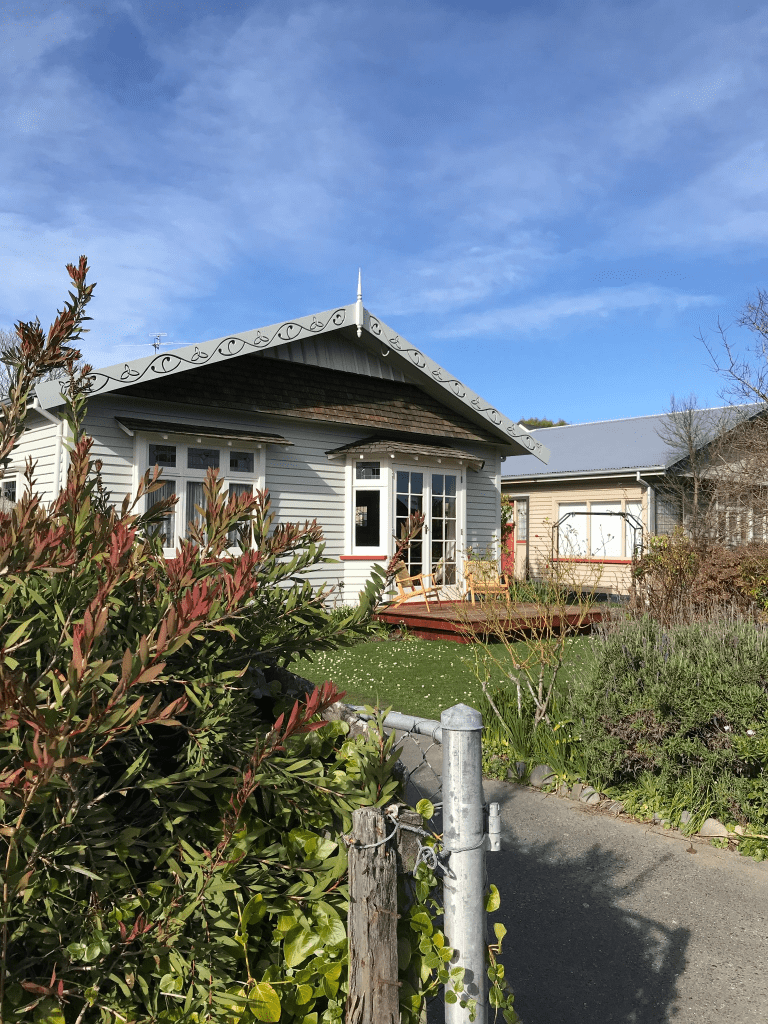
It was a pleasant tree lined street and most of the houses were built in the 1920s. They were lovely wooden villas.